A complete guide for fintechs on obtaining a New Mexico money transmitter license — NMSA 58-32 requirements, NMLS application steps, and ongoing compliance.
How to Get a Money Transmitter License in New Mexico
Fintechs that transmit money on behalf of New Mexico customers — through payment apps, remittance services, digital wallets, or cryptocurrency platforms — generally need a money transmitter license (MTL) from the New Mexico Financial Institutions Division (FID). New Mexico's Money Transmission Act (NMSA § 58-32) governs who must be licensed and what ongoing obligations apply, and all applications are processed through NMLS.
This guide covers what fintechs need to know about getting a money transmitter license in New Mexico — from assessing your licensing obligation to maintaining compliance after licensure.
What Law Governs New Mexico Money Transmission?
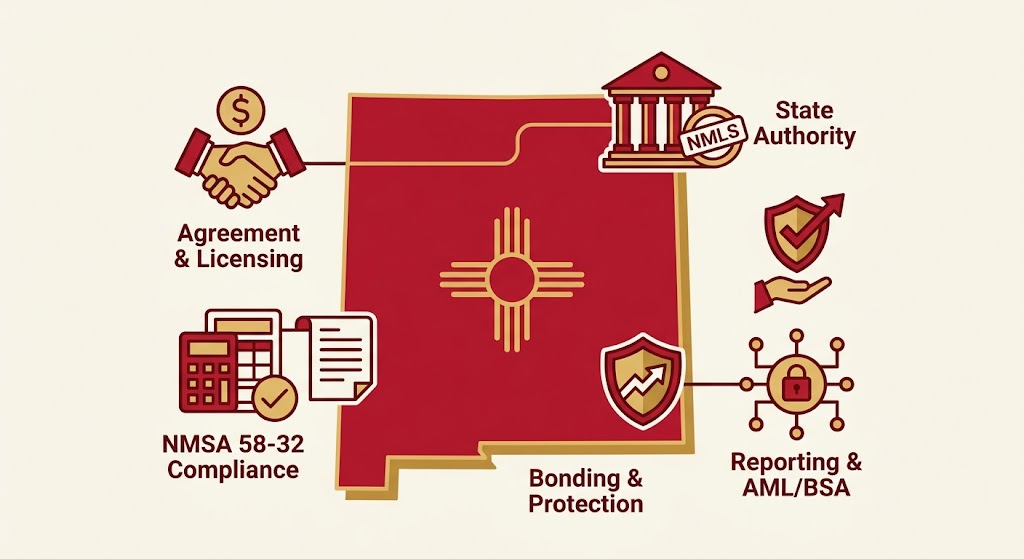
New Mexico's Money Transmission Act is codified at NMSA § 58-32. The statute defines money transmission broadly and requires any person engaged in money transmission in or into New Mexico to obtain a license from the Financial Institutions Division unless an exemption applies. The FID administers all licensing, and applications are submitted through NMLS.
Does My Fintech Need a New Mexico MTL?
You likely need a New Mexico MTL if you receive money from New Mexico customers for transmission to another party or place, operate a stored-value or digital wallet product used by New Mexico residents, provide remittance or cross-border payments involving New Mexico, or run a crypto platform transmitting fiat currency. Exemptions include federally insured banks and credit unions, government entities, and the US Postal Service. Review who needs a money transmitter license before assuming your business model is exempt.
Key Requirements at a Glance
Always verify current fees, net worth minimums, and bond requirements via the NMLS Resource Center and the New Mexico FID's licensing checklist before submitting an application.
What You'll Need to Apply
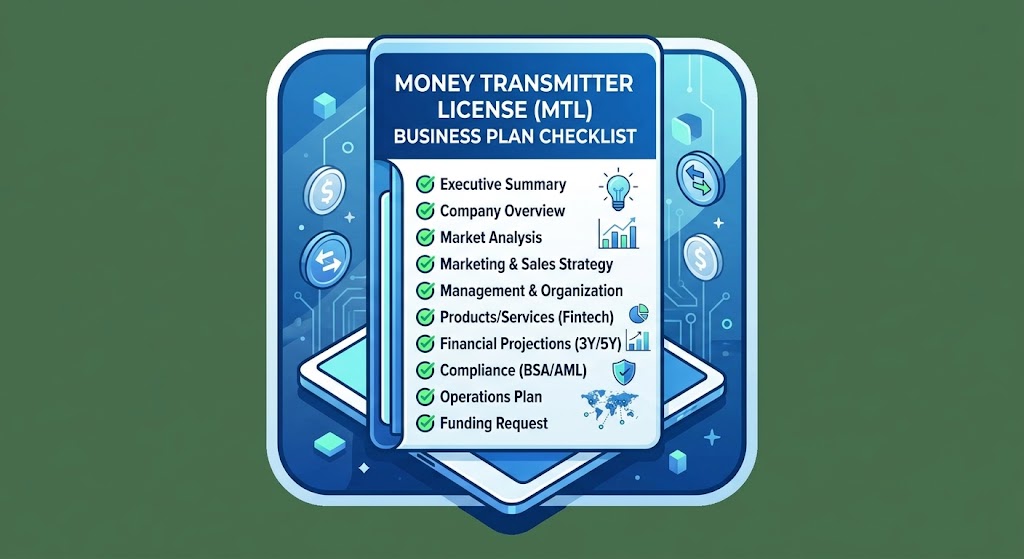
Before submitting through NMLS, prepare: completed MU1 (company) and MU2 (individual) forms for all control persons; certificate of good standing from your state of formation; audited financial statements for the most recent fiscal year; a business plan covering your products, markets, transaction volumes, and compliance structure; AML/BSA compliance program documentation including designated compliance officer; surety bond in the required amount; organizational chart; background check authorization and fingerprints for all control persons; list of authorized delegates if applicable; and sample customer agreements and disclosures.
How to Apply: Step by Step
Step 1: Set Up Your NMLS Account
Create or log into your NMLS company account. Your NMLS company ID is used throughout the New Mexico application, examination, and annual renewal process.
Step 2: Complete MU1 and MU2 Forms
Complete the MU1 covering company structure, ownership, financial history, and regulatory disclosures. All control persons complete MU2 forms and submit fingerprints through NMLS. Thoroughness and consistency are critical — the FID carefully reviews ownership and financial history.
Step 3: Upload Supporting Documents
Upload your audited financials, business plan, AML documentation, organizational chart, and New Mexico-specific exhibits through the NMLS document upload system. Review the FID's current checklist for any additional state-specific requirements.
Step 4: Obtain and Submit Your Surety Bond
Obtain a surety bond in the required amount from a licensed surety provider and upload it to NMLS. Bond amounts typically scale with transaction volume.
Step 5: Pay Fees and Submit
Pay the application fee through NMLS and submit your application. The FID reviews your submission and may issue deficiency notices requesting additional information or clarification. Processing timelines vary based on application quality and regulator workload.
Ongoing Compliance Requirements
After approval, New Mexico MTL holders must renew annually through NMLS; file annual reports disclosing transaction volumes and financial condition; maintain permissible investments equal to outstanding obligations; keep net worth and surety bond coverage current as the business grows; submit to FID examinations; notify the FID promptly of material changes; and operate a compliant AML/BSA program. See MTL annual reporting requirements for the full list of ongoing obligations.
Multi-State Licensing Considerations
New Mexico is a mid-size market in the Southwest. For most fintechs building national coverage, states like Texas, Arizona, and Colorado typically come first in regional expansion, but New Mexico must be added once you have active customers there. See our fintech licensing strategy guide for how to sequence applications efficiently across states.
Frequently Asked Questions
Does New Mexico require a separate crypto license?
New Mexico does not currently maintain a standalone cryptocurrency license separate from its Money Transmission Act. Companies that transmit fiat or otherwise meet NMSA § 58-32's definition of money transmission should obtain an MTL. Consult a compliance professional for guidance on how digital-asset activities are classified under New Mexico law.
Can I use authorized delegates under my New Mexico MTL?
New Mexico's statute permits licensees to conduct money transmission through authorized delegates. The licensee is responsible for delegate compliance, and all delegates must be properly disclosed and supervised.
What happens if I operate without a license in New Mexico?
Unlicensed money transmission in New Mexico can result in civil penalties, cease-and-desist orders, and other regulatory action from the FID. Learn about the risks of operating without a money transmitter license.
Do I need to designate a compliance officer?
Yes. You must designate a qualified compliance officer responsible for your AML/BSA program. See our guide on BSA compliance officer requirements.
Disclaimer: This article is for informational purposes only and does not constitute legal or compliance advice. Licensing requirements, fees, and bond amounts are subject to change. Always verify current requirements with the New Mexico Financial Institutions Division, the NMLS Resource Center, and a qualified compliance professional before applying.
Talk to the ComplyOne team to get started.