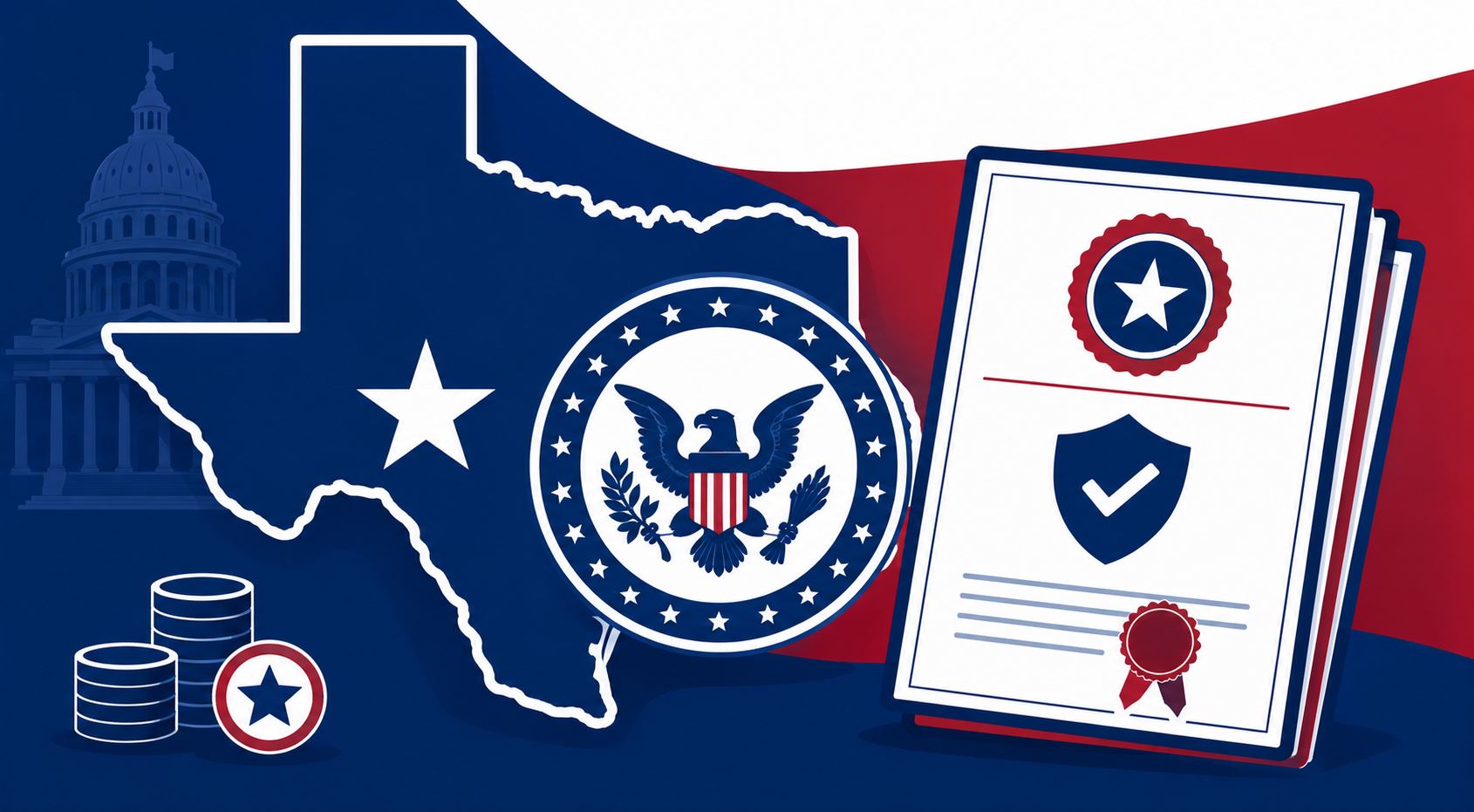
Texas money transmitter licensing is administered by the Money Services Bureau. Here is what Texas requires, what the application involves, how long it takes, and how to prepare effectively.
How to Get a Money Transmitter License in Texas
Texas is one of the most important states for fintech money transmitter license programs. With a large population, significant fintech activity, and an active regulatory environment, Texas licensing is typically a high priority for fintechs pursuing a national license portfolio.
The good news is that Texas is generally considered a manageable state for money transmitter licensing — with structured requirements, professional regulatory engagement, and processing timelines that are reasonable relative to more demanding states like New York and California.
Who Regulates Money Transmitters in Texas
Money transmitter licensing in Texas is administered by the Texas Department of Banking, specifically through the Money Services Bureau. Texas regulates money services businesses under the Texas Money Services Act.
Applications are filed through the Nationwide Multistate Licensing System where available, though Texas has specific documentation requirements that must be addressed for each application.
Texas Money Transmitter License Requirements
Business documentation — legal business name, all DBA names, formation documents, EIN, certificate of good standing, and organizational chart.
Principal background information — for all officers, directors, and owners above defined ownership thresholds, Texas requires background disclosures covering regulatory history, criminal history, civil litigation history, and personal financial statements. Fingerprints are required for background investigations.
Financial documentation — audited financial statements for the most recent fiscal year, evidence of minimum net worth, and a surety bond in the required amount.
Compliance program documentation — written AML program, AML risk assessment, KYC and CDD procedures, compliance officer information, and evidence of compliance program implementation.
Business plan — description of your business model, products, target Texas customer base, projected transaction volumes, technology infrastructure, and risk management approach.
Surety bond — Texas requires a surety bond to protect consumers. The required bond amount is defined by statute and scales with transaction volume.
Processing Timeline
Well-prepared applications to the Texas Money Services Bureau typically receive responses within 3 to 6 months. Total approval from submission to license issuance commonly falls within 6 to 9 months for complete applications. For context on how long licensing takes across states, Texas compares favorably to more demanding jurisdictions.
Texas has a reputation for professional, substantive engagement with applicants. Applications involving novel business models may take longer as examiners work through questions about how Texas law applies to the specific model.
Ongoing Obligations After Licensing
Licensed Texas money transmitters are subject to annual license renewal with updated financial statements and compliance program certification, periodic examinations by the Money Services Bureau, notification of material changes to the business, and ongoing compliance with the Texas Money Services Act.
Frequently Asked Questions
Does Texas license crypto companies differently from traditional money transmitters?
Texas applies its Money Services Act broadly to cryptocurrency businesses that qualify as money transmitters. Texas has generally been viewed as a reasonable jurisdiction for crypto businesses, engaging substantively with crypto-specific questions during the application process.
What is the minimum net worth requirement in Texas?
Texas sets minimum net worth requirements by statute. Specific amounts change with regulatory updates — verify current requirements directly with the Texas Money Services Bureau or through qualified licensing counsel before applying. For a full MTL requirements checklist across states, see our complete guide.
How ComplyOne Helps
ComplyOne works with fintechs to prepare Texas money transmitter license applications, build the compliance programs Texas requires, and manage the application process — through advisory services, compliance technology, or both.
Talk to the ComplyOne team to get started.
The information in this article is for general educational purposes and does not constitute legal or regulatory advice. Texas licensing requirements change. Verify current requirements with the Texas Money Services Bureau or qualified legal counsel before applying.