Most fintechs that move money need state money transmitter licenses to operate legally. Here is how the licensing process works, what states require, and how to build a licensing strategy that does not stall your launch.
How to Get a Money Transmitter License: A State-by-State Guide for Fintechs
For most fintechs that move money, obtaining state money transmitter licenses is not optional — it is a legal requirement to operate. And unlike FinCEN registration, which is a single federal filing, money transmitter licensing happens state by state with different requirements, different timelines, and different ongoing obligations in each jurisdiction.
It is one of the most time-consuming and resource-intensive compliance undertakings a fintech faces. Understanding how it works — and building a smart licensing strategy early — can be the difference between a smooth launch and months of costly delays.
What Is a Money Transmitter License?
A money transmitter license is a state-issued license that authorizes a business to transmit money on behalf of others within that state. Most states require this license for any business that sends or receives money electronically on behalf of customers, operates a payment platform that moves funds between parties, issues stored value or prepaid products, or operates a cryptocurrency exchange that accepts and transmits value.
The specific definition of money transmission varies by state — some define it broadly, others more narrowly. The direction of regulation is consistently toward broader licensing requirements covering more business models, not fewer.
Which States Require a License?
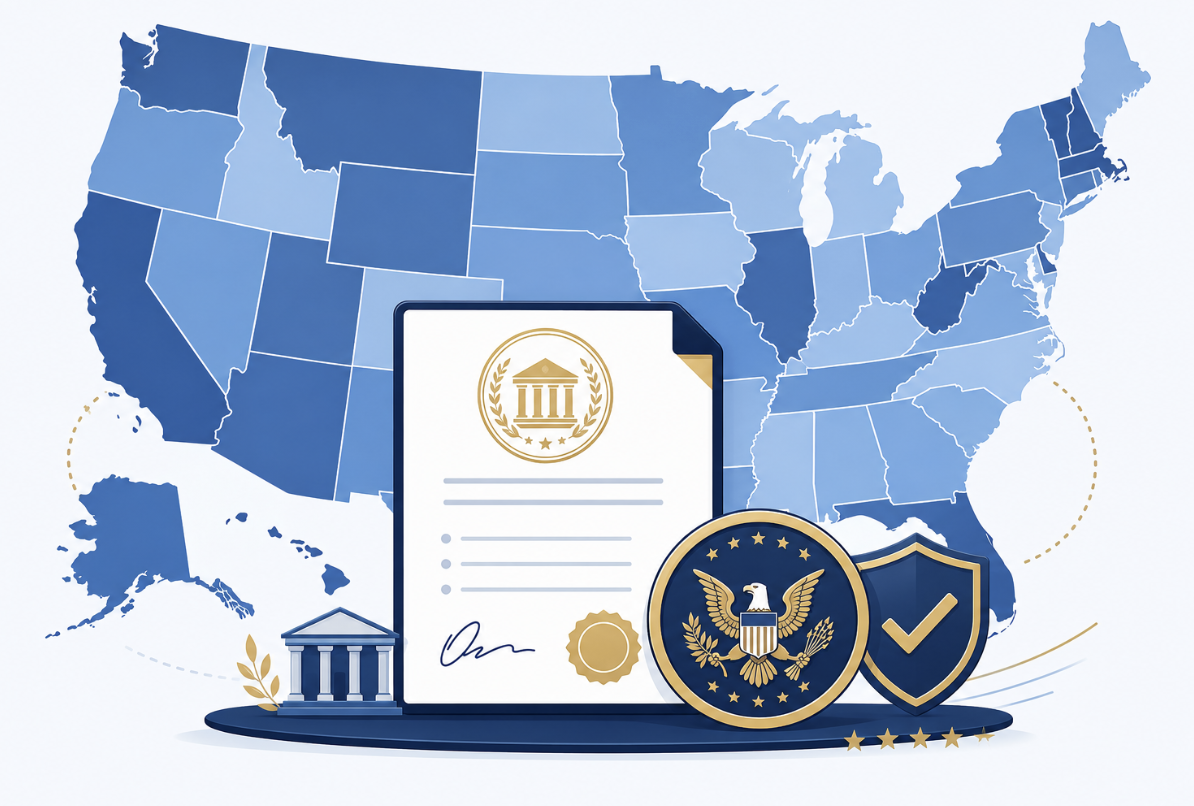
Currently 49 states plus Washington D.C. and Puerto Rico have some form of money transmitter licensing requirement. The specifics vary significantly by state.
- New York operates one of the most stringent regimes in the country, with a separate BitLicense for cryptocurrency businesses and comprehensive requirements for traditional money transmitters overseen by the Department of Financial Services.
- California requires a Money Transmission License through the Department of Financial Protection and Innovation with significant net worth and surety bond requirements.
- Texas requires licensing through the Money Services Bureau with specific examination requirements and financial condition standards.
- All other states each have their own licensing authority, application process, capital requirements, and ongoing reporting obligations.
Most states use the Nationwide Multistate Licensing System (NMLS) — a centralized platform that allows businesses to submit applications to multiple states through a single system, significantly streamlining the multi-state application process.
What a Money Transmitter License Application Requires
While requirements vary by state, most MTL applications require the following categories of information and documentation.
Business Information — legal business name and all DBA names, state of formation and formation documents, principal office address and all operating locations, description of business activities and products offered.
Ownership and Control Information — identification of all owners above a defined threshold typically between 10 and 25 percent, personal financial statements for principal owners, background checks and fingerprinting for owners and key executives, and organizational chart showing the complete ownership structure.
Financial Requirements — audited financial statements for the most recent fiscal year, minimum net worth commonly ranging from $100,000 to $1 million or more depending on the state, a surety bond in an amount that varies by state and projected transaction volume, and in some states permissible investment requirements obligating you to hold liquid assets equal to or exceeding outstanding customer fund balances.
Compliance Documentation — written BSA/AML program, AML risk assessment, KYC and CDD procedures, compliance officer information, and sample compliance policies.
Business Plan — a description of your business model, target markets, projected transaction volumes by state, and how you intend to operate within the state's regulatory framework.
The Licensing Timeline — Setting Realistic Expectations
MTL applications are not fast. Setting realistic timelines is essential for launch planning.
New York typically requires 12 to 18 months for processing. California typically requires 9 to 12 months. Texas typically requires 6 to 9 months. Most other states range from 3 to 9 months.
These are averages. Applications that are incomplete, have compliance gaps, have ownership structures that require additional review, or trigger additional examiner questions can take significantly longer. Applications submitted without a complete compliance program already in place are frequently returned or delayed.
The practical implication is clear: start your licensing process early. If you need licenses in multiple states to launch your product, beginning applications 12 to 18 months before your target launch date is not unreasonable.
Building a Smart Licensing Strategy
Most fintechs cannot afford to apply for 49 state licenses simultaneously — it is expensive, operationally complex, and unnecessary for an early-stage launch. A phased licensing strategy prioritizes states based on several factors.
Where your customers are — prioritize the states where you have the most users, the highest transaction volume, or the strongest market opportunity. Regulatory risk is greater where you have more customer exposure.
Where you are incorporated or headquartered — your home state license is typically the natural starting point and often receives more favorable treatment.
Regulatory complexity — New York and California are the most demanding and time-consuming. Some fintechs complete licenses in the majority of other states first and tackle New York and California as dedicated efforts given their distinct requirements.
Reciprocity and expedited review — some states offer expedited review for businesses already licensed in other states. Building from an established base of licenses can accelerate the multi-state rollout.
A common phased approach is to launch with licenses in your top 10 to 15 states by customer concentration and strategic importance, then expand systematically while operating under sponsor bank coverage or geographic restrictions in unlicensed states.
Operating Without a License — The Risk
Operating as a money transmitter without a required state license is a serious violation with significant consequences.
- Cease and desist orders from state regulators can require you to immediately stop operations in that state and remediate before resuming.
- Civil penalties vary by state and by duration of unlicensed operation but can be substantial.
- Criminal exposure exists in some states where unlicensed money transmission is treated as a criminal offense carrying potential imprisonment.
- Reputational consequences from state enforcement actions are public and visible to banking partners and investors.
Many early-stage fintechs operate under the coverage of their sponsor bank while pursuing their own licenses. This is a common and generally acceptable approach for managing the gap between launch timing and license availability — but it requires the sponsor bank's explicit agreement, has limitations on what you can do independently, and does not eliminate the obligation to obtain your own licenses over time.
Frequently Asked Questions
How much does it cost to get a money transmitter license?
Costs vary significantly by state. Application fees typically range from several hundred to several thousand dollars per state. Beyond application fees, the major costs are surety bonds which can range from $25,000 to over $1 million depending on the state and your transaction volume, minimum net worth requirements which may require raising capital, and professional fees for legal and compliance support with applications. A comprehensive national licensing program across all states can cost several hundred thousand dollars in total when all fees, bonds, and professional costs are included.
Can a fintech operate nationwide with just a few state licenses?
Not without restrictions. You can only legally conduct money transmission in states where you are licensed — or where an exemption applies. Operating in unlicensed states exposes you to regulatory action in those states. Many fintechs manage this by using sponsor bank coverage for unlicensed states while pursuing their own licenses, with explicit geographic restrictions in their sponsor bank agreement covering states where neither party is licensed.
What is the NMLS and do all states use it?
The Nationwide Multistate Licensing System (NMLS) is a centralized platform that allows businesses to apply for and manage licenses across multiple states through a single system. Most states use the NMLS for money transmitter licensing, which significantly reduces administrative complexity for multi-state applications. A small number of states have their own separate licensing portals outside of NMLS.
How often must a money transmitter license be renewed?
License renewal requirements vary by state but annual renewal is the most common requirement. Renewal typically requires updated financial statements, updated compliance documentation, renewal fees, and confirmation that all required reports and filings have been made during the license year. Maintaining a license calendar tracking renewal dates across all states is an essential operational function for any multi-state licensed fintech.
How ComplyOne Helps
ComplyOne works with fintechs to develop licensing strategies, prepare state money transmitter license applications, manage regulatory correspondence during the review process, and maintain license portfolios as businesses grow and expand — through advisory services, compliance technology, or both.
Talk to the ComplyOne team to get started.
The information in this article is for general educational purposes and does not constitute legal or regulatory advice. Licensing requirements vary significantly by state, business model, and product type. Consult a qualified compliance professional for guidance specific to your situation.