Getting a money transmitter license is just the beginning. Every licensed money transmitter must meet ongoing annual reporting requirements or risk losing the license. Here is what fintechs need to know.
Money Transmitter License Annual Reporting Requirements
Obtaining a money transmitter license is not a one-time compliance event. Every state that licenses money transmitters requires annual reporting from its licensees, and failure to meet annual reporting obligations is one of the most common reasons fintechs lose licenses they worked hard to obtain.
This article covers what annual reporting requirements exist for money transmitter licensees, when filings are typically due, what common requirements look like across states, and how to build an annual compliance calendar to stay on track.
Why Annual Reporting Requirements Exist
State regulators use annual reports to monitor the continued financial health of licensees, verify that transmission volumes and business activities are consistent with licensing assumptions, track changes in ownership and control, and identify early warning signs of compliance or financial problems.
Annual reporting is effectively the ongoing license renewal mechanism — in most states, your license remains in good standing only so long as annual reporting and other ongoing obligations are met.
Common Annual Reporting Requirements
Annual Report Through NMLS
Most states require annual renewal and reporting through the Nationwide Multistate Licensing System — NMLS. This typically includes updating your company information and attestation that the information on file remains accurate. NMLS annual renewal filings are typically due by December 31 of each calendar year for the upcoming year.
Audited Financial Statements
Most states require submission of annual audited financial statements — typically due within 90 to 120 days after your fiscal year end. These must be prepared by an independent CPA and must demonstrate that your net worth continues to meet the state's minimum requirement.
Transmission Volume Reporting
Many states require annual or quarterly reports on your transmission volume — total dollars transmitted in the state during the reporting period. This information is used to confirm that your surety bond and net worth remain calibrated to your actual business scale.
Agent List Updates
If your license covers a network of agents — locations that transmit money on your behalf — many states require periodic (annual or more frequent) updates to your registered agent list.
Change Notifications
Significant changes to your business — new ownership, executive officer changes, new product lines, mergers or acquisitions — typically require prompt notice to state regulators, separate from annual reporting.
Multi-State Compliance Calendar
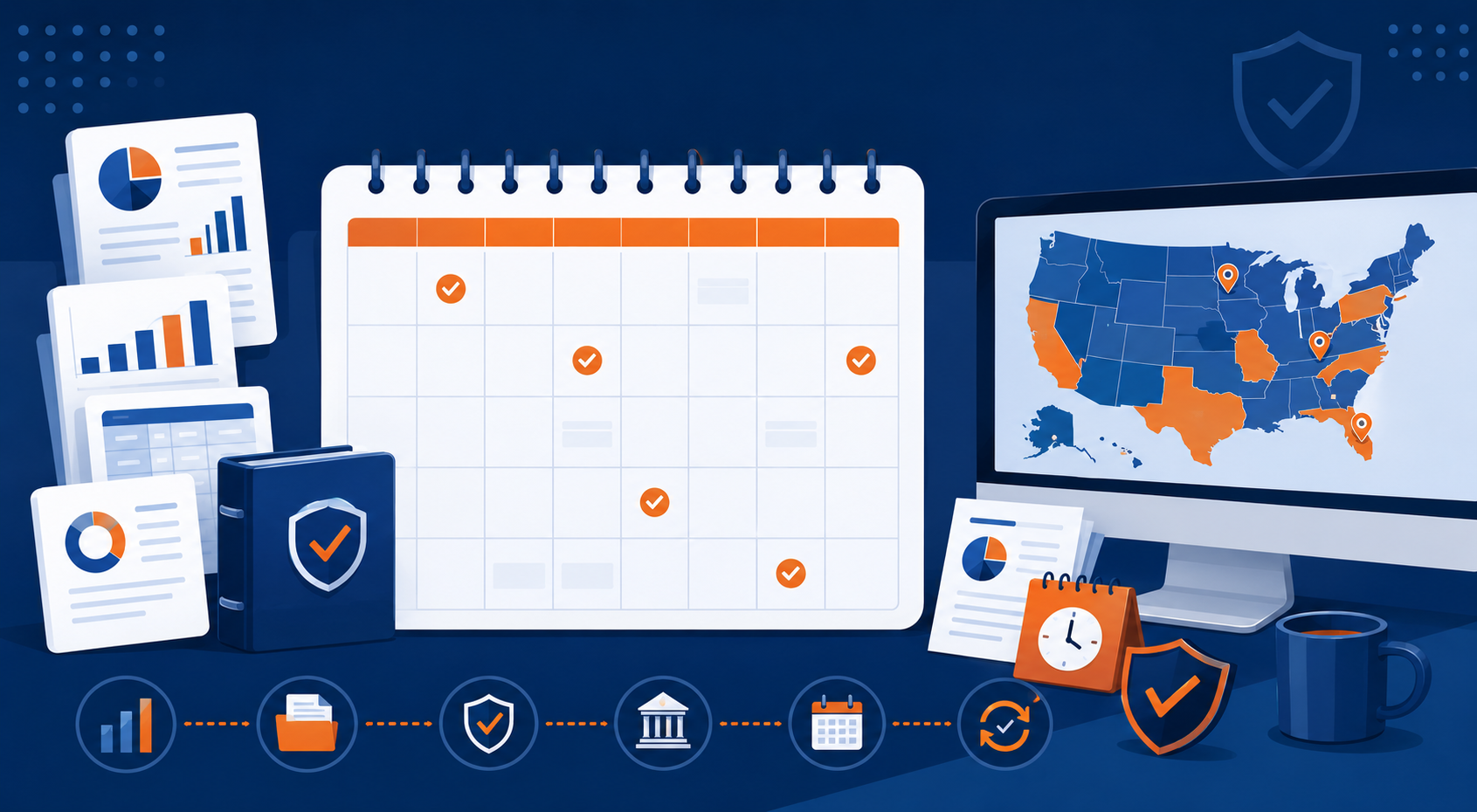
Fintechs holding money transmitter licenses in multiple states face a complex annual calendar with different deadlines in different states. Building and maintaining an annual compliance calendar — tracking every state's annual report deadline, financial statement due date, and renewal fee deadline — is essential.
Missing a single state's annual reporting deadline can result in a license expiration or suspension in that state. Reinstating an expired license often requires starting the application process again — a costly outcome that is entirely preventable with proper calendar management.
Annual Fees
Most states charge annual maintenance fees for holding a money transmitter license. These fees vary by state and in some cases are based on transmission volume. For a multi-state licensing program, annual fees across all licensed states can represent a significant budget line item.
For a comprehensive view of money transmitter license costs, including initial application and ongoing annual costs by state, see our detailed cost guide.
Consequences of Missing Annual Reporting Deadlines
Missing annual reporting deadlines — particularly NMLS renewal deadlines and audited financial statement submission deadlines — can result in license expiration with no grace period, requirement to reapply and pay new application fees, and in some states, formal enforcement action for operating with an expired license.
State regulators are generally not sympathetic to missed deadlines attributed to inadvertence. These deadlines are fixed, publicly available, and expected to be tracked by licensed businesses as a core compliance obligation.
Frequently Asked Questions
Is the NMLS annual renewal the same as my state's annual report?
Not necessarily. Some states require both an NMLS renewal attestation and separate annual report documents submitted directly to the state regulator — for example, financial statements submitted directly to the state's banking department. The NMLS renewal is a separate system from a state's direct reporting requirements, though NMLS serves as the conduit for some state filings.
What if my financial statements are not ready by the annual deadline?
Request an extension from the state regulator in advance of the deadline — do not simply miss it. Most state regulators will consider extension requests when made proactively and with adequate explanation. Extension requests submitted after a missed deadline are treated much less favorably.
How ComplyOne Helps
ComplyOne helps licensed fintechs manage their multi-state annual reporting calendar, prepare and submit annual filings, and maintain their licenses in good standing across all licensed jurisdictions — through advisory services, compliance technology, or both.
Talk to the ComplyOne team to get started.
The information in this article is for general educational purposes and does not constitute legal or regulatory advice. Consult a qualified compliance professional for guidance specific to your situation.