Non-bank brands embedding payments, lending, and banking features into their products face real compliance obligations. This guide covers what embedded finance compliance means and what's required.
Embedded Finance Compliance: What Brands Need to Know
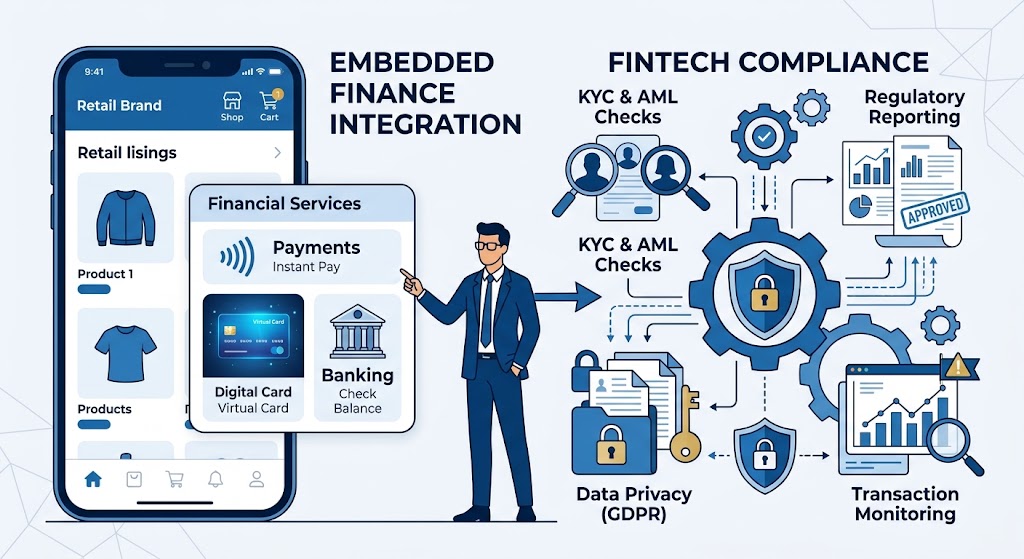
Embedded finance — the integration of financial services like payments, lending, and banking directly into non-financial products — has become one of the fastest-growing trends in financial technology. Retail brands, SaaS platforms, gig economy apps, and e-commerce companies are all adding financial features to deepen customer relationships and create new revenue streams.
But embedding financial services doesn't mean embedding their compliance obligations only on your banking partner. Brands that embed finance face real, direct regulatory responsibilities — and many are surprised to discover how extensive those obligations are.
This guide covers what embedded finance compliance means in practice and what brands need to know before they launch financial features in their products.
What Is Embedded Finance?
Embedded finance refers to the integration of financial products and services — payments, bank accounts, debit cards, lending, insurance — into non-financial platforms and applications. Examples include:
- A retail brand offering a co-branded debit card and FDIC-insured spending account to its customers
- A gig economy platform providing instant payout or earned wage access (EWA) to its workers
- An e-commerce marketplace offering checkout financing or BNPL to buyers
- A SaaS platform embedding invoicing, payments, and bank accounts for its small business customers
- A healthcare platform offering medical financing or HSA management within the patient portal
In each case, the financial product is delivered through a non-bank brand's interface, often powered by a combination of a banking-as-a-service (BaaS) provider and an underlying chartered bank. See our guide on what is Banking as a Service (BaaS).
Who Is Responsible for Compliance in Embedded Finance?
This is the core question most brands get wrong. The common assumption is that the licensed banking partner or BaaS provider handles all the compliance. That is not accurate.
In an embedded finance arrangement, regulatory responsibility is shared — and regulators hold all parties in the chain accountable. The licensed bank (typically called a sponsor bank or program bank) holds the charter, holds deposits, and is the regulated entity. But the brand (also called the program manager or non-bank partner) is responsible for:
- Implementing and maintaining the customer-facing compliance program
- Conducting KYC/CIP on end customers
- Operating transaction monitoring on customer activity
- Filing SARs for suspicious activity they identify
- Screening customers against OFAC sanctions lists
- Managing customer complaints and UDAAP compliance
- Following the compliance requirements set out in their program agreement with the bank
Regulators — particularly the OCC and state banking regulators — have made clear through recent guidance and enforcement actions that sponsor banks cannot outsource their compliance obligations to non-bank partners, and non-bank partners cannot hide behind their banking partner when their programs are non-compliant. See our guide on sponsor bank compliance requirements.
Key Compliance Obligations for Embedded Finance Brands
1. Know Your Customer (KYC) and Customer Identification Program (CIP)
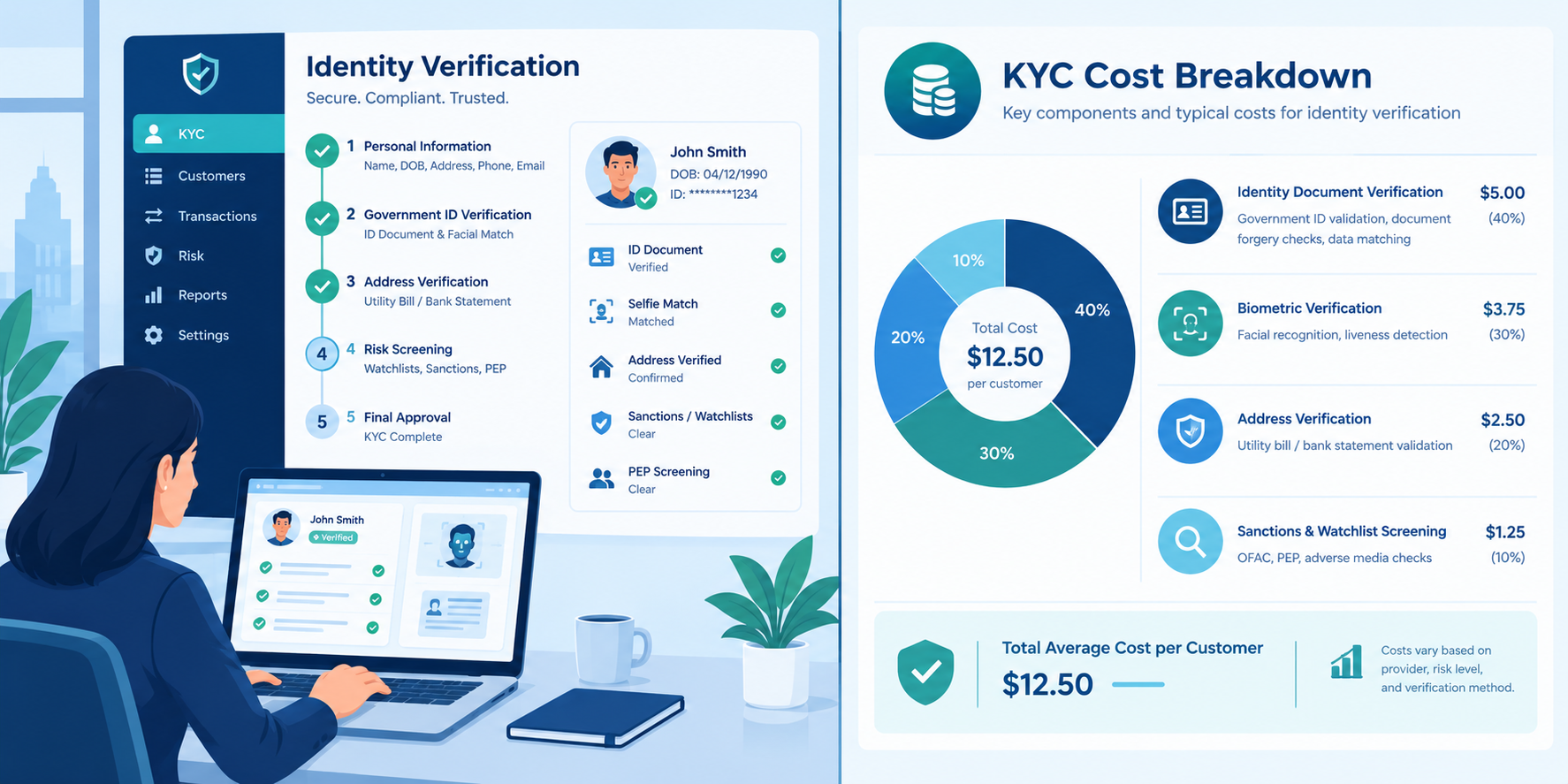
Any embedded finance product that involves opening an account for a customer — a bank account, a debit card, a lending product — triggers KYC/CIP obligations. The brand is typically responsible for collecting, verifying, and maintaining customer identity documentation. See our guides on KYC requirements for fintechs and CIP requirements.
2. AML/BSA Compliance Program
Brands operating embedded financial products that involve money movement — payments, transfers, withdrawals — need to operate an AML/BSA compliance program. This includes written AML policies, a designated compliance officer, transaction monitoring, and SAR filing procedures. The program must be approved by the sponsor bank and is subject to their oversight and examination. See our guide on AML compliance program requirements.
3. OFAC Sanctions Screening
Every embedded finance product that involves payments or account opening must screen customers against OFAC's Specially Designated Nationals (SDN) list and other sanctions lists. See our guides on OFAC sanctions screening and how to conduct OFAC screening.
4. Money Transmitter Licensing
Whether your embedded finance brand needs its own money transmitter license (MTL) depends on your specific product structure. If the licensed bank holds all funds and performs all money transmission activities directly, the brand may not need a standalone MTL. However, if the brand has any degree of control over funds — receiving payments, holding balances, or directing transfers — MTL licensing may be required. See our guide on who needs a money transmitter license and our overview of BaaS compliance requirements.
5. UDAAP Compliance
The Consumer Financial Protection Bureau (CFPB) has made UDAAP (Unfair, Deceptive, or Abusive Acts or Practices) a priority focus for embedded finance programs. Marketing claims, fee disclosures, and customer communications related to your financial features must all comply with UDAAP standards — and the CFPB holds both the bank and the non-bank partner accountable. See our guide on what is UDAAP and how it applies to fintechs.
6. Regulation E (for Payment Features)
If your embedded product involves electronic fund transfers — debit cards, ACH payments, digital wallets — Regulation E consumer protections apply. This means specific disclosure requirements, error resolution procedures, and consumer liability protections that must be built into your product. See our guide on Regulation E for fintechs.
7. Third-Party Risk Management
Your sponsor bank will scrutinize your company as a vendor. You will likely face an initial compliance review, an ongoing monitoring program, and periodic audits. Maintaining good standing with your bank partner requires ongoing compliance performance — not just compliance at launch. See our guide on third-party risk management for fintechs.
The Sponsor Bank Relationship
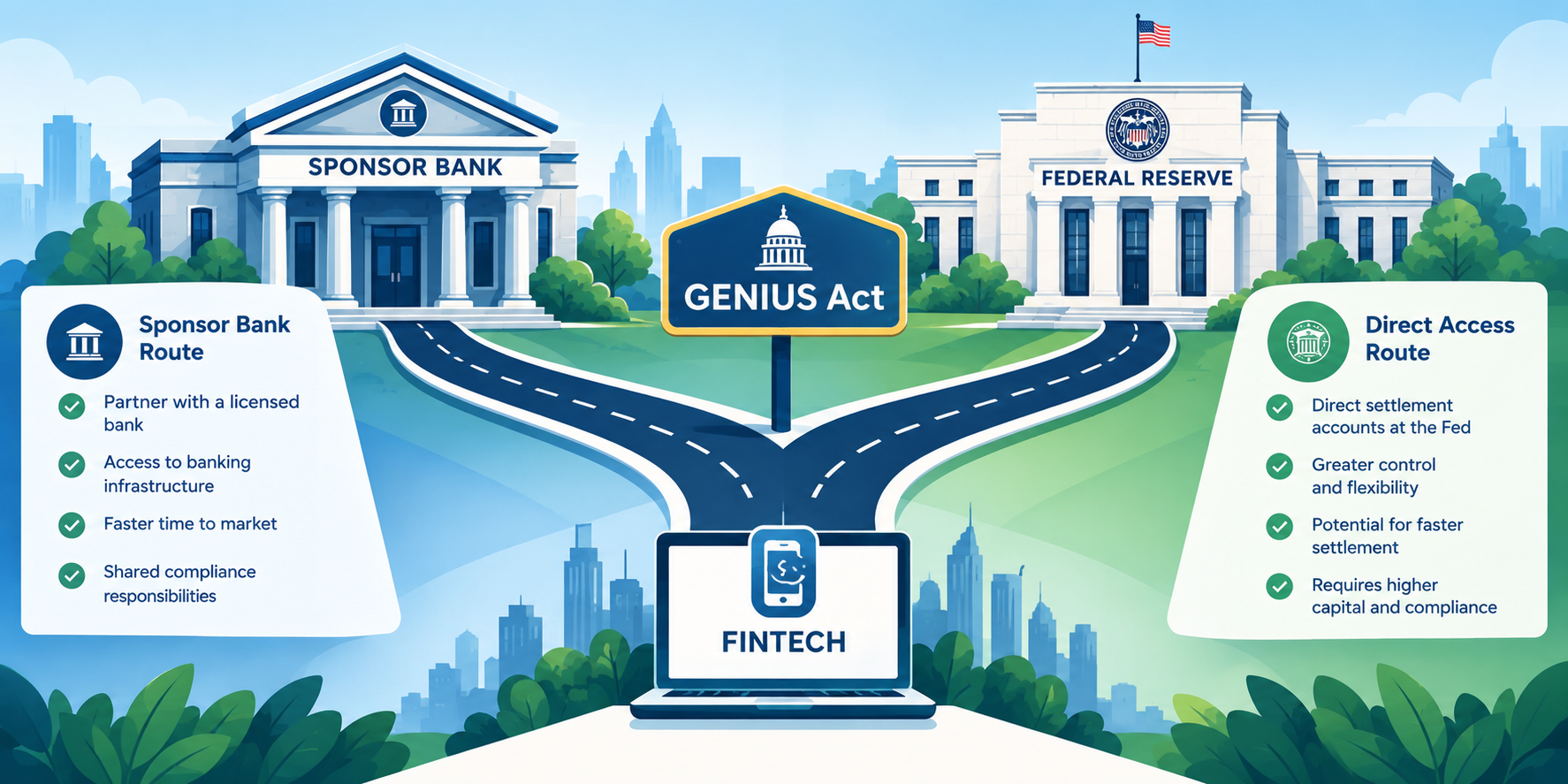
Most embedded finance programs run through a sponsor bank (also called a program bank). The sponsor bank provides the charter, holds deposits, and issues regulated products like debit cards. The non-bank partner — the embedded finance brand — is the program manager responsible for customer-facing operations and compliance implementation.
Getting and maintaining a sponsor bank relationship requires demonstrating compliance maturity. Banks have become significantly more selective after regulatory scrutiny of BaaS arrangements. See our guides on fintech sponsor bank requirements and how to choose a sponsor bank.
Common Compliance Mistakes in Embedded Finance
- Assuming the bank handles all compliance — The bank sets the requirements; you implement them. The compliance responsibility is shared
- Launching without a written compliance program — Every embedded finance product needs documented policies and procedures before launch
- Treating KYC as a one-time check — KYC is ongoing; you need processes for customer monitoring, adverse media screening, and periodic reviews
- Under-investing in transaction monitoring — Embedded finance programs without real transaction monitoring are a regulatory liability for both the brand and the bank
- Not planning for regulatory examinations — Your bank partner is examined by its regulator, and your program will be reviewed as part of that examination. Be prepared
Frequently Asked Questions
Does a retail brand need its own compliance officer for embedded finance?
Yes. Even if your sponsor bank provides compliance support, you need a designated compliance officer who is accountable for your program's compliance program implementation. This person works with the bank's compliance team but is responsible for your day-to-day compliance operations.
How is embedded finance different from white-label banking?
White-label banking typically refers to a bank's own products being offered under a partner's brand. Embedded finance is broader — it encompasses any financial service delivered through a non-financial platform. The compliance obligations are similar regardless of what the arrangement is called.
Does CFPB supervision apply to non-bank embedded finance brands?
The CFPB has been actively expanding its supervision of non-bank financial service providers, including larger fintech and technology companies offering financial products. See our guide on how the CFPB oversees fintechs for current guidance.
What is the biggest compliance risk for embedded finance brands?
The biggest risk is regulatory action resulting from inadequate compliance implementation — particularly in AML/BSA, UDAAP, and consumer protection areas. The second biggest risk is losing your sponsor bank relationship due to compliance performance issues, which can shut down your entire financial product line. Investing adequately in compliance from day one is not optional.
Disclaimer: This article is for informational purposes only and does not constitute legal or compliance advice. Embedded finance regulatory requirements are evolving rapidly. Always consult a qualified compliance professional and review the specific requirements of your sponsor bank and applicable regulators before launching any embedded finance product.
Talk to the ComplyOne team to get started.