Sponsor bank compliance refers to the compliance obligations fintechs must meet to maintain their banking partnerships. Here is what it covers, what banks audit, and how to stay ahead of their requirements.
What Is Sponsor Bank Compliance? A Guide for Fintechs
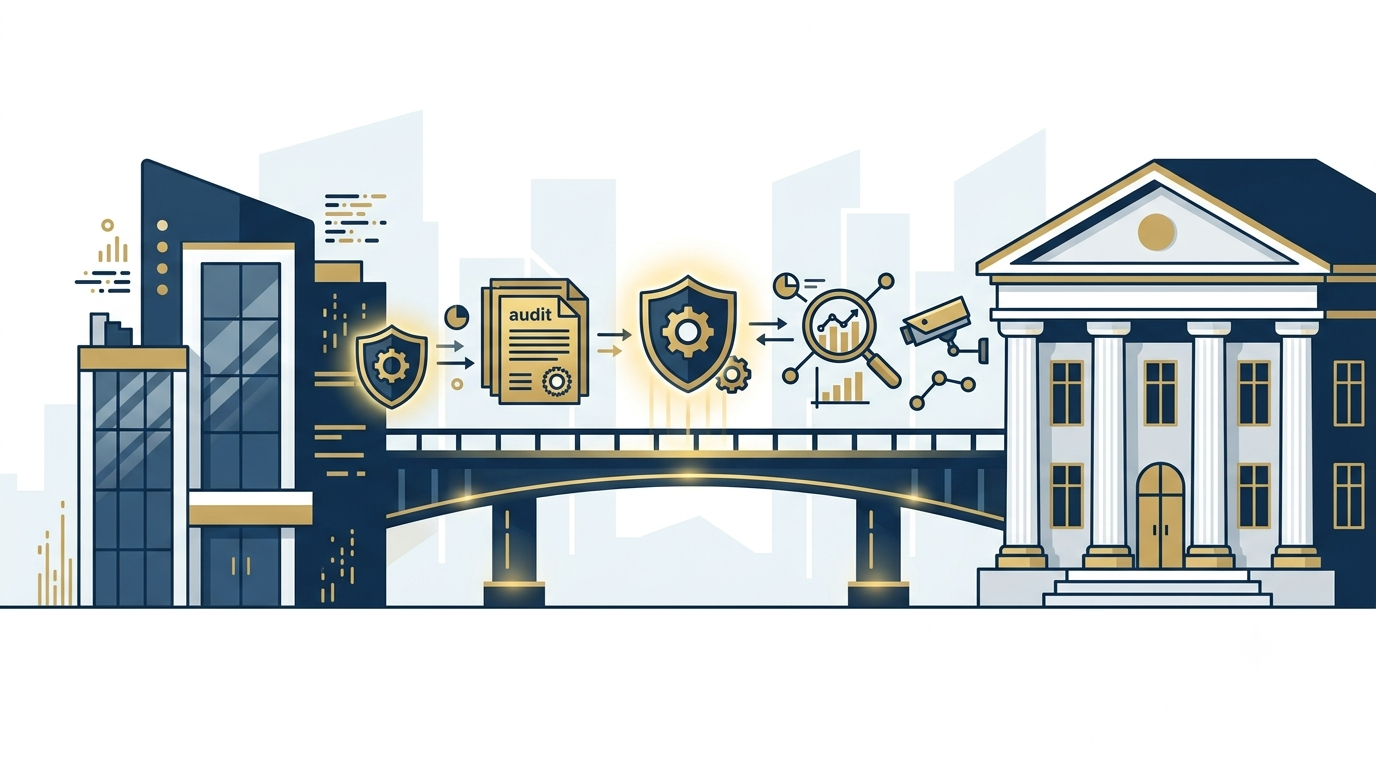
For most fintechs, the sponsor bank relationship is the most important business relationship they have. It is also the most compliance-intensive. Sponsor bank compliance refers to the full set of compliance obligations — documentation requirements, audit expectations, ongoing reporting, and program standards — that fintechs must meet to establish and maintain their banking partnerships.
Unlike regulatory compliance with FinCEN or the CFPB — where the regulator is an external authority — sponsor bank compliance is a contractual and operational relationship. Your bank is both your partner and your overseer. And when your compliance program falls short, they have the authority to restrict your operations or exit the relationship entirely.
Why Sponsor Banks Have Compliance Authority Over Fintechs
Sponsor banks are regulated financial institutions. When they partner with a fintech, the fintech's activities are conducted under the bank's regulatory umbrella. The bank is legally responsible to its own regulators — the OCC, FDIC, Federal Reserve, or state banking authority — for ensuring that its fintech partners operate compliantly.
This shared regulatory exposure is why sponsor banks treat fintech compliance so seriously. A fintech compliance failure is a bank compliance problem. Banks price this risk into their willingness to partner and their ongoing oversight intensity.
What Sponsor Bank Compliance Covers
BSA/AML Program Requirements
Every sponsor bank will require its fintech partners to maintain a written, operational BSA/AML program. This means a written AML policy approved by senior management, a completed AML risk assessment, operational KYC and CDD procedures, a functioning transaction monitoring program, a documented SAR filing process, and evidence of AML training for all relevant staff.
The bank needs to be confident that your program is not just documented but actually running. They will ask to see evidence — alert logs, training records, SAR filings — not just policy documents.
KYC and Customer Verification Standards
Banks require their fintech partners to have customer identification and verification procedures that meet or exceed BSA requirements. This includes documenting how identity is verified at onboarding, how customer risk is rated, how higher-risk customers are handled through EDD, and how ongoing monitoring is connected to the customer relationship.
OFAC Sanctions Screening
Your bank requires evidence that you are screening customers and transactions against OFAC sanctions lists — at onboarding and ongoing. They will ask about your screening technology, your fuzzy matching capability, and your hit review process.
Ongoing Reporting Requirements
Most sponsor bank arrangements include ongoing reporting obligations — regular compliance reporting to the bank covering transaction volumes, SAR filings, significant compliance events, and program changes. The specific frequency and format varies by bank but most require at minimum quarterly reporting.
Material Change Notification
If you launch a new product, enter a new geography, significantly change your customer base, or make any other material change to your business, you are typically required to notify your sponsor bank before the change goes live — not after. Banks underwrite your partnership based on the business model you disclosed. Undisclosed material changes are a serious relationship violation.
What the Compliance Review Process Looks Like
Sponsor banks conduct periodic compliance reviews of their fintech partners — typically annually for established relationships and more frequently for newer or higher-risk partners. These reviews typically involve a document request covering your AML program documentation, followed by a remote or on-site review with your compliance team, followed by a formal findings report.
How well you perform in these reviews directly affects the terms of your banking relationship — your operational flexibility, your ability to add new products, and ultimately the bank's willingness to continue the partnership.
How to Stay Ahead of Sponsor Bank Compliance Requirements
Maintain your compliance program as if a bank review could happen at any time — because it can. Keep your AML policy current, your risk assessment updated, your monitoring alerts reviewed within SLA, and your training records complete. When a review arrives, you should be able to produce everything they ask for without scrambling.
Communicate proactively. If something significant happens — a compliance event, a product change, a key personnel change — tell your bank before they ask. Banks respond much better to proactive communication than to discovering things during a review.
Frequently Asked Questions
What is the difference between sponsor bank compliance and regulatory compliance?
Regulatory compliance refers to meeting requirements imposed by government regulators — FinCEN, the CFPB, state regulators. Sponsor bank compliance refers to meeting the requirements your sponsor bank imposes as a condition of your banking relationship. The two overlap significantly — most sponsor bank requirements mirror regulatory requirements — but the bank may impose additional or more specific standards beyond what regulators technically require.
Can a fintech lose its sponsor bank for compliance failures?
Yes. Sponsor bank termination for compliance deficiencies is one of the most common and most disruptive compliance consequences fintechs face. Banks can and do exit fintech relationships when compliance programs are found to be inadequate, when compliance events create regulatory risk, or when the fintech fails to meet the bank's evolving compliance standards.
How many sponsor banks should a fintech have?
Having two sponsor banking relationships provides redundancy — ensuring that the loss of one relationship does not halt operations. However, managing two sponsor bank compliance relationships requires more compliance bandwidth and documentation. Most early-stage fintechs start with one sponsor bank and add a second as their compliance infrastructure matures.
How ComplyOne Helps
ComplyOne helps fintechs build and maintain compliance programs that satisfy sponsor bank requirements — from initial program development through ongoing audit preparation and compliance reporting. Whether through advisory services, compliance technology, or both, we help you maintain banking relationships with confidence.
Talk to the ComplyOne team to get started.
The information in this article is for general educational purposes and does not constitute legal or regulatory advice. Consult a qualified compliance professional for guidance specific to your situation.