Transaction monitoring is a core AML requirement that every fintech must have in place. Here is how it works, what triggers alerts, how to build an effective system, and what regulators expect.
What Is Transaction Monitoring in Fintech? How It Works and Why It Matters
Every fintech that processes payments, transfers funds, or manages customer accounts needs a system to continuously watch for suspicious financial activity. That system is called transaction monitoring — and it is one of the core operational requirements of any BSA/AML compliance program.
Without it, you have no systematic way of knowing whether your platform is being used for money laundering, fraud, structuring, or other financial crime. With it, you have an automated, documented, auditable process for catching suspicious activity and responding to it correctly.
This article explains exactly how transaction monitoring works in fintech, what the regulations require, what makes a program effective versus inadequate, and what it takes to build a system that genuinely functions.
What Is Transaction Monitoring?
Transaction monitoring is the ongoing, automated process of reviewing customer transactions in real time or near-real time to identify activity that may indicate money laundering, fraud, structuring, sanctions violations, or other financial crime.
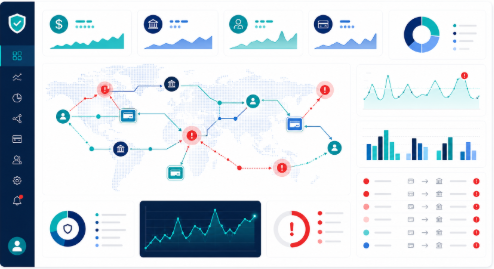
It works by applying rules, thresholds, and behavioral models to your transaction data. When a transaction or pattern of transactions meets the criteria defined in your rules, the system generates an alert and places it in a review queue for your compliance team.
Transaction monitoring is not a periodic check or a monthly review. It runs continuously across all accounts and all transactions, every day. It is what transforms your AML program from a set of documents into a functioning operational control.
Why Transaction Monitoring Is a BSA Requirement
Transaction monitoring is a direct requirement of the Bank Secrecy Act. Covered financial institutions must maintain internal controls that include a mechanism for detecting and reporting suspicious activity — and transaction monitoring is how that requirement is operationally fulfilled.
FinCEN and sponsor bank examiners evaluate transaction monitoring programs during examinations. They specifically look for:
- Rules that are calibrated to your specific risk profile — not generic industry templates
- Evidence that alerts are being generated and reviewed within defined timelines
- Complete documentation of alert investigations and disposition decisions
- A clear, documented process connecting alerts to your SAR filing workflow
- Evidence of periodic rule tuning as your business and customer base evolve
A monitoring program that generates alerts that nobody reviews is a compliance failure — not a compliance program. The rules must produce alerts. The alerts must be reviewed. The reviews must be documented. The suspicious ones must result in SARs.
How Transaction Monitoring Works — Step by Step
Rules and Scenarios
Every transaction monitoring system is built on a library of rules — logical conditions that trigger an alert when met by a transaction or pattern of transactions.
Common rule categories:
Threshold rules — trigger when a transaction or series of related transactions exceeds a defined dollar amount within a specified time window. The most classic example is monitoring for transactions that appear to be structured just below the $10,000 CTR reporting threshold.
Velocity rules — trigger when transaction frequency or volume exceeds a defined rate within a time period. For example, more than 10 outbound transfers in a 24-hour window.
Pattern rules — trigger when transaction behavior matches known money laundering typologies — such as rapid round-trip transactions, layering through multiple accounts, or fan-in fan-out patterns where funds from multiple sources are consolidated and then rapidly redistributed.
Geographic rules — trigger when transactions involve counterparties in high-risk countries, OFAC-sanctioned jurisdictions, or geographies flagged in your risk assessment.
Behavioral rules — trigger when a customer's current activity deviates materially from their established historical baseline — the expected behavior documented in your CDD program at onboarding.
Rules must be tailored to your specific products, customer types, and risk profile. Generic, uncalibrated rules produce excessive false positives — alerts that waste your compliance team's time and create dangerous backlogs that dilute attention from genuinely suspicious activity.
Alert Generation and Queue Management
When a transaction meets a rule's conditions, the system automatically generates an alert with relevant transaction details, customer information, and the triggering rule. Alerts are placed in a review queue — typically organized by risk level, age, or assigned analyst.
Your compliance program must define how alerts are prioritized, who reviews them, and within what timeframe they must be reviewed. These are your alert SLAs — Service Level Agreements — and they must be documented and followed consistently.
Alert Review and Investigation
Each alert must be reviewed by a trained compliance analyst. The review involves examining the flagged transaction in full account context, analyzing the customer's full transaction history, checking whether there is a legitimate and verifiable explanation for the activity, reviewing the customer's KYC profile and risk rating, and reaching a documented conclusion.
Every alert review outcome must be documented — including the analyst's name, the date of review, the evidence reviewed, and the disposition decision. This documentation is what you produce during an examination.
SAR Filing or Closure
If investigation concludes the activity is suspicious and meets the filing threshold, a SAR is filed with FinCEN. If the activity has a legitimate explanation, the alert is closed with documented reasoning. If additional investigation is needed, the alert is escalated within your defined workflow.
Every disposition — filed, cleared, or escalated — must be documented completely.
What Makes a Transaction Monitoring Program Effective vs. Inadequate
An effective program has rules calibrated to the actual risk profile of your specific products and customers, SLAs that are enforced and auditable, complete documentation for every alert regardless of outcome, a direct integration with the SAR filing process, and regular rule tuning based on performance data.
An inadequate program has generic uncalibrated rules, alert backlogs with no defined review timeline, dispositions that are undocumented or have boilerplate rationale, no connection to SAR filing, and rules that have not been reviewed since implementation.
The difference between the two is what FinCEN examiners spend their time assessing.
Build vs. Buy — The Practical Decision
Most early-stage fintechs use purpose-built compliance technology platforms rather than building transaction monitoring systems from scratch. These platforms provide pre-built rule libraries, alert management workflows, case management tools, audit trails, and sometimes integrated SAR filing.
When evaluating monitoring technology, ask these questions:
- Can rules be fully customized and tuned to our specific risk profile?
- Does the system maintain a complete, timestamped audit trail of all alerts, reviews, and dispositions?
- What is the integration path to our core transaction data infrastructure?
- What reporting does the platform produce for regulatory examinations?
- Does it support the SAR filing workflow or require a separate manual process?
- What are the false positive rates for businesses with a similar profile to ours?
- How does pricing scale with transaction volume?
The platform you choose matters less than whether it is configured correctly, integrated properly, and actively used by a trained team.
Common Mistakes Fintechs Make
Configuring rules at launch and never touching them again. As your customer base grows and your product evolves, rules that were appropriate at launch will become outdated. Rule tuning must be an ongoing function, not a one-time setup.
Allowing alert backlogs to accumulate. Unreviewed alerts are a serious BSA compliance failure. If volume exceeds team capacity, rules must be recalibrated — not alerts left in the queue.
Documenting alert closures with boilerplate rationale. Closing every alert with "reviewed and found no suspicious activity" without specific analysis is not acceptable documentation. Each closure must reflect the actual investigation conducted.
Treating monitoring as purely a technology problem. Technology generates the alerts. Trained humans review them, make filing decisions, and produce the documentation that satisfies regulators. The human element is non-negotiable and cannot be automated away.
Frequently Asked Questions
What is the difference between transaction monitoring and sanctions screening?
Transaction monitoring is an ongoing AML control that looks for suspicious patterns in customer behavior and transaction activity over time. Sanctions screening is a separate control that checks specific individuals and transactions against government watchlists — primarily OFAC's SDN List — to prevent doing business with sanctioned parties. Both are required components of a BSA/AML program, but they serve different purposes and are typically separate technology functions.
How long does a fintech have to review transaction monitoring alerts?
There is no single BSA-mandated SLA for alert review, but FinCEN examiners expect timely review. Most well-run compliance programs target alert review within 5 to 10 business days for standard alerts, and faster for high-priority or high-risk flags. SARs triggered by alerts must be filed within 30 days of detection.
What happens if a fintech has no transaction monitoring program?
Operating without a required transaction monitoring program is a BSA violation. Consequences include civil money penalties, potential criminal liability in willful cases, sponsor bank termination, and loss of operating licenses. FinCEN views the absence of monitoring as a fundamental program failure rather than a technical gap.
How many transaction monitoring rules does a fintech need?
There is no minimum number of rules. The right number of rules depends entirely on your products, customers, and risk profile. What matters is that your rules cover the key risk scenarios identified in your AML risk assessment, are calibrated correctly to produce actionable alerts, and are reviewed and tuned regularly. Quality and calibration matter more than quantity.
How ComplyOne Helps
ComplyOne helps fintechs design, implement, calibrate, and tune transaction monitoring programs that satisfy BSA requirements and sponsor bank expectations — through our compliance technology platform, advisory services, or both. From rule design to alert workflow to SAR integration, we build programs that genuinely function.
Talk to the ComplyOne team to get started.
The information in this article is for general educational purposes and does not constitute legal or regulatory advice. Consult a qualified compliance professional for guidance specific to your situation.