A practical guide to what KYC compliance actually costs for fintechs — from identity verification vendors to in-house compliance teams — and how to structure your program without overspending or under-protecting.
How Much Does KYC Compliance Cost? A Fintech Pricing Breakdown
KYC compliance is one of the most significant recurring cost centers for financial services companies — but most early-stage fintechs budget for it as an afterthought. They treat identity verification as a single line item, underestimate the operational overhead, and get surprised when compliance becomes one of their largest cost pools at scale.
This guide breaks down every component of KYC cost, explains the build-vs-buy decision, and gives you a framework for budgeting your compliance program proportionally to your risk profile and growth stage.
What Does "KYC Cost" Actually Include?
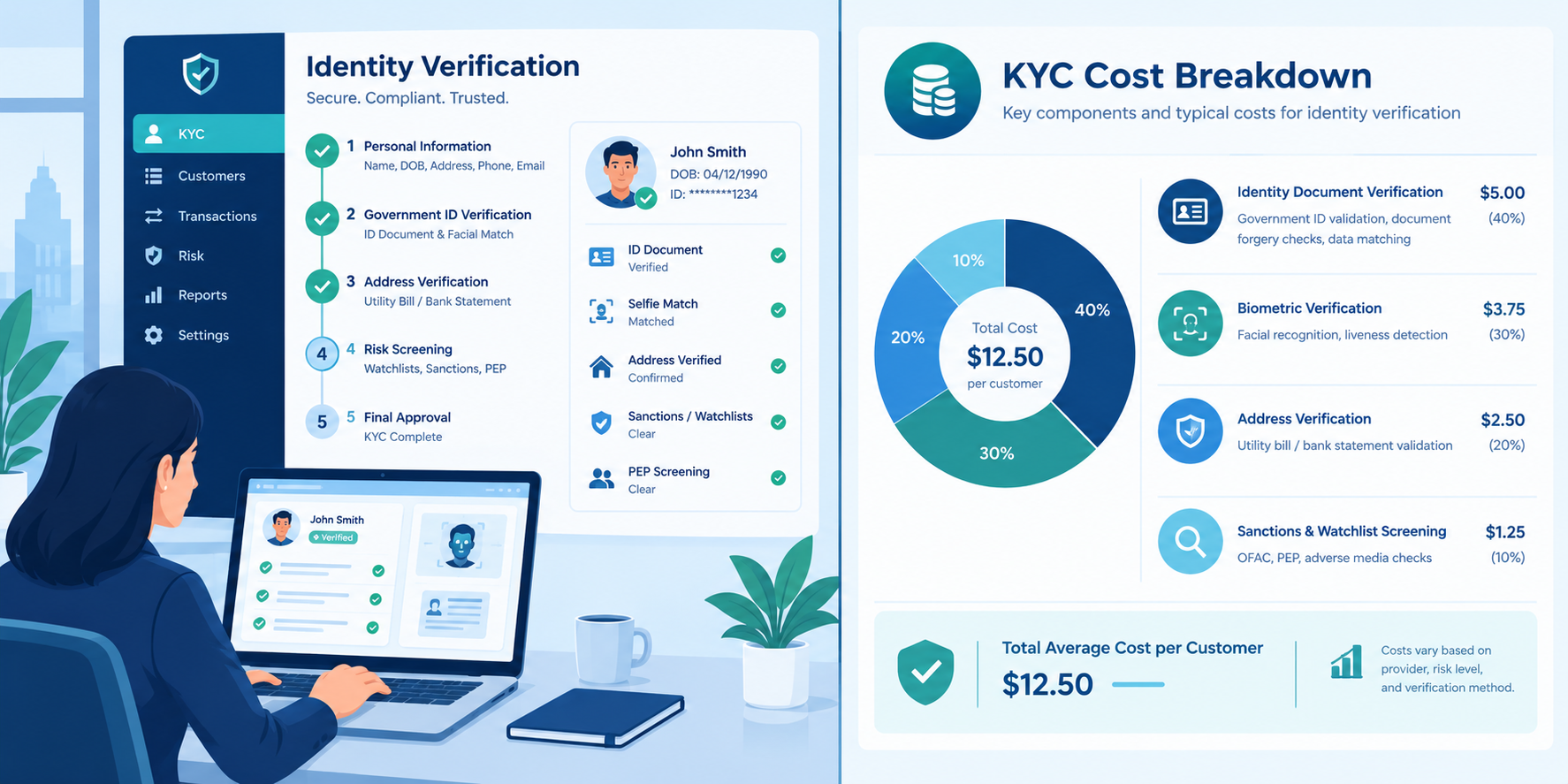
Know Your Customer (KYC) compliance is not a single expense. It is a program with multiple cost layers that compound as your user base grows:
- Identity verification technology — the vendor or in-house tools that verify who your customers are
- Ongoing customer due diligence — periodic re-verification and enhanced due diligence for higher-risk customers
- Watchlist and sanctions screening — real-time checks against OFAC, PEP, and adverse media databases
- Manual review operations — the human review queue that catches what automation cannot
- Compliance team and BSA officer — the people managing your program
- Audit and examination costs — external audits and regulatory examination preparation
- Regulatory penalties — the cost of getting it wrong, which can dwarf all the above
The Build vs. Buy Decision
The first structural decision that determines your KYC cost is whether to build your own identity verification infrastructure or buy it from a vendor.
Buying from a Vendor (Most Common for Fintechs)
The vast majority of fintechs buy KYC infrastructure from third-party identity verification vendors. These platforms handle document verification, biometric checks, database lookups, and watchlist screening. Common providers include Alloy, Socure, Persona, Jumio, Onfido, and others.
Vendor pricing models vary significantly:
- Per-verification pricing — you pay a fee each time a user is verified. This model is predictable at low volume but expensive at scale. Per-verification rates vary based on the vendor, the checks included (document + biometric + database vs. database-only), and your contracted volume.
- Monthly subscription + usage — a base platform fee plus a per-verification rate above a volume threshold. Common for mid-stage fintechs with predictable verification volumes.
- Volume-tiered pricing — per-verification rate decreases as monthly verification volume increases. Favorable for high-growth companies.
- Annual enterprise contracts — flat annual fee for committed verification volume, with overages charged separately. Lowest per-unit cost but requires volume predictability.
The total vendor cost depends heavily on your customer onboarding rate, your re-verification cadence for existing customers, and the depth of checks your risk profile requires.
Building In-House
Building KYC infrastructure in-house — directly integrating with data providers, building document verification, and managing your own watchlist databases — is generally only cost-effective for very high-volume operations where per-verification vendor fees become prohibitive. For most fintechs, the upfront engineering cost and ongoing maintenance burden of in-house infrastructure far exceeds vendor costs, particularly when regulatory requirements evolve and require continuous updates.
The Hidden Costs of KYC
Vendor fees are the visible cost of KYC. These are the costs founders consistently underestimate:
Manual Review Operations
No automated KYC system has a 100% straight-through processing rate. Documents get rejected, biometric checks fail on edge cases, and adverse media hits require human judgment. The size of your manual review queue — and the cost of staffing it — depends on your product, your customer demographics, and how aggressively you tune your risk thresholds.
Manual review is where KYC cost scales in ways that are hard to predict. Companies operating in higher-risk customer segments or international markets consistently report manual review as their largest KYC cost item.
Enhanced Due Diligence for High-Risk Customers
Standard KYC handles most customers. Enhanced due diligence (EDD) — required for higher-risk customers, politically exposed persons (PEPs), and customers from high-risk jurisdictions — costs significantly more per customer. The depth of additional documentation, source of funds verification, and ongoing monitoring required for EDD customers drives a disproportionately higher cost per account.
Ongoing Monitoring and Re-Verification
KYC is not a one-time event at onboarding. Your compliance program must monitor existing customers on an ongoing basis — screening against updated OFAC sanctions lists and adverse media, and re-verifying customers when their risk profile changes. The cost of ongoing monitoring is proportional to your active customer base and your re-verification frequency.
Compliance Team and BSA Officer
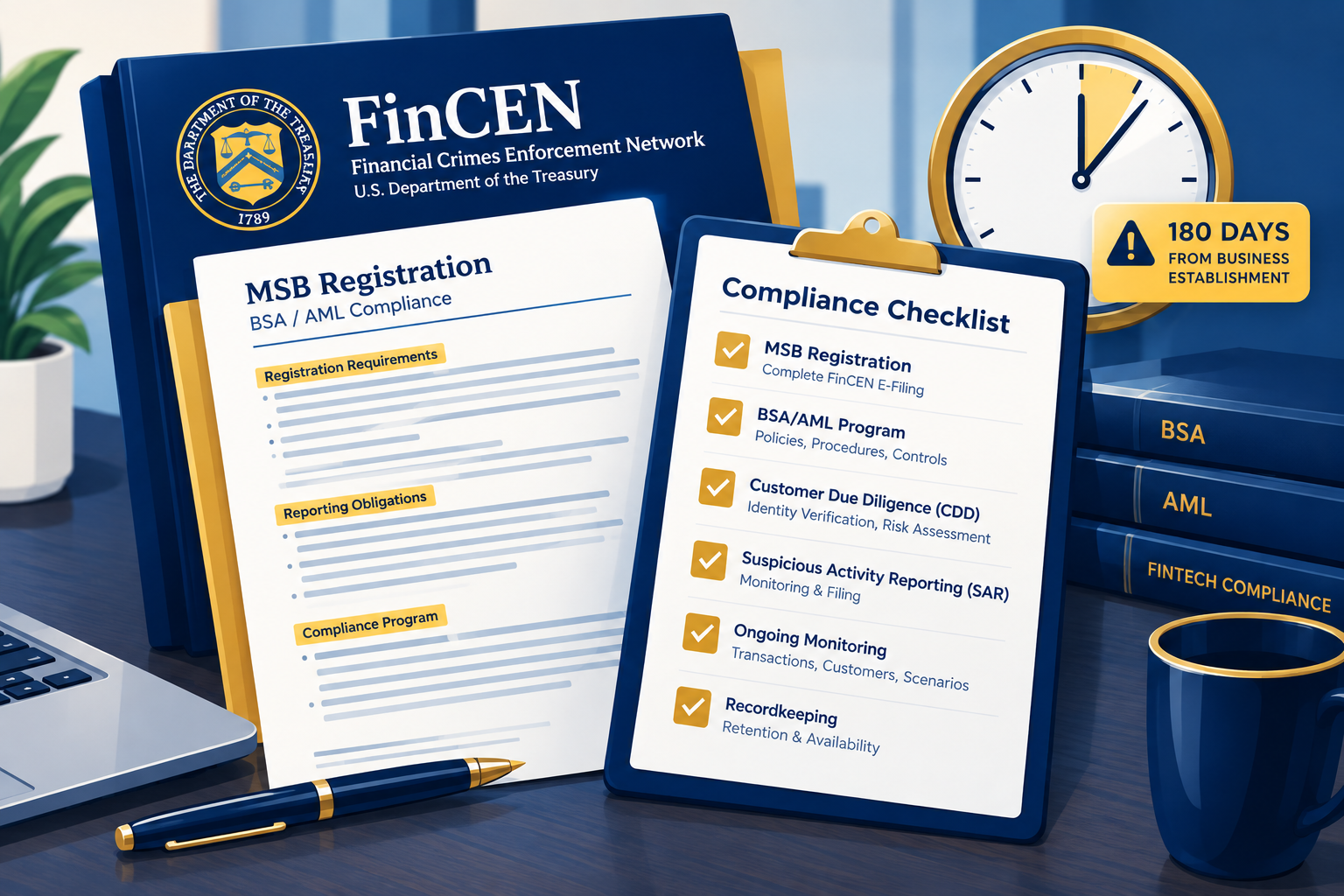
Under Bank Secrecy Act requirements, your AML/BSA compliance program must be managed by a qualified BSA officer. This is a people cost that is fixed regardless of transaction volume at lower volumes and then scales as your program grows in complexity.
False Positives and Abandonment
Overly aggressive KYC friction — too many verification steps, too many document requests — creates customer abandonment at onboarding. The economic cost of a lost customer is a real KYC cost that rarely appears in compliance budgets. Tuning your risk thresholds to minimize false positives without compromising compliance is an ongoing optimization exercise with direct revenue implications.
KYB vs. KYC: The Business Verification Cost Layer
If your product serves businesses rather than consumers, Know Your Business (KYB) verification adds another cost layer. KYB involves verifying the business entity, its ownership structure, and the beneficial owners behind it. The depth of this verification — and the cost — depends on entity complexity. Verifying a sole proprietorship is straightforward; verifying a multi-layered LLC with complex beneficial ownership requires significantly more data and review time.
What Drives Cost Variation Between Fintechs
Two fintechs at the same transaction volume can have dramatically different KYC costs based on these factors:
- Risk profile of customer base — higher-risk customers require deeper verification and more ongoing monitoring
- Geographic footprint — international customers require additional documentation types, language processing, and cross-border database checks
- Product type — a crypto exchange has materially higher KYC requirements than a payroll fintech
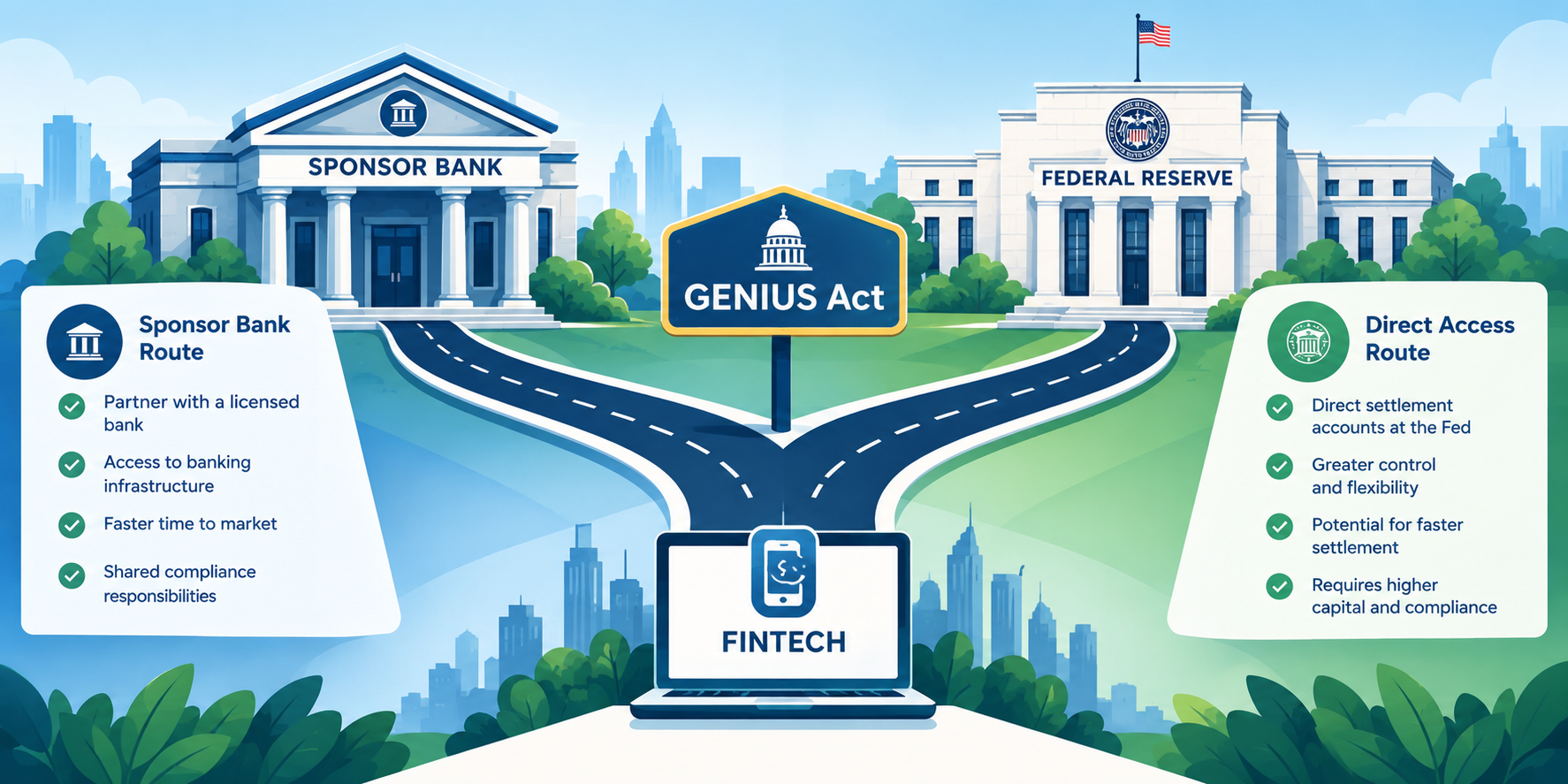
- Regulatory requirements — money services businesses face stricter requirements than companies operating under bank partnerships
- Straight-through processing rate — a well-tuned KYC flow with high STP reduces manual review costs significantly
How to Right-Size Your KYC Budget
Rather than benchmarking against competitors (whose risk profiles and customer bases differ), size your KYC program against your own risk framework:
- Segment your customers by risk tier — not every customer needs the same depth of verification. Build a tiered KYC program proportional to risk.
- Model your verification volume — project monthly new customer onboarding, expected re-verification cadence, and the estimated split between automated and manual review.
- Get vendor quotes at your projected volume — most vendors negotiate enterprise pricing for committed volumes. Get quotes at your 6-month and 12-month projected volumes, not just your current rate.
- Separate recurring costs from one-time implementation — vendor integration, policy development, and staff training are one-time costs. Model them separately from ongoing per-verification fees.
- Budget for the cost of non-compliance — include the cost of an annual independent AML audit, examination readiness, and a compliance reserve in your budget. The alternative — regulatory penalties — is far more expensive.
The Compliance Cost That Pays for Itself
KYC done right does more than satisfy regulators. A robust onboarding flow that accurately identifies customers reduces fraud, reduces chargebacks, and reduces the cost of account remediation later. The operational cost of a well-designed KYC program is almost always lower than the cost of cleaning up fraud enabled by a weak one.
For fintechs operating under money transmitter licenses, your KYC program is also a core component of your AML compliance program — which state regulators will review during licensing and examination. A weak KYC program is a licensing risk, not just a fraud risk.
This article is for informational purposes only and does not constitute legal or compliance advice. KYC requirements vary by business model, regulatory status, and jurisdiction. Consult a compliance professional to design a program appropriate for your specific situation.
Talk to the ComplyOne team to get started.