A breakdown of every cost component in getting a money transmitter license — application fees, surety bonds, net worth requirements, and ongoing compliance — with a framework for budgeting your multi-state expansion.
Money Transmitter License Cost by State: What You'll Actually Pay (2026)
"How much does a money transmitter license cost?" is one of the most common questions fintech founders ask — and one of the hardest to answer precisely, because the honest answer is: it depends heavily on which states you're targeting.
MTL licensing is not a single purchase. It's a multi-component cost structure that includes upfront fees, capital requirements, bond premiums, and ongoing compliance infrastructure. Founders who budget only for the application fee routinely underestimate total cost by a factor of two or three.
This guide breaks down every cost component, explains what drives variation by state, and tells you exactly where to look up current figures for your target states.
The Four Cost Components of a Money Transmitter License
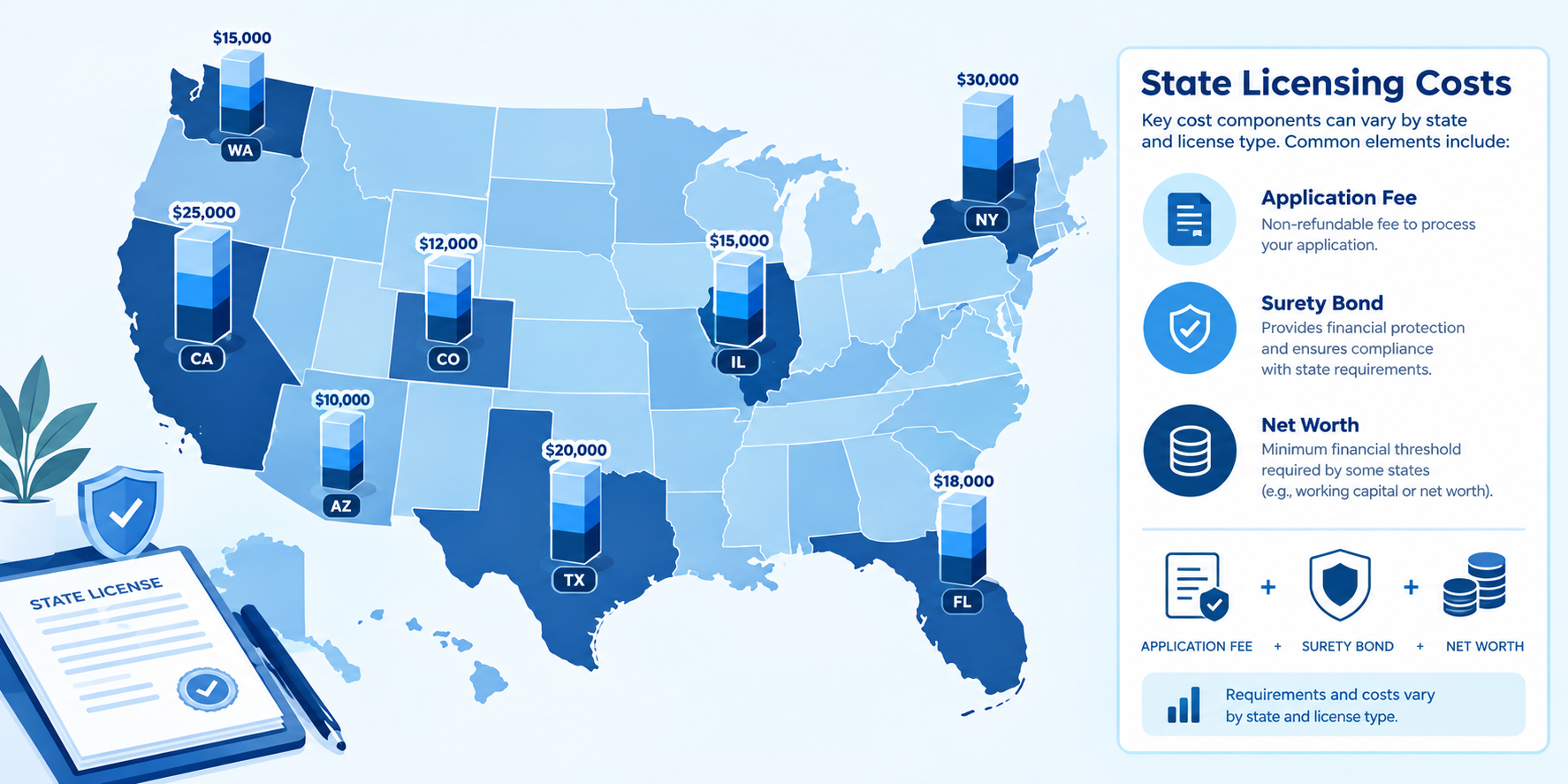
Every MTL involves four categories of cost. The weight of each varies dramatically by state.
1. Application Fee
The application fee is what you pay the state regulator to process your license application. It is typically non-refundable, regardless of whether your application is approved.
Application fees vary by state and are set by each state's money transmission statute. Some states charge a flat fee; others base it on the volume of transactions you expect to process. A handful of states adjust fees based on the number of states included in a coordinated multi-state application filed through NMLS.
Application fees are generally the smallest component of total MTL cost — but in states with large application fees, they are worth factoring into your sequencing decisions (i.e., which states to license first).
2. Surety Bond
A surety bond is a financial guarantee to the state that you will fulfill your obligations as a money transmitter. If your company fails to pay consumers or violates state law, the bond provides a mechanism for restitution.
Bond requirements are set by state statute and can vary significantly. Most states specify a minimum bond amount; some also require bonds that scale with transaction volume or the number of states you operate in. You do not pay the full bond amount — you pay an annual premium to a surety company, typically a percentage of the required bond amount based on your company's creditworthiness and risk profile.
For exact bond amounts required by each state, refer to the NMLS Resource Center and each state regulator's licensing checklist.
3. Net Worth Requirement
Most states require money transmitters to maintain a minimum net worth — meaning your company's assets must exceed its liabilities by at least a specified amount. Unlike the application fee or bond premium, this is not a payment you make to the state; it is a capital adequacy threshold your balance sheet must meet and maintain.
Net worth requirements vary substantially by state. Some states have minimal requirements; others set thresholds that can make early-stage licensing prohibitive. For early-stage startups, this is often the binding constraint on which states to target first.
Current net worth requirements are published in each state's money transmission act. The NMLS Resource Center provides licensing requirement summaries by state.
4. Ongoing Compliance Costs
Once licensed, the ongoing cost of staying licensed is often larger than the initial application cost over a multi-year horizon. Ongoing costs include:
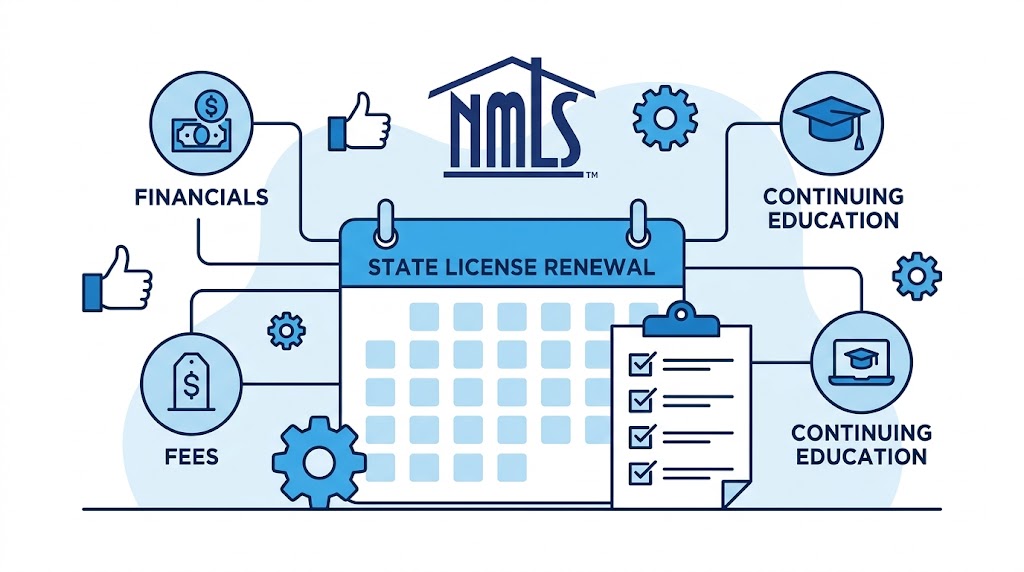
- Annual renewal fees — most states require annual or biennial license renewal, each with its own fee
- Annual bond premiums — paid each year to maintain your surety bond
- AML/BSA compliance program — technology, staff, and audit costs for your ongoing compliance program
- Transaction monitoring systems — software licensing or vendor costs
- Examination readiness — state examiners can audit licensed money transmitters; preparation takes time and resources
- Registered agent fees — in states where you do not have a physical presence
For a detailed breakdown of what states require on an ongoing basis, see our guide to money transmitter license renewal requirements by state.
What Drives Cost Variation Between States
Four factors determine why the same license costs dramatically more in one state than another.
Bond Amount Requirements
State surety bond minimums are the single largest driver of cost variation. Some states set bond minimums that are multiples of what others require. Since bond premiums are a percentage of the required amount, higher bond minimums mean higher annual premiums — and higher capital requirements if you choose to use a letter of credit or cash deposit in lieu of a third-party surety bond.
Transaction Volume Scaling
Several states scale their bond or fee requirements based on transaction volume. A startup processing small volumes may face a much lower cost threshold in these states than a growth-stage company processing hundreds of millions annually. As your volume grows, your bond obligation in these states can increase significantly.
Multi-State Application Coordination
The NMLS Multi-State Money Services Businesses Licensing Agreement allows applicants to file a coordinated multi-state application. Some states participating in this agreement offer reduced application fees for coordinated filings. This can meaningfully lower total upfront cost if you are targeting multiple states simultaneously.
Approval Timeline and Carrying Costs
States with longer approval timelines — some of which take 12–24 months — create indirect costs in the form of compliance team time, legal fees for application preparation, and delayed revenue from restricted operations while pending. For a comparison of fastest states for MTL approval and easiest states to get a money transmitter license, see our state comparison guides.
How to Budget for Multi-State Expansion
Most fintechs eventually need licenses in multiple states. Budgeting for multi-state expansion requires thinking about cost sequencing, not just cost totals.
Phase by Net Worth Feasibility
Start with states whose net worth requirements you can meet at your current stage. There is no benefit in applying for a license your balance sheet cannot support. Use net worth headroom as your primary filter for sequencing.
Stack Low-Cost States First
Early licensing in lower-cost states serves two purposes: it builds your compliance infrastructure and track record before tackling complex states, and it generates the revenue needed to fund higher-cost applications. States like Wyoming, North Dakota, and Montana are often used as starting points for this reason.
Budget for Cumulative Bond Premiums
By the time you are licensed in 10–15 states, your annual bond premium portfolio can represent a material recurring expense. Model this before committing to a broad multi-state filing strategy.
Account for Compliance Infrastructure
The biggest mistake founders make is budgeting only for filing costs. Your AML compliance program — including BSA officer, policies, transaction monitoring, and annual audits — must be in place before you can get licensed. Factor this in from day one.
Where to Find Exact Cost Figures for Your Target States
Because application fees, bond requirements, and net worth minimums are set by state statute and updated periodically, we do not publish specific dollar amounts that could become outdated. Instead, here are the authoritative sources for current figures:
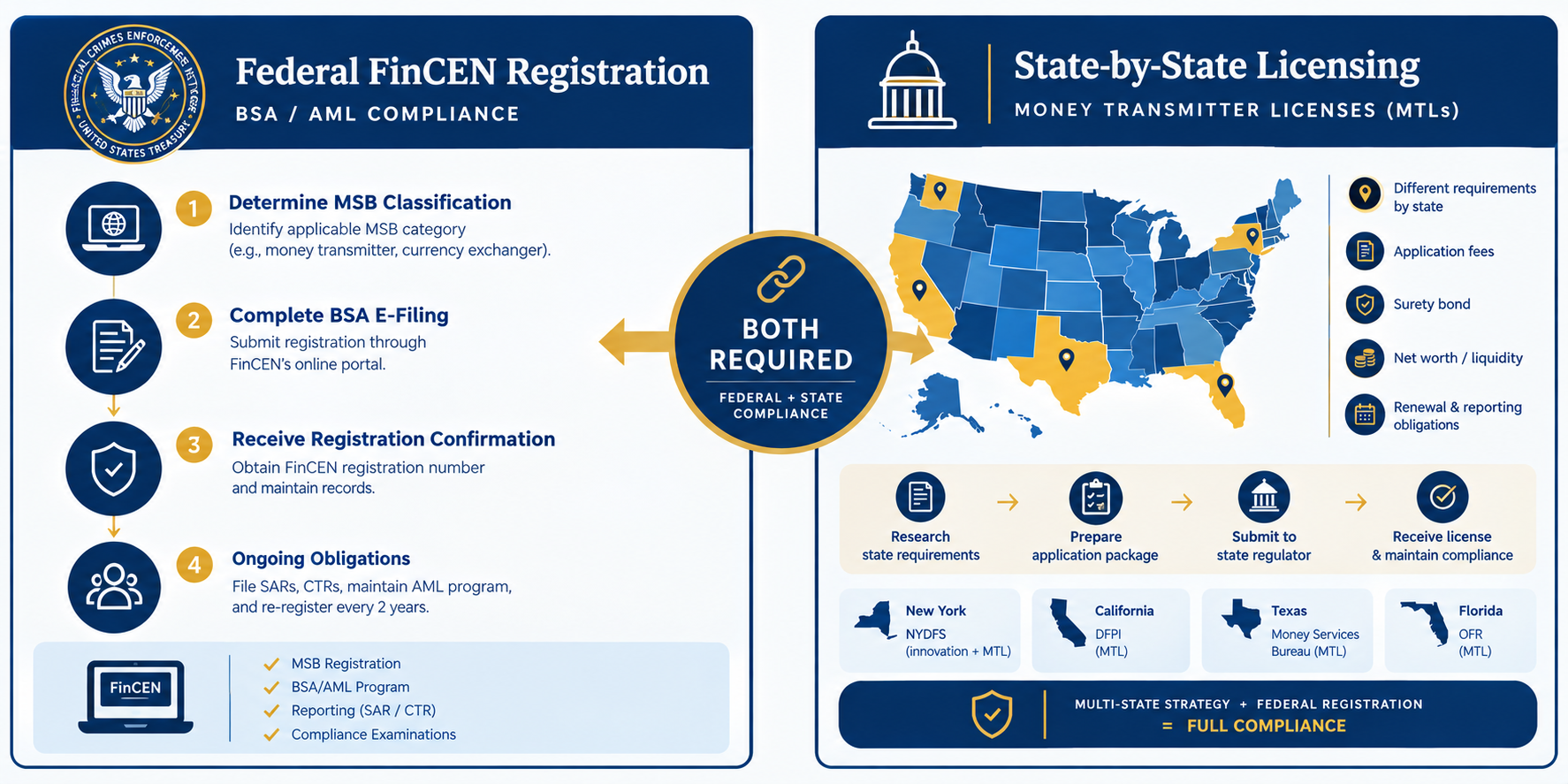
- NMLS Resource Center — mortgage.nationwidelicensingsystem.org — provides state-by-state licensing requirements, checklists, and fee schedules for all NMLS-participating states
- State regulator websites — each state's Department of Financial Institutions, Division of Banking, or equivalent publishes its money transmission licensing requirements directly
- NMLS Money Services Business state licensing page — provides a clickable map to each state's specific MSB licensing requirements
For a full overview of what each state requires across all licensing dimensions — not just cost — see our money transmitter license requirements by state guide.
Does Your Business Even Need a Money Transmitter License?
Before investing in the licensing process, confirm your business model actually triggers MTL requirements. Not all fintech companies need one. See our guide to who needs a money transmitter license for a business model–by–business model breakdown. For marketplace businesses specifically, see when does a marketplace need a money transmitter license.
The Hidden Cost: What Happens If You Get It Wrong
Operating as an unlicensed money transmitter in a state that requires a license carries penalties that dwarf the licensing cost itself — including fines, cease-and-desist orders, and in some cases criminal liability for individuals. The cost of not getting licensed in a required state is always higher than the cost of getting licensed.
For an honest look at MTL approval rates by state and what affects your application, see our breakdown of how different state regulators assess applicants.
This article is for informational purposes only and does not constitute legal or financial advice. MTL requirements change frequently. Always verify current requirements with the NMLS Resource Center and the relevant state regulator before filing.
Talk to the ComplyOne team to get started on your MTL licensing strategy.