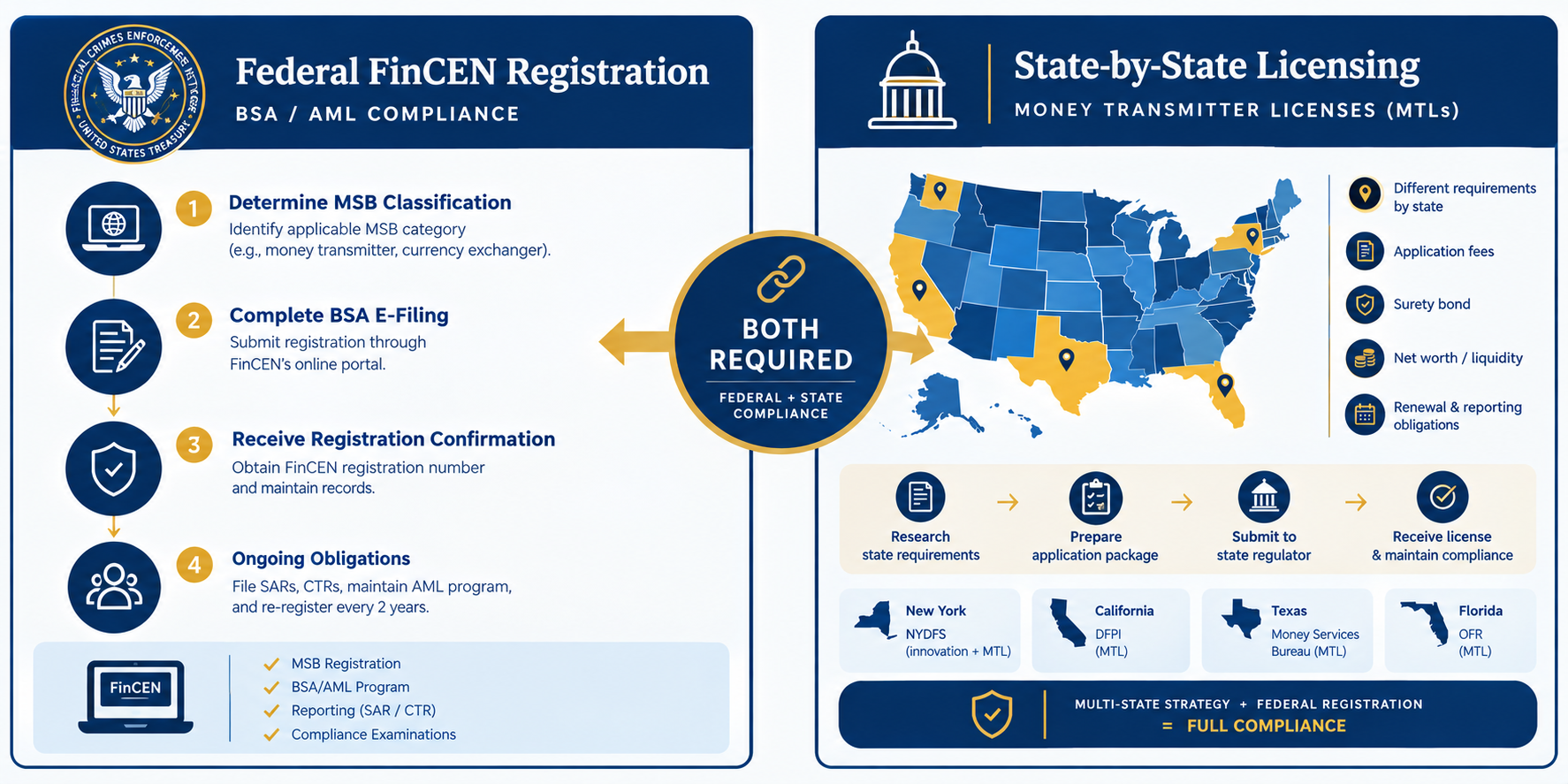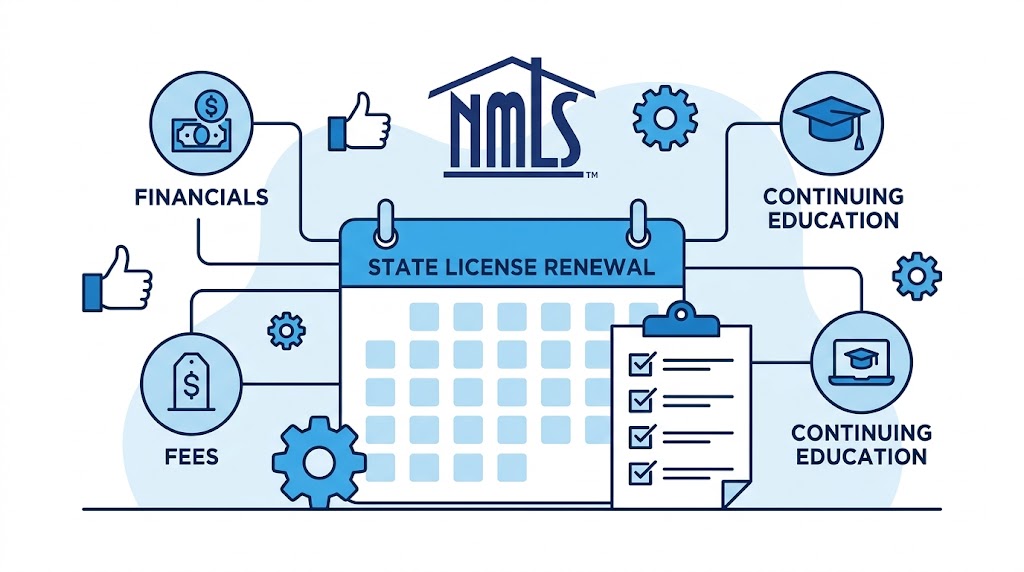
Money transmitter licenses don't last forever. Most states require annual renewal with updated financials, continuing education, and fee payments. This guide covers what renewal requires and how to stay compliant.
Money Transmitter License Renewal Requirements by State
Getting your money transmitter license (MTL) is only the beginning. Maintaining it year over year requires staying on top of renewal deadlines, updated financial documentation, fee payments, and ongoing reporting obligations. Missing a renewal deadline or filing incomplete renewal documentation can result in license expiration — which means you can no longer legally operate in that state until the license is reinstated.
This guide covers how MTL renewal works, what most states require, and how to stay on top of renewal obligations across multiple states.
How MTL Renewal Works
Most state money transmitter licenses are issued on a calendar-year basis and must be renewed annually. The majority of states process renewals through NMLS (Nationwide Multistate Licensing System), the same platform used for initial applications. See our guide on how to apply for a money transmitter license through NMLS.
The NMLS renewal window typically opens in November and requires renewal applications to be submitted before December 31 for the following license year. However, some states have earlier deadlines — and missing the NMLS renewal window means you're operating on an expired license until your state processes a late renewal or reinstatement.
A handful of states — including New York (which uses its own DFS portal rather than NMLS for BitLicense and some money transmitter activities) — have different systems or timelines. Always verify the specific renewal process for each state where you hold a license.
Standard Annual Renewal Requirements
While requirements vary by state, most annual MTL renewals through NMLS include the following components:
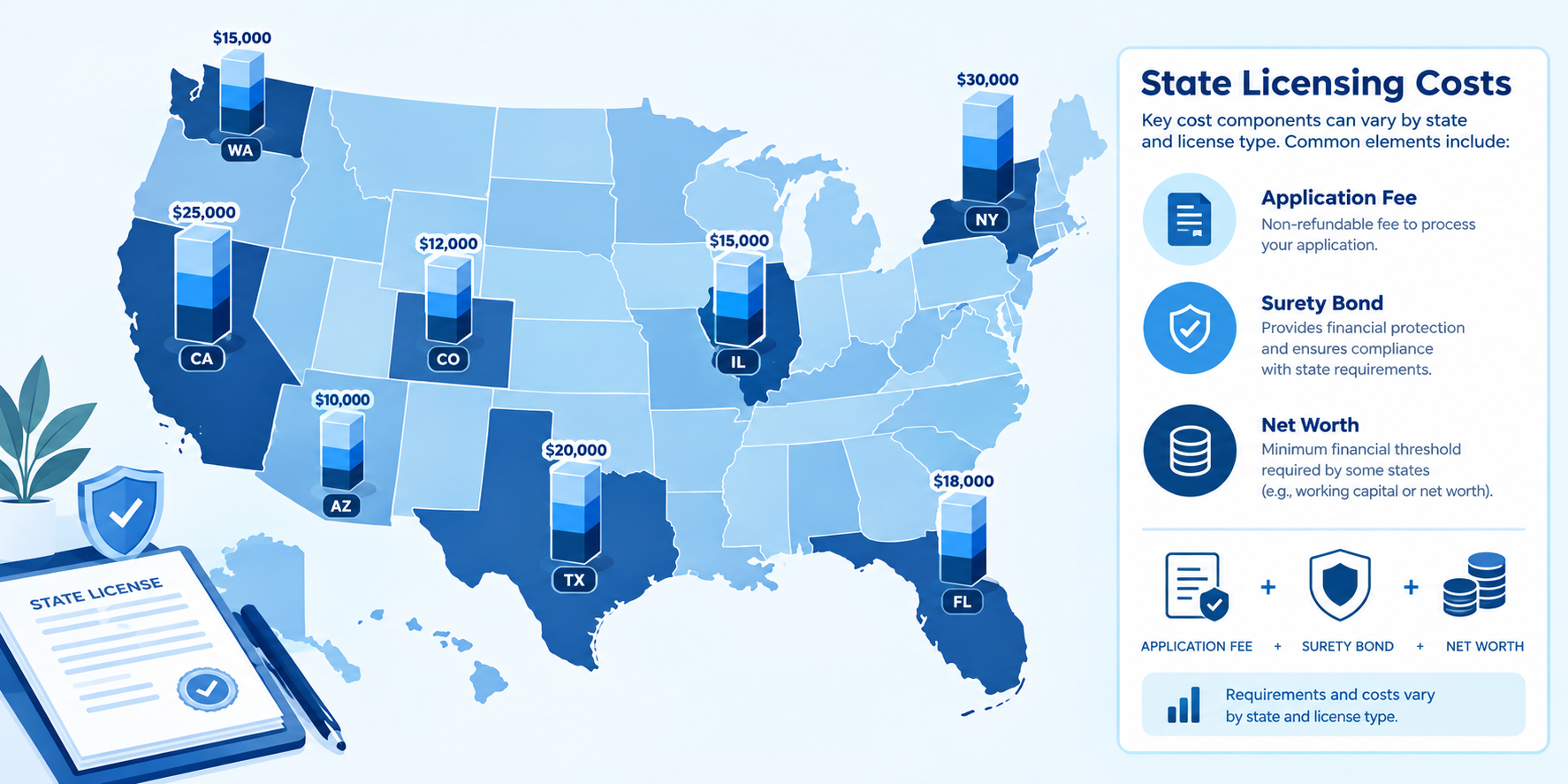
Renewal Fee
Each state charges an annual renewal fee. Fee amounts vary significantly by state. For current fee schedules, check the NMLS Resource Center at mortgage.nationwidelicensingsystem.org and your specific state regulator's fee schedule — do not rely on third-party sources for dollar amounts, as fees change.
Updated Financial Statements
Most states require submission of updated financial statements as part of annual renewal. Requirements vary:
- Some states require audited financial statements (prepared by a CPA)
- Some states accept reviewed or compiled financial statements
- Some states require year-end balance sheet and income statement only
- Some states require a net worth certification confirming you continue to meet the minimum net worth requirement
For states that require audited financials, coordinate with your auditor well in advance — audits take time and the renewal window is short.
Updated Surety Bond or Net Worth Evidence
Your surety bond must remain active and at or above the required coverage amount. Bond requirements may increase based on transaction volume growth. Some states require you to submit updated bond documentation annually; others verify directly with the bond issuer. Review your bond coverage each renewal cycle to ensure it still meets the state's current requirement. For more on surety bonds, see our guide on MTL surety bond requirements by state.
Updated Authorized Delegate List
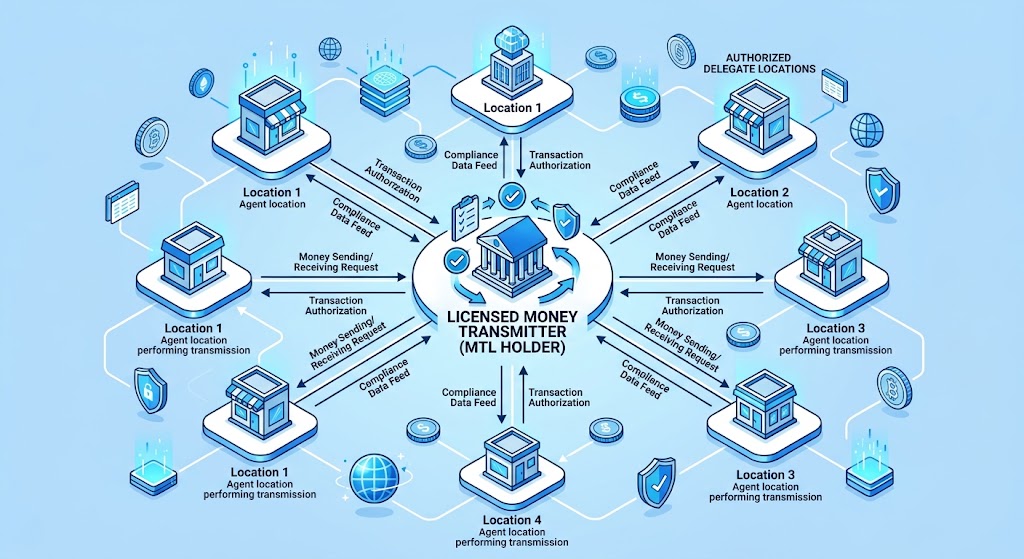
If you operate through authorized delegates (agents), most states require you to maintain an accurate list of delegates through NMLS. Annual renewal is a good time to audit and update this list, removing delegates that are no longer active and adding new ones that were onboarded during the year. See our guide on what is an authorized delegate under a money transmitter license.
Disclosure of Material Changes
Material changes to your business — ownership changes, new products, new payment methods, significant adverse legal or regulatory events — must typically be reported to state regulators, often within 30 days of the change. Annual renewal is not a substitute for in-year change reporting. However, renewal does require certifying that all previously reported information remains current or disclosing any changes that have occurred.
Officer and Control Person Updates
NMLS tracks the officers and control persons associated with your license. Renewals typically require verifying that officer and control person information is current, and background checks may be re-run if there are new control persons or if prior background check information has aged out.
Annual Reporting Requirements (Beyond Renewal)
In addition to the annual renewal itself, many states require separate annual reports that must be filed at different times during the year. These are distinct from the NMLS renewal and may include:
- Annual volume reports — reporting total dollar volume and transaction count of money transmission activity in the state during the prior year
- Annual financial reports — some states require a standalone annual financial filing separate from the NMLS renewal
- Consumer complaint reports — some states require an annual summary of consumer complaints received and resolved
These annual reporting deadlines vary by state and are easy to miss if you don't have a systematic compliance calendar. See our guide on MTL ongoing compliance requirements for a broader overview of post-licensing obligations.
States with Notable Renewal Requirements
New York
New York's BitLicense and money transmitter licensing programs have historically been among the most demanding in the country. NY operates through its own DFS system for some license types rather than NMLS. Annual financial filing requirements, examination obligations, and reporting are more extensive than most states.
California
California's Money Transmission Act (CFLL) requires extensive annual renewal documentation including audited financials and detailed volume reporting by payment category. California uses NMLS for renewal but has additional state-specific requirements.
Texas
Texas requires annual reporting of transmission activity volumes broken down by country. Texas also requires maintaining permissible investments that cover outstanding transmission obligations — these must be tracked and reported. See our guide on how to get a money transmitter license in Texas.
Florida
Florida requires an annual audit and detailed financial reporting. Florida's renewal process has reputational timelines for processing, so filing early is important to maintain a valid license without gaps. See our guide on how to get a money transmitter license in Florida.
How to Stay on Top of Multi-State Renewals
For companies licensed in multiple states, renewal management is a significant operational undertaking. Best practices include:
- Build a compliance calendar — map every renewal deadline, annual report due date, and quarterly filing deadline for each state. Review and update this calendar at the start of each year
- Start early — begin gathering renewal documentation (updated financials, bond renewals, officer confirmations) in Q3, well before the November NMLS window opens
- Assign ownership — designate a specific person or team responsible for renewal tracking. Renewal failures often happen because nobody owned the process
- Use NMLS renewal alerts — NMLS sends renewal reminders to license administrators; make sure the right person is set as your NMLS account administrator
- Track state-specific requirements separately — NMLS handles the platform submission, but each state's content requirements differ. Don't assume submitting through NMLS is sufficient without meeting each state's specific documentation requirements
What Happens If You Miss a Renewal Deadline?
If you fail to renew on time, your license will lapse. Operating under an expired license violates state law and can result in:
- Civil penalties and fines
- Cease and desist orders requiring you to suspend operations in the state
- Regulatory scrutiny that affects your standing in other states
- Reputational damage with banking partners and counterparties
Some states offer a grace period for late renewals; others do not. Reinstatement of an expired license may require going through a full application process again in some states. The safest approach is to treat renewal deadlines as hard stops, not soft targets.
Frequently Asked Questions
Do all states require renewal through NMLS?
Most states that participate in NMLS process money transmitter renewals through the platform. A small number of states use state-specific portals. Check the NMLS Resource Center for the current list of NMLS-participating states and their specific processes.
Can we renew early?
The NMLS renewal window typically opens in November. You can submit your renewal as soon as the window opens — earlier is better, both to avoid the last-minute rush and to ensure any issues with your application are resolved before the deadline.
What if our financial statements aren't ready in time for renewal?
This is a common challenge. If your audited financial statements won't be available before the renewal deadline, contact the state regulator proactively. Some states will accept a renewal submission with financials to follow, or grant extensions in limited circumstances. Never submit renewal without engaging the regulator if you have a documentation gap — silence is the worst option.
Do we need to renew in states where we have minimal transaction volume?
If you hold a license in a state, you need to renew it — regardless of volume. If you have genuinely zero activity in a state and no plans to operate there, you may want to voluntarily surrender the license. However, this is a strategic decision that should be made carefully, as reapplying later is expensive and time-consuming.
Disclaimer: This article is for informational purposes only and does not constitute legal or compliance advice. MTL renewal requirements vary by state and change over time. Always verify current requirements directly with NMLS and your state regulators, or consult a qualified compliance professional.
Talk to the ComplyOne team to get started.