An authorized delegate is a third party that conducts money transmission on behalf of a licensed money transmitter. Learn what this means, how it works, and what compliance obligations it creates.
What Is an Authorized Delegate Under a Money Transmitter License?
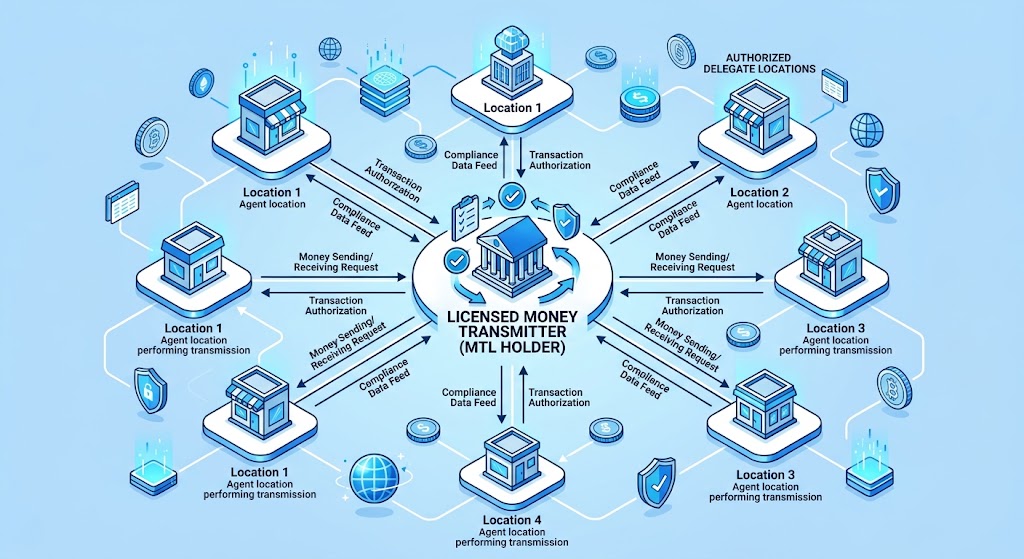
When a licensed money transmitter wants to expand its services through third-party locations or agents — rather than through its own employees and physical offices — it typically does so through authorized delegates. An authorized delegate (sometimes called an agent) is a person or business authorized by a licensed money transmitter to conduct money transmission activities on its behalf.
Understanding the authorized delegate relationship is important both for licensed money transmitters looking to expand their distribution network and for businesses being asked to serve as authorized delegates for another company's license.
What Is an Authorized Delegate?
An authorized delegate is a third party — typically a retail location, agent network, or business — that the licensed money transmitter has authorized to offer money transmission services under the transmitter's license. The delegate operates under the umbrella of the transmitter's license rather than holding its own standalone license.
Examples of authorized delegate arrangements include:
- Convenience stores, check cashing locations, or grocery stores that offer wire transfer or money order services on behalf of a national money transmitter (Western Union, MoneyGram, and similar companies pioneered this model)
- A regional bank or credit union offering a fintech company's payment product to its customers under the fintech's license
- A retail franchise network distributing a licensed money transmitter's prepaid card or payment product
- An agent network of individual locations offering international remittance services under a single transmitter's license
How Does the Authorized Delegate Relationship Work?
The licensed money transmitter (the principal) is fully responsible for the conduct of its authorized delegates. If a delegate violates state law or the transmitter's compliance policies, the transmitter bears regulatory liability. This responsibility makes delegate oversight a critical compliance function for any licensed transmitter with an agent network.
The relationship is governed by an authorized delegate agreement — a contract between the transmitter and the delegate that sets out the scope of permitted activities, compliance requirements the delegate must follow, training obligations, reporting requirements, and termination conditions.
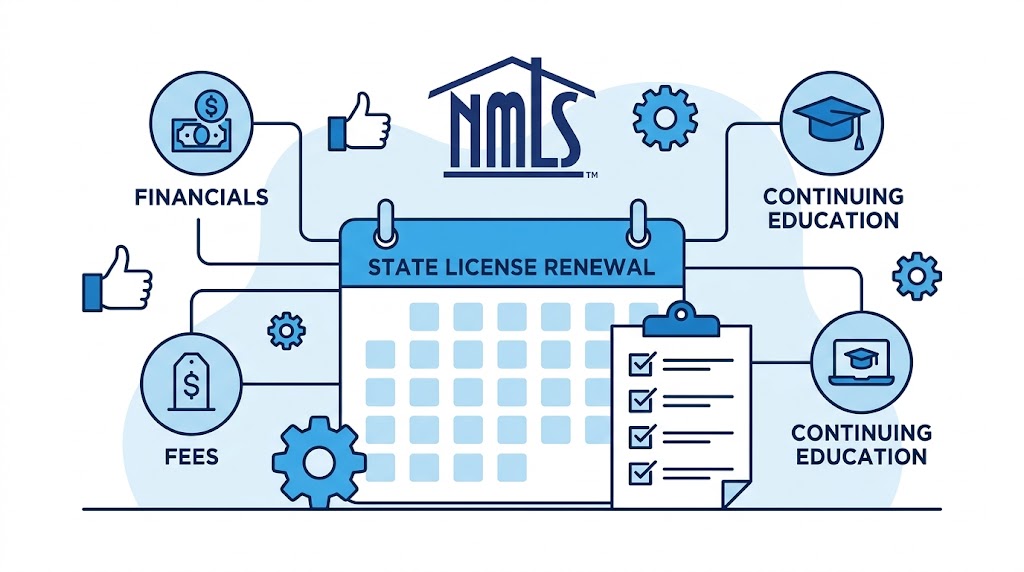
Most states require the money transmitter to register or list its authorized delegates with the state regulator, typically through NMLS. The money transmitter is responsible for maintaining an accurate and current delegate list. See our guide on MTL renewal requirements by state for how delegate list maintenance fits into the annual renewal process.
Do Authorized Delegates Need Their Own License?
Generally, no — operating as an authorized delegate of a licensed money transmitter does not require the delegate to hold its own money transmitter license, provided the delegate's activities are within the scope of what the principal's license permits and the arrangement complies with state law.
However, this depends on:
- The specific state — a few states require delegates to register separately even when operating under a principal's license
- The scope of activities — if the delegate is conducting money transmission activities beyond what the principal's license covers, those activities may require separate licensing
- Whether the delegate holds funds independently — if a delegate holds customer funds in its own accounts rather than transmitting them directly on the principal's behalf, licensing analysis changes
This is a frequently misunderstood area. If you're being asked to serve as an authorized delegate and you're unsure whether you also need your own license, that's a question worth analyzing carefully. See our guide on who needs a money transmitter license for the broader licensing framework.
Compliance Obligations for Licensed Transmitters with Authorized Delegates
If you are the licensed money transmitter with an authorized delegate network, you have significant compliance obligations beyond just signing delegate agreements:
Due Diligence Before Onboarding
Before authorizing a delegate, most states require — and best practice demands — that you conduct due diligence on the potential delegate. This includes background checks on the delegate entity and its principals, verification that the delegate can meet your compliance requirements, and assessment of the delegate's risk profile.
Ongoing Monitoring and Oversight
You are responsible for monitoring your delegates' compliance on an ongoing basis. This typically includes periodic site visits or remote audits, transaction monitoring for suspicious activity at delegate locations, review of delegate sales volume and patterns, and investigation of consumer complaints involving delegate locations.
Training Requirements
Many states require that authorized delegates receive training on AML/BSA compliance, consumer protection, and the applicable state regulations. The licensed transmitter is responsible for providing this training and documenting that delegates have completed it. See our guide on AML compliance program requirements for what these programs must cover.
Delegate List Maintenance and Reporting
Most states require the licensed transmitter to maintain an accurate, current list of all authorized delegates and to update that list when delegates are added or terminated. Changes must typically be reported to the state regulator within a specified time period — often 30 days. Failure to maintain and report an accurate delegate list is a common compliance violation. For delegate list specifics by state, check the NMLS Resource Center at mortgage.nationwidelicensingsystem.org and your specific state regulator's requirements.
Termination Procedures
When a delegate relationship ends — whether for cause or for business reasons — the transmitter must properly terminate the authorization and notify the state. Leaving a terminated delegate on your active list, or failing to deauthorize them properly, creates compliance exposure.
Compliance Obligations for Authorized Delegates
If you are operating as an authorized delegate, you also have compliance obligations — primarily those set out in your agreement with the licensed transmitter, plus applicable state law requirements for delegates. These typically include:
- Following the transmitter's AML/BSA policies and procedures
- Completing required training
- Maintaining required records
- Reporting suspicious activity to the transmitter
- Complying with all applicable consumer protection requirements
- Cooperating with audits and examinations
Even though you are operating under the transmitter's license, you can still face direct regulatory action for violations committed at your location.
Authorized Delegate vs. Agent of Payee
The "agent of payee" concept is related but distinct. The agent of payee exemption refers to a payment flow structure where a business receiving a payment on behalf of a payee (the merchant or seller) is deemed to have completed the payment once the funds reach the agent — which may exempt the arrangement from money transmission licensing. This is a payment flow classification, not an authorized delegate relationship. See our guide on when a marketplace needs a money transmitter license for how the agent of payee concept applies to marketplaces.
Frequently Asked Questions
Can a fintech without its own MTL use another company's license by becoming an authorized delegate?
Potentially, yes — but the analysis is fact-specific and depends on what the fintech is actually doing. If the fintech is genuinely acting as an agent of the licensed transmitter within the scope of that license, it may not need its own license. However, if the fintech is the actual service provider and the arrangement is structured as an authorized delegate relationship primarily to avoid licensing, regulators may look through the structure. The key question is who bears the customer relationship and who controls the funds flow.
How many authorized delegates can a licensed money transmitter have?
There is no statutory cap on the number of authorized delegates in most states. However, the more delegates you have, the more significant your oversight and monitoring obligations become. Large delegate networks require robust compliance infrastructure — technology, staffing, and processes — to manage effectively.
What happens to my authorized delegates if my license is revoked or surrendered?
If your license is revoked or you voluntarily surrender it, your authority to operate authorized delegates in that state ends as well. Delegates who were conducting money transmission under your license must cease those activities until they either obtain their own license or become authorized delegates of another licensed transmitter.
Disclaimer: This article is for informational purposes only and does not constitute legal or compliance advice. Authorized delegate requirements vary by state and change over time. Always verify current requirements directly with NMLS and your state regulators, or consult a qualified compliance professional.
Talk to the ComplyOne team to get started.