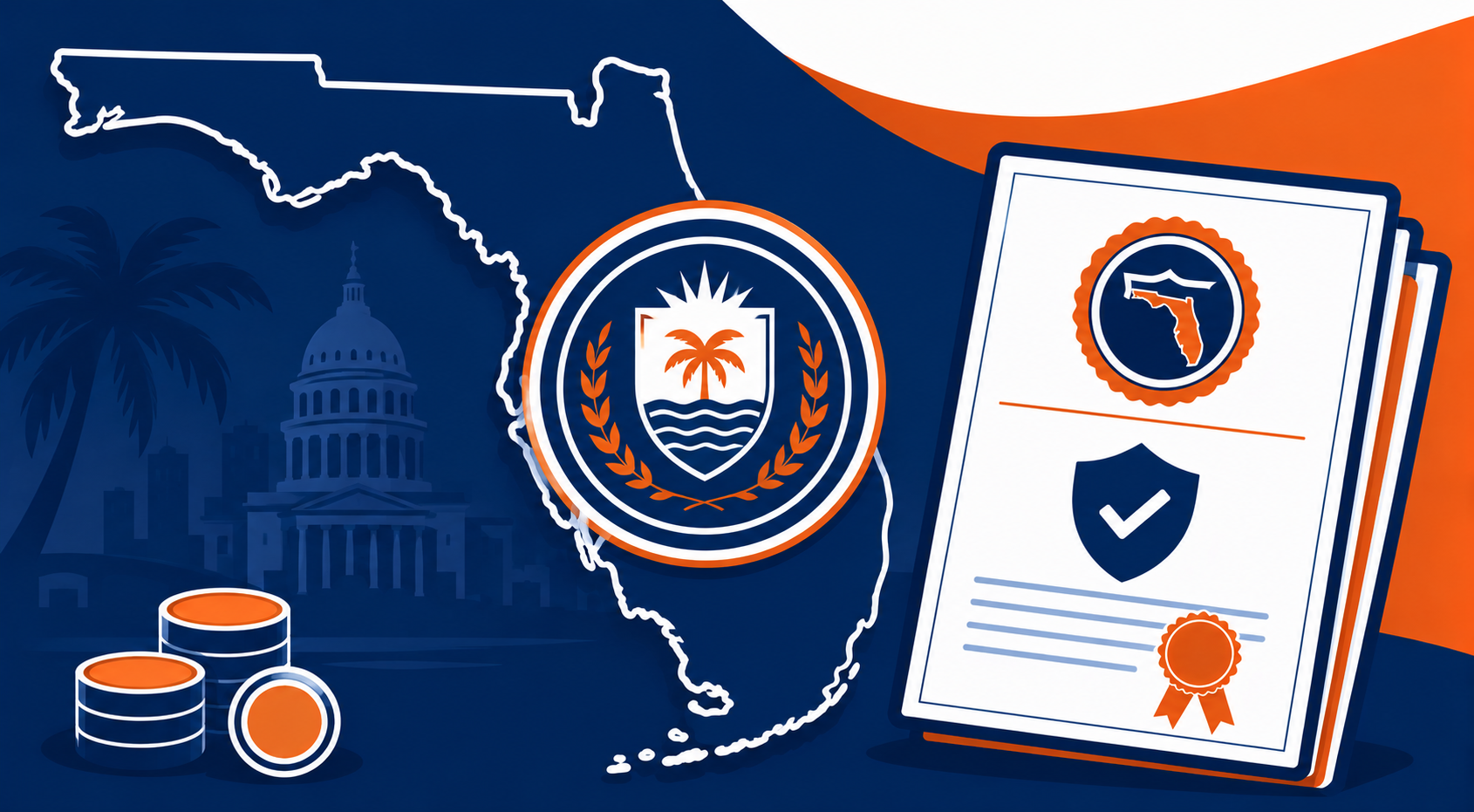
Florida money transmitter licensing is administered by the Office of Financial Regulation. Here is what Florida requires, what the application involves, how long it takes, and how to prepare.
How to Get a Money Transmitter License in Florida
Florida is a high-priority state for most fintech money transmitter license programs. With a large and diverse population, significant remittance activity, and active regulatory enforcement against unlicensed money transmitters, Florida licensing is typically addressed in the first phase of any national licensing program.
Who Regulates Money Transmitters in Florida
Money transmitter licensing in Florida is administered by the Florida Office of Financial Regulation (OFR) under the Florida Money Transmitters Act. Applications are filed through the Nationwide Multistate Licensing System.
Florida has been active in enforcement against unlicensed money transmitters and has a dedicated financial enforcement division. Operating in Florida without a required license creates meaningful enforcement risk.
Florida Money Transmitter License Requirements
Business documentation — legal name, all DBA names, formation documents, EIN, certificate of good standing from the state of formation, and organizational chart showing all subsidiaries and affiliates.
Principal background information — for all officers, directors, and owners above 10% ownership, Florida requires personal financial statements, background disclosures covering regulatory history and criminal history, and fingerprints for background investigation.
Financial documentation — audited financial statements for the most recent fiscal year, evidence of minimum net worth meeting Florida's requirement, and a surety bond in the required amount.
Compliance program documentation — written AML program, AML risk assessment, KYC and CDD procedures, compliance officer identification and qualifications, and training program description.
Business plan — description of your business model, Florida customer base, projected transaction volumes, payment processing infrastructure, and risk management approach.
Surety bond — Florida requires a surety bond as consumer protection. Bond amounts are set by the Florida Money Transmitters Act and vary based on transaction volume. See the full MTL requirements checklist for state-by-state comparison.
Processing Timeline
Florida OFR applications for money transmitter licenses typically process within 3 to 6 months for complete, well-prepared applications. For a broader sense of how long licensing takes across states, Florida compares favorably to more demanding jurisdictions. Well-prepared applications with no background issues or complex ownership structures generally move through the process smoothly.
Incomplete applications or those with principal background issues take longer. Florida may issue deficiency notices requesting additional information; prompt, complete responses keep the process moving.
Florida-Specific Considerations
Florida has significant remittance activity — particularly to Latin America and the Caribbean. Fintech companies operating in the remittance space should expect Florida examiners to focus on their AML program's treatment of cross-border transfer risk and their approach to higher-risk corridors. For context on what remittance compliance involves, see our dedicated guide.
Ongoing Obligations After Licensing
Licensed Florida money transmitters are subject to annual license renewal, updated financial reporting, periodic OFR examinations, and notification of material changes to business operations.
Frequently Asked Questions
Does Florida have specific requirements for crypto businesses?
Florida applies its Money Transmitters Act to cryptocurrency businesses that qualify as money transmitters. Florida has generally applied its existing money transmission framework to crypto rather than creating a dedicated crypto licensing regime. Crypto businesses should confirm the applicability of Florida's law to their specific model with qualified counsel.
How ComplyOne Helps
ComplyOne works with fintechs to prepare Florida OFR money transmitter license applications, build the compliance programs Florida requires, and manage the application process — through advisory services, compliance technology, or both.
Talk to the ComplyOne team to get started.
The information in this article is for general educational purposes and does not constitute legal or regulatory advice. Florida licensing requirements change. Verify current requirements with the Florida OFR or qualified legal counsel before applying.