Whether a payment processor needs a money transmitter license depends on exactly how funds flow through the business. Here is how to determine your licensing requirement and what the payment processor exemption actually covers.
Do Payment Processors Need a Money Transmitter License?
This is one of the most common and most consequential licensing questions in the payments industry. The answer is: it depends — specifically on how funds flow through your business and what legal role you play in the payment transaction.
Many payments companies assume they qualify for the payment processor exemption from money transmitter licensing. Many of them are wrong. And operating as an unlicensed money transmitter is a federal crime and a state law violation.
The Payment Processor Exemption — What It Actually Says
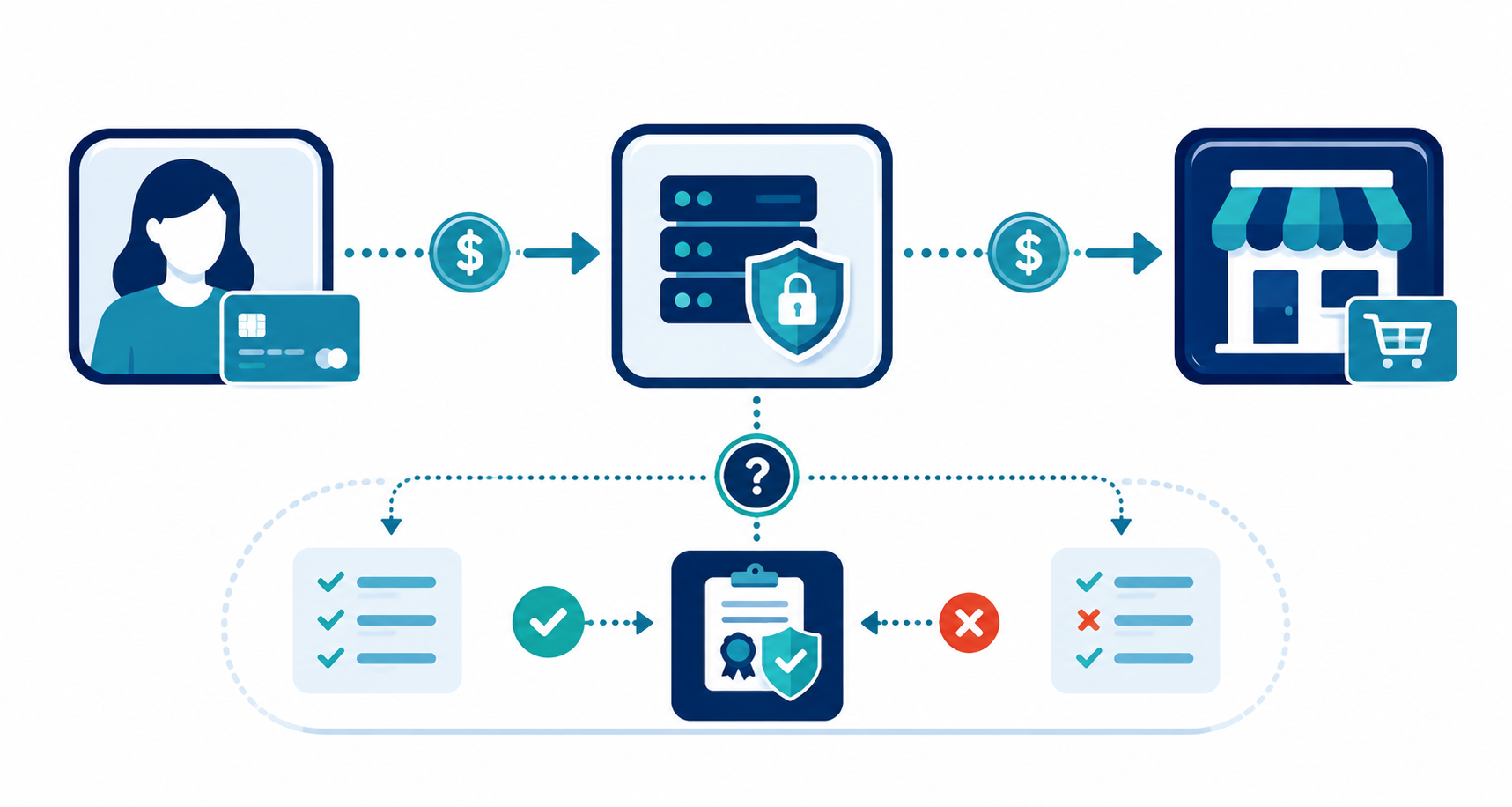
Most state money transmission laws and FinCEN's MSB regulations include some form of an exemption for payment processors. The basic concept is that a business that processes payments as an agent of a payee — facilitating the movement of funds for the purchase of goods and services — may not be classified as a money transmitter.
The exemption has several required elements. The processor must be acting as an agent of the payee — the merchant — not as a principal holding funds on behalf of consumers or third parties. There must be an established relationship between the processor and the merchant payee. The payment is specifically for the purchase of goods or services. The consumer has received or will receive the goods or services in exchange for the payment.
When all of these elements are present, the payment processor may qualify for the exemption.
When the Exemption Does NOT Apply
The exemption fails to apply — and money transmitter license is likely required — in several common situations.
You hold consumer funds independently of a specific merchant transaction. If your platform maintains consumer balances, allows consumers to store funds in a wallet, or holds funds for any period beyond the specific payment transaction, you are not acting as a payment processor under the exemption.
Funds flow between consumers rather than from consumer to merchant. Peer-to-peer payments between individual users are not payment processing under the exemption — they are money transmission.
You take a principal position in the transaction. If your business takes possession of funds as a principal and then remits to the merchant — rather than acting purely as the merchant's agent — you may be a money transmitter.
You process payments without an established merchant relationship. The exemption requires an established relationship with the merchant payee. Facilitating payments to unknown or unverified payees does not qualify.
You process cryptocurrency. The payment processor exemption as traditionally applied to fiat transactions does not straightforwardly apply to cryptocurrency transactions, which are subject to separate FinCEN guidance.
How to Determine Your Licensing Status
The determination of whether your specific payments business qualifies for the exemption or requires money transmitter licensing requires legal analysis of your specific business model — how funds actually flow, what your legal relationships with merchants and consumers are, and how the applicable state laws define the exemption.
General rules are not sufficient. The payment processor exemption is applied differently by different states. Some states define it narrowly. Others have broader definitions. A business that qualifies for the exemption in one state may not qualify in another.
Seek qualified legal counsel with payments regulatory expertise before relying on the exemption as the basis for not obtaining money transmitter licenses. Learn more about who needs a money transmitter license and money transmitter licensing requirements.
What Happens If You Are Wrong
If you are treating your business as a payment processor exempt from money transmitter licensing and that determination is incorrect, you are operating as an unlicensed money transmitter. The consequences include cease and desist orders from state regulators requiring you to stop accepting funds from state residents, civil money penalties for unlicensed operation, potential criminal exposure in states where unlicensed money transmission is a criminal offense, termination of sponsor bank and payment network relationships, and reputational consequences from public enforcement actions.
Frequently Asked Questions
Is a payment facilitator different from a payment processor for licensing purposes?
Payment facilitators — businesses that aggregate merchant accounts under a master merchant agreement — present a more complex licensing analysis than traditional payment processors. Whether a payment facilitator qualifies for the payment processor exemption depends on the specific structure of the arrangement and how funds flow. Many payment facilitators are classified as money transmitters, not payment processors, and require licensing accordingly.
Does using Stripe or another licensed processor eliminate my licensing obligation?
Using a licensed processor for your payment infrastructure does not eliminate your independent licensing obligation if your business itself constitutes money transmission. If your platform independently qualifies as a money transmitter — because you hold consumer funds, facilitate P2P transfers, or operate outside the payment processor exemption — you need your own licenses regardless of which processor you use.
How does the payment processor exemption apply to marketplace platforms?
Marketplace platforms that hold payments from buyers pending seller delivery, then release funds to sellers, often do not qualify for the payment processor exemption because they are holding funds independent of a specific goods-and-services transaction in the traditional sense. Whether a specific marketplace structure requires money transmitter licensing depends on the detailed facts of how funds flow and what legal relationships exist.
How ComplyOne Helps
ComplyOne helps payments companies determine their licensing status, navigate the payment processor exemption analysis, and build the compliance programs that licensing requires — through advisory services, compliance technology, or both. We can also help with AML compliance for payments and your overall licensing strategy.
Talk to the ComplyOne team to get started.
The information in this article is for general educational purposes and does not constitute legal or regulatory advice. Licensing requirements vary significantly by state and business model. Consult qualified legal counsel for a determination specific to your business.