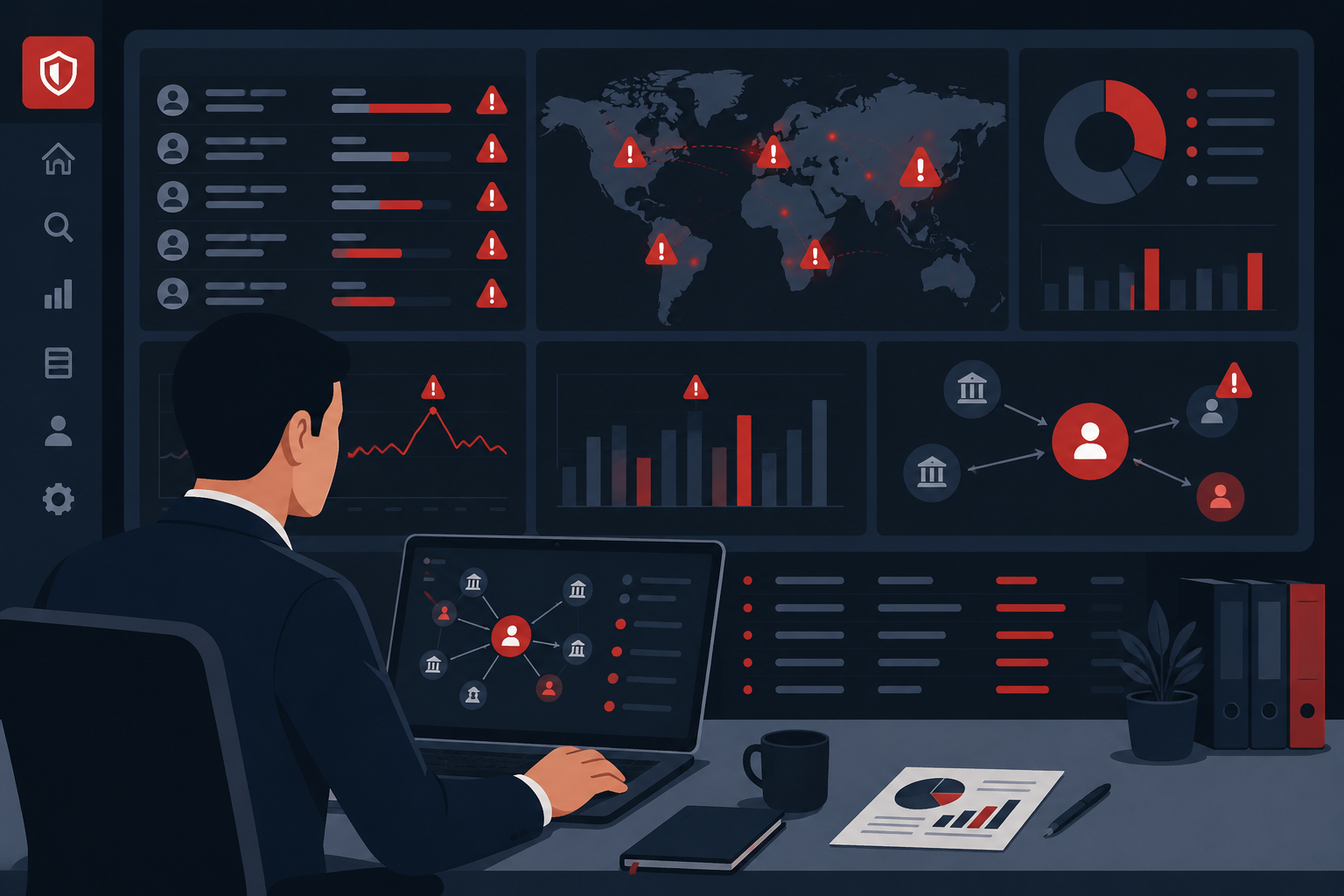
Recognizing AML red flags is a core compliance skill. Here is what suspicious activity actually looks like in fintech — the patterns, behaviors, and transaction characteristics that should trigger a compliance review.
AML Red Flags: What Fintechs Need to Watch For
Transaction monitoring technology generates the alerts. But understanding why specific patterns are suspicious — and being able to make sound judgment calls about what warrants a SAR filing — requires a genuine understanding of what money laundering looks like in practice.
AML red flags are not random. They reflect the methods money launderers actually use to move illicit funds through financial systems — layering transactions to obscure origin, structuring amounts to avoid reporting thresholds, using intermediaries to distance proceeds from their source, and exploiting legitimate financial infrastructure for illegitimate purposes.
Why Red Flag Recognition Matters
Your transaction monitoring rules catch what they are programmed to catch. But no rule set can anticipate every pattern. Compliance teams, customer service staff, and operations personnel need to understand what suspicious activity looks like so they can escalate concerns that automated systems might miss.
Additionally, FinCEN examinations assess not just whether your monitoring technology is configured correctly — but whether your team understands the red flags your business should be watching for.
Customer and Onboarding Red Flags
Reluctance to Provide Identification
A customer who is reluctant or refuses to provide required KYC identification documents, who provides identification that appears altered, or who becomes agitated when asked standard verification questions is displaying a significant red flag.
Inconsistencies in Identification Information
Name variations between different documents, addresses that do not match, identification numbers that do not verify against authoritative databases, or inconsistencies between stated information and verified information all warrant additional scrutiny.
Unwillingness to Explain the Source of Funds
When a customer is unwilling or unable to explain where their funds come from — particularly for large initial deposits or transfers — this warrants attention. Vague, changing, or implausible explanations for the origin of significant funds are red flags that may trigger Enhanced Due Diligence.
Unusual Interest in the Reporting Threshold
A customer who asks specifically what the reporting thresholds are — how much they can transfer without triggering a report — is displaying a red flag associated with structuring awareness.
Transaction Red Flags
Structuring — Transactions Just Below Thresholds
The most classic money laundering red flag. A customer who consistently makes transactions just below a significant reporting or monitoring threshold is likely structuring to avoid detection. Structuring is itself a federal crime regardless of whether the underlying funds are from illegal sources. Your monitoring must detect not just individual suspicious transactions but patterns across multiple transactions.
Rapid Round-Trip Transactions
Funds that come into an account and leave the same account within a very short time — particularly to a different recipient or geography — suggest layering. The rapid movement of funds with no clear business purpose is a red flag that warrants investigation.
Activity Inconsistent With the Customer's Profile
A customer who onboarded for low-volume personal transfers and suddenly begins conducting high-volume business transactions, or a small business processing volumes inconsistent with its stated size and type, is displaying behavior inconsistent with their established CDD profile.
Multiple Payments to or From the Same Counterparty
Multiple customers sending funds to the same external recipient, or a single customer sending identical amounts to the same recipient at regular intervals, warrant investigation.
Use of Multiple Accounts to Funnel Funds
A single individual or group of related individuals using multiple accounts to move funds in a coordinated pattern is associated with layering.
Geographic Red Flags
Transactions Involving High-Risk Jurisdictions
Transactions involving counterparties in FATF grey or black list countries, OFAC-sanctioned jurisdictions, or countries identified as high-risk in your AML risk assessment warrant elevated scrutiny.
Geographic Inconsistencies
A customer whose stated residence is in one location but whose transactions consistently involve counterparties in a very different geography — particularly a high-risk geography — warrants attention.
IP Address Location Inconsistencies
For digital platforms, a customer who consistently accesses the platform from IP addresses inconsistent with their stated location — particularly addresses associated with VPN or anonymizing services — warrants review.
Business and Commercial Customer Red Flags
Vague or Implausible Business Description
A business customer that cannot clearly explain what its business does, or whose stated activities do not match the types of transactions it conducts on your platform, is a significant red flag that may trigger KYB Enhanced Due Diligence.
Complex Ownership Structures With No Clear Business Purpose
A business with multiple layers of ownership through offshore entities or shell companies, where no clear legitimate business purpose is evident, is associated with the use of corporate structures to conceal beneficial ownership.
Transaction Volumes Inconsistent With Business Size
A small business conducting transaction volumes inconsistent with its stated business size and type raises questions about the actual source of those transaction flows.
Behavioral Red Flags
Nervousness or Unusual Behavior During Onboarding
Customers who display unusual anxiety during the verification process or who become hostile when asked standard compliance questions may be uncomfortable with legitimate identity verification.
Third Parties Conducting Transactions on Behalf of Others
When someone other than the account holder is clearly directing transactions — particularly large transactions — this warrants attention.
Pressure to Complete Transactions Quickly
Urgent requests to process transactions as quickly as possible, particularly when the urgency is not explained by a legitimate business need, are associated with attempts to move funds before compliance reviews can occur.
What to Do When You Identify a Red Flag
Identifying a red flag does not automatically mean a SAR must be filed. It means the activity must be investigated and documented. Your BSA Officer should oversee this process.
If the activity is suspicious and meets the SAR filing threshold, a SAR must be filed within 30 days. If the activity has a legitimate explanation, the alert is closed with documented reasoning.
Frequently Asked Questions
Do all red flags require a SAR filing?
No. A red flag requires investigation and documentation — not automatic SAR filing. Many flagged transactions have legitimate explanations when reviewed in full context. What is required is that the investigation is thorough, the reasoning is documented, and a SAR is filed when the conclusion is that the activity is suspicious.
What is the most common AML red flag in fintech?
Structuring — conducting transactions in amounts specifically designed to avoid reporting thresholds — is consistently one of the most common patterns associated with money laundering across all financial services including fintech.
Who in a fintech should be trained to recognize red flags?
All employees whose roles touch customer interactions, transaction processing, or compliance functions should receive AML training that covers red flag recognition relevant to their specific role. The SAR confidentiality rule is particularly important training for customer-facing staff.
How ComplyOne Helps
ComplyOne helps fintechs design transaction monitoring programs calibrated to their specific risk profiles, train compliance teams on red flag recognition, and build the investigation and documentation workflows that satisfy BSA requirements — through advisory services, compliance technology, or both.
Talk to the ComplyOne team to get started.
The information in this article is for general educational purposes and does not constitute legal or regulatory advice. Consult a qualified compliance professional for guidance specific to your situation.