FinCEN 314(b) allows financial institutions to voluntarily share information with each other to identify and report money laundering. This guide explains how it works, what protections it provides, and why fintechs should consider participating.
What Is a FinCEN 314(b) Program? Voluntary Information Sharing Explained
When one financial institution suspects a customer of money laundering, it has limited ability to warn other institutions about that customer — and limited visibility into what those customers are doing at other firms. The FinCEN 314(b) program exists to change that.
Here's how it works and why your fintech should consider participating.
What Is FinCEN 314(b)?
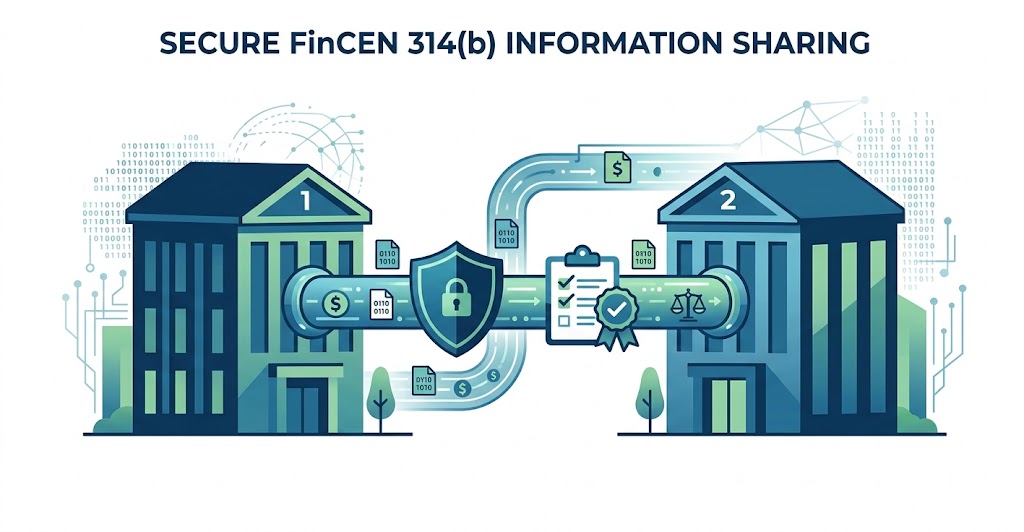
Section 314(b) of the USA PATRIOT Act created a voluntary information-sharing program that allows financial institutions to share information with each other about persons or transactions suspected of involvement in money laundering or terrorism financing.
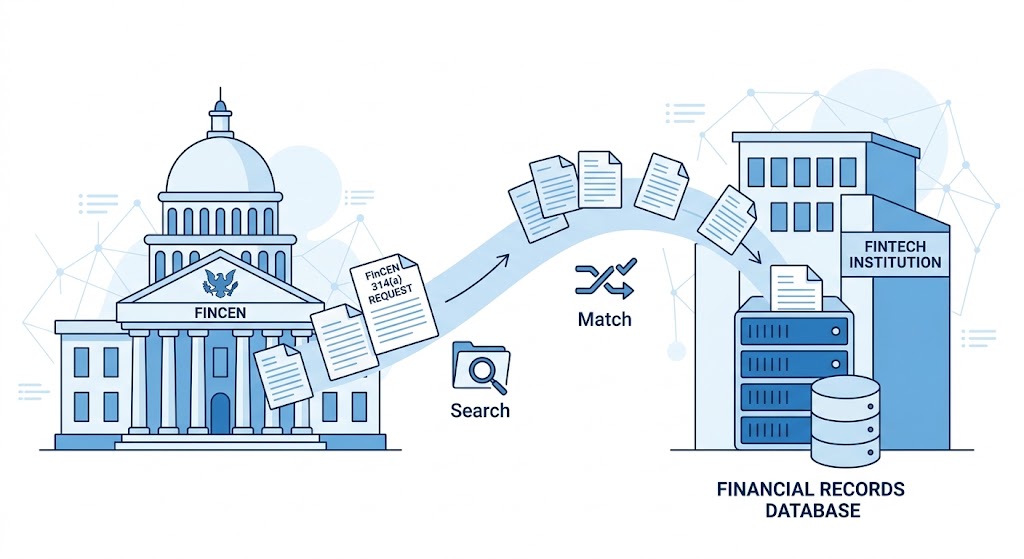
Unlike 314(a), which is mandatory and involves law enforcement requesting information from institutions, 314(b) is entirely voluntary and involves institutions sharing with each other — peer to peer.
The program is administered by FinCEN, and participation requires registration. As of recent years, thousands of financial institutions are registered 314(b) participants.
Why Does 314(b) Exist?
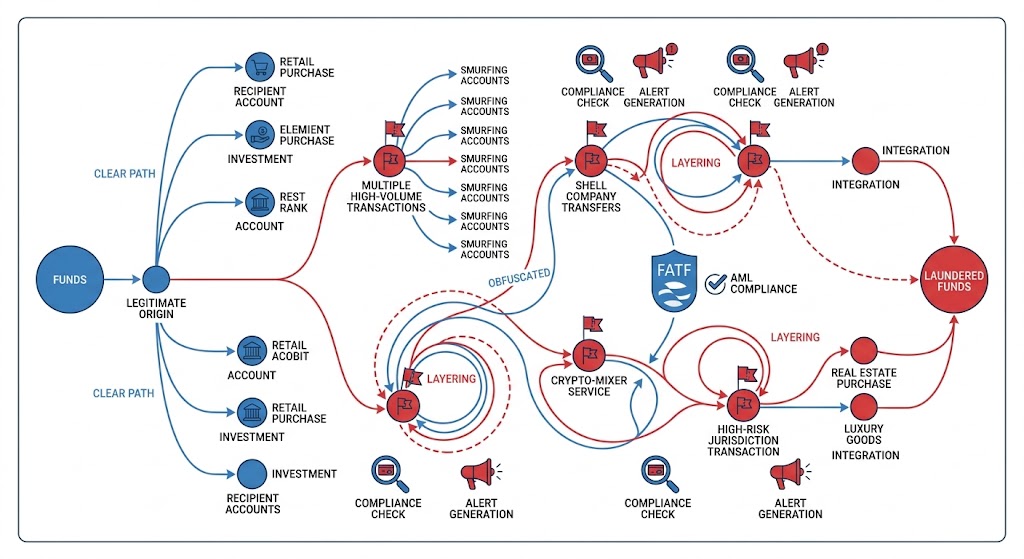
Money launderers routinely use multiple financial institutions simultaneously — spreading their activity across accounts to avoid hitting monitoring thresholds at any single institution. Each institution sees only a fragment of the full picture.
314(b) addresses this by letting institutions share information and connect the dots. If Institution A and Institution B are both seeing suspicious fragments of the same customer's activity, they can share those observations and jointly determine whether a SAR filing is warranted.
Without 314(b), such sharing would potentially violate customer privacy laws (GLBA, RFPA). With 314(b), a safe harbor provides legal protection for good-faith sharing between registered participants.
Who Can Participate in 314(b)?
Any financial institution that files reports under the BSA — including banks, credit unions, MSBs, broker-dealers, mutual funds, and insurance companies — is eligible to register for 314(b).
If your fintech is a registered MSB or operates under a bank's BSA program, you may be eligible.
How to Register for 314(b)
Registration is done through FinCEN's 314(b) system:
- Complete the registration form on FinCEN's 314(b) portal (currently at fincen.gov)
- Certify that your institution has an AML program and is subject to BSA requirements
- Designate a point of contact — a named individual who will manage 314(b) communications
- Renew your registration annually — 314(b) registrations expire and must be renewed each calendar year
Registration is free. Once registered, you can search for other registered institutions and initiate information sharing requests.
How Does 314(b) Information Sharing Work?
When your institution has a suspicious subject and wants to know whether another institution has information about the same person:
- Confirm the other institution is registered — only share with registered 314(b) participants
- Initiate contact — reach out to the other institution's designated 314(b) contact
- Share the specific information — transaction details, account information, and reasons for suspicion relevant to the AML inquiry
- Use the information solely for AML purposes — 314(b) information may only be used to identify and report suspected money laundering or terrorism financing
- Document the exchange — record what was shared, with whom, and when
The key limitation: 314(b) sharing can only be used for money laundering and terrorism financing investigations. It cannot be used for fraud investigations, credit decisions, or any other purpose.
The 314(b) Safe Harbor
The safe harbor for 314(b) is significant: financial institutions that share information in good faith with registered participants are not liable under any federal or state law or regulation for the disclosure — even if the suspected activity ultimately turns out not to be criminal.
This protection is what makes 314(b) practically useful. Without it, institutions would fear defamation claims or privacy law violations for sharing information about customers who haven't been charged with anything.
When Should Fintechs Use 314(b)?
314(b) is most useful when:
- You've identified suspicious activity that involves accounts at other institutions (wire transfer counterparties, common addresses, shared ownership)
- You're investigating a complex case that touches multiple financial entities
- You've received a 314(b) inquiry from another institution and need to decide how to respond
It's not a substitute for SAR filing — if you have a SAR obligation, you still need to file. But 314(b) sharing can help you file more complete, better-informed SARs.
Frequently Asked Questions
Does 314(b) sharing replace SAR filing?
No. SAR filing obligations are independent. If your investigation reveals suspicious activity meeting the SAR threshold, you must file regardless of whether you engaged in 314(b) sharing.
Can I share 314(b) information with a foreign institution?
Generally, no. The 314(b) program is a US-domestic program. Sharing information internationally requires different legal frameworks (mutual legal assistance treaties, financial intelligence unit channels, etc.).
What happens if a registered 314(b) institution shares information in bad faith?
The safe harbor only covers good-faith sharing. Sharing information for an improper purpose — such as to harm a competitor or satisfy personal curiosity — is not protected and could create legal liability.
Should early-stage fintechs register for 314(b)?
If your fintech is an MSB or otherwise covered by the BSA, registering for 314(b) is a best practice. It costs nothing, demonstrates regulatory engagement, and provides a tool you may need as your customer base and AML program mature.
This article is for educational purposes only and does not constitute legal or compliance advice. Regulations vary by jurisdiction and change frequently. Consult a qualified compliance professional or legal counsel for guidance specific to your business.