KYC for payments fintechs involves verifying both direct customers and — in some arrangements — merchant counterparties. Here is what payments KYC requires and how it differs from consumer-focused KYC.
What Is KYC for Payments? A Guide for Payment Fintechs
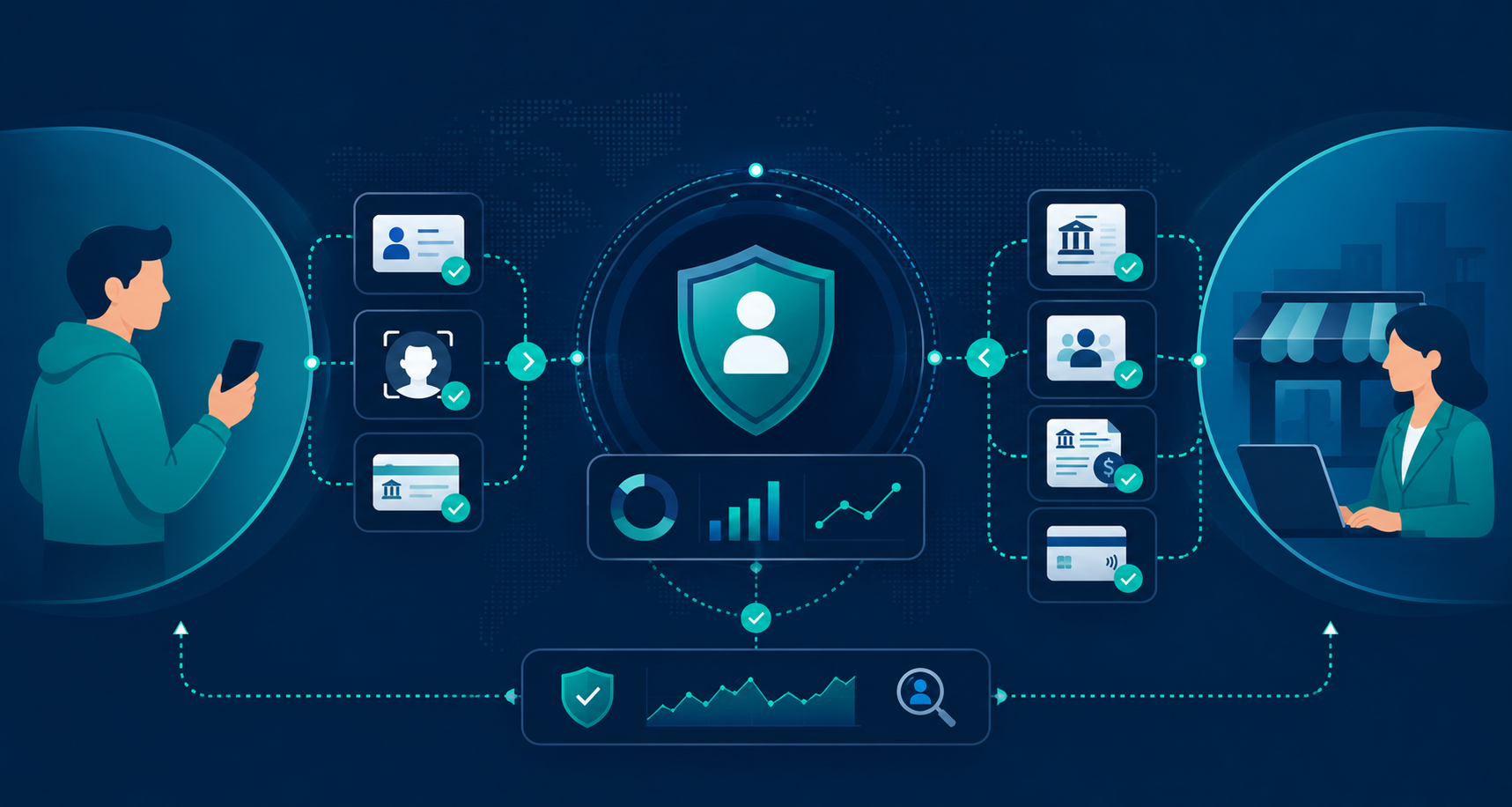
AML compliance for payments fintechs involves verifying the identity and assessing the risk of every party whose activity you are responsible for under your AML obligations. For consumer-focused payment products, this is primarily your direct customers. For business-to-business payment platforms and payment facilitators, this extends to merchant customers — and in some cases to the sub-merchants or end users those merchants serve.
Standard Consumer KYC for Payments
Payment fintechs that serve individual consumers must implement standard KYC — collecting and verifying name, date of birth, address, and identification number before allowing customers to transact, and conducting CDD including customer risk rating and ongoing monitoring.
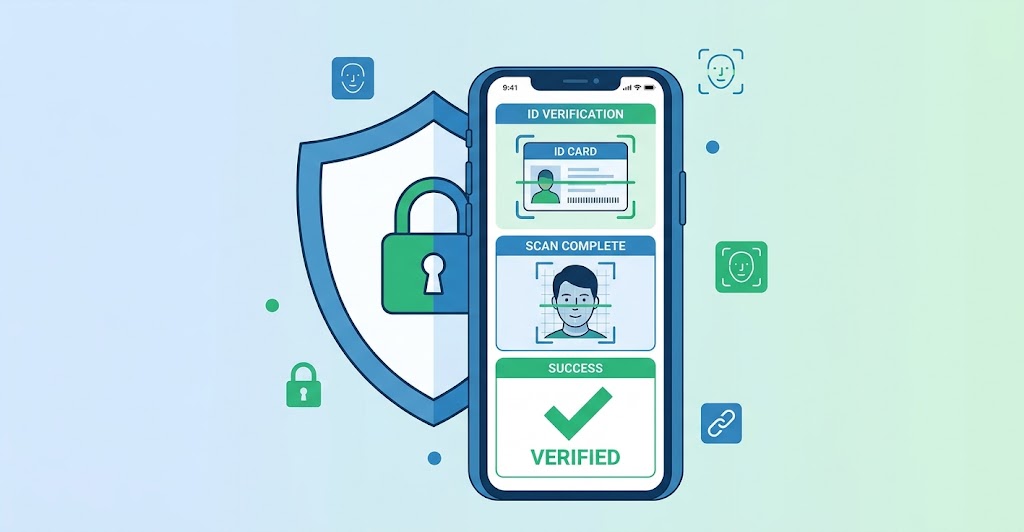
The specific technology and process for consumer payments KYC typically includes automated identity verification integrated into the onboarding flow, sanctions and PEP screening at onboarding, customer risk rating based on KYC data, and transaction monitoring for ongoing behavioral assessment.
Merchant KYC for Business-to-Business Payment Platforms
Payment fintechs that process payments on behalf of merchants have additional KYC obligations that go beyond consumer-focused verification. Merchant KYC — sometimes called KYB for merchants — involves verifying the merchant business entity and assessing the AML risk it introduces.
Merchant KYC typically covers entity verification — confirming the merchant is a legitimate, legally formed business, beneficial ownership identification and verification for the merchant entity, industry risk assessment — evaluating whether the merchant operates in a high-risk industry, expected transaction volume and type assessment, and ongoing monitoring of merchant transaction activity against the established baseline.
Why Merchant Risk Matters
For payment facilitators and platforms that onboard merchants, the AML risk profile includes not just the merchants themselves but the end customers transacting through those merchants. A high-risk merchant — one operating in a risky industry or with suspicious transaction patterns — introduces risk that flows upstream to the payment platform facilitating those transactions.
Underestimating merchant risk is one of the most common compliance gaps in payments company AML programs.
Sub-Merchant and End User Considerations
For platforms with complex structures — where merchants themselves onboard sub-merchants, or where platform activity involves end users who are not directly onboarded — the KYC obligations become more layered. The appropriate level of KYC for sub-merchants and end users depends on the specific structure of the arrangement and the risk it presents.
Frequently Asked Questions
Does a payment processor need to KYC every end consumer?
A payment processor that qualifies for the payment processor exemption from money transmission — and is acting purely as a merchant's agent — may not have independent KYC obligations for every end consumer. However, this exemption is narrow. If the platform is a money transmitter rather than a pure payment processor, KYC obligations extend to all customers.
How does merchant KYC differ from consumer KYC?
Merchant KYC focuses on entity verification and business risk assessment rather than individual identity verification. The documents collected, the verification methods used, and the risk factors assessed differ between merchant KYC (which is similar to KYB) and consumer KYC (which is governed by the CIP requirement).
How ComplyOne Helps
ComplyOne helps payments fintechs build KYC programs designed for their specific business model — whether consumer-focused, merchant-focused, or both — through advisory services, compliance technology, or both.
Talk to the ComplyOne team to get started.
The information in this article is for general educational purposes and does not constitute legal or regulatory advice. Consult a qualified compliance professional for guidance specific to your situation.