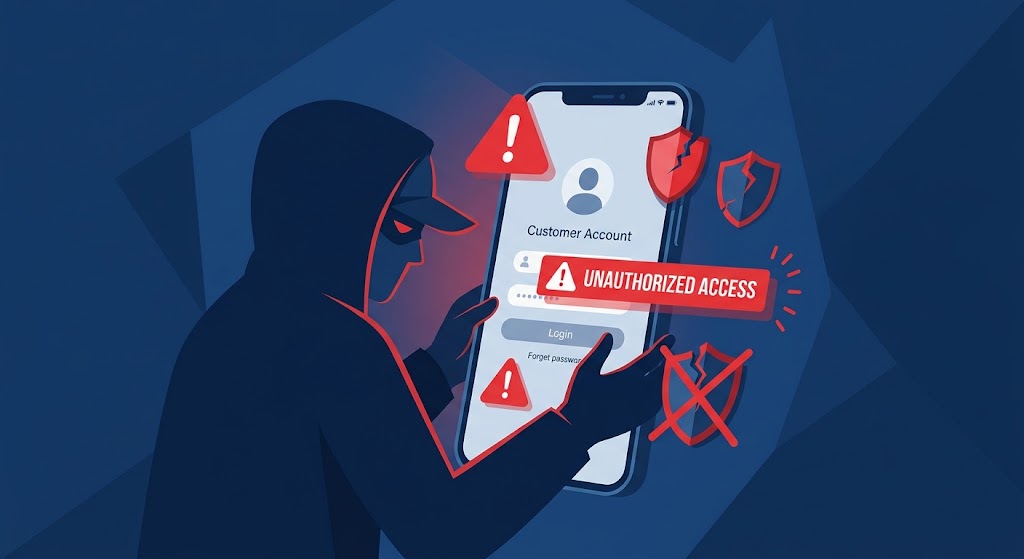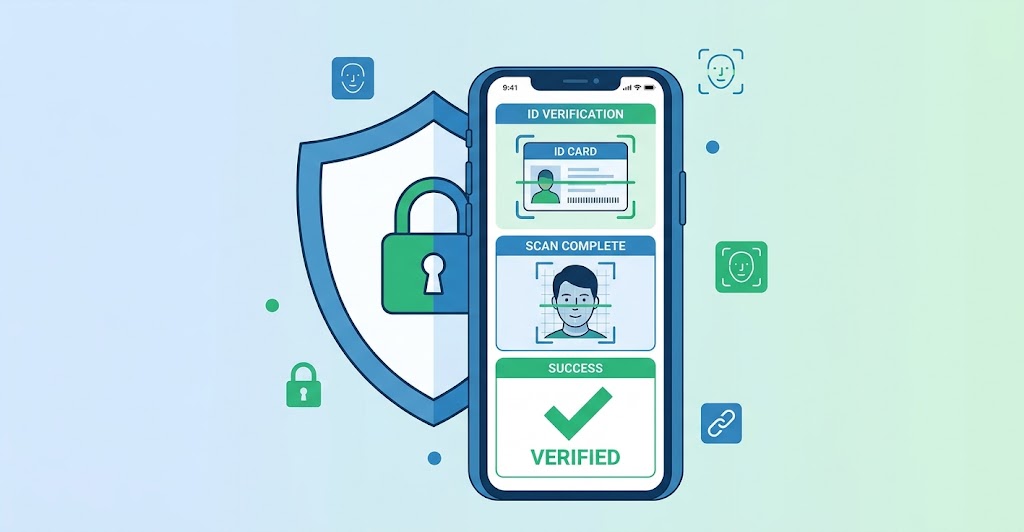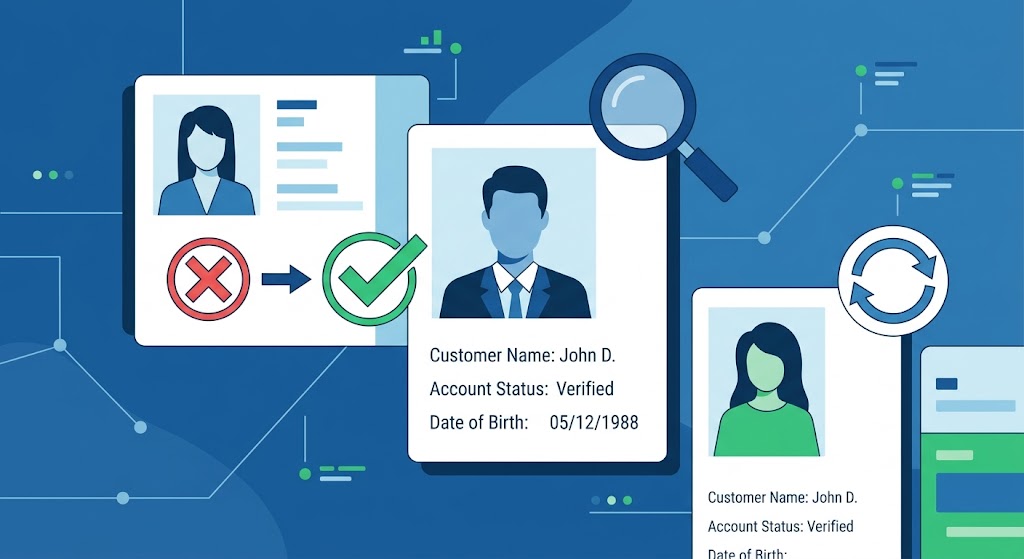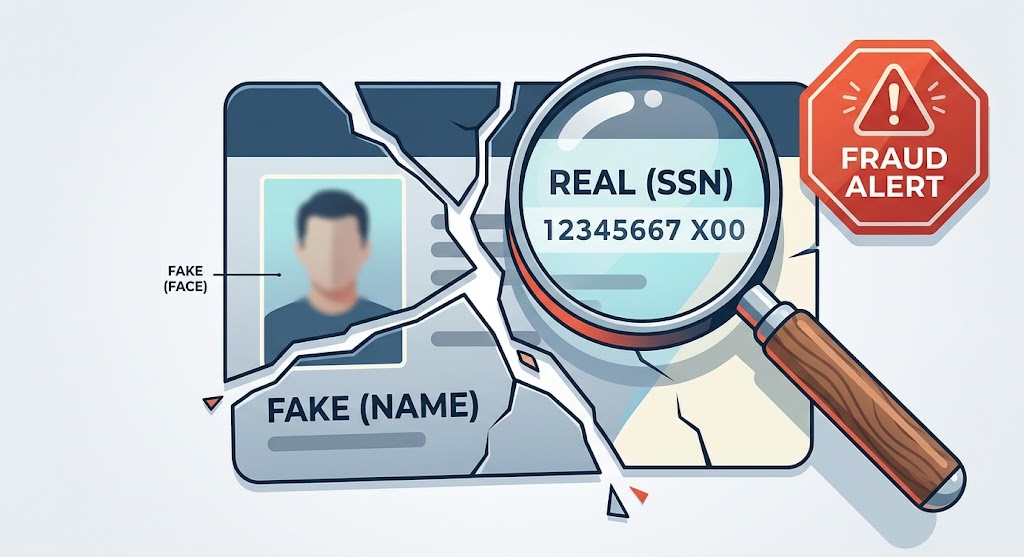
Synthetic identity fraud — where criminals combine real and fake information to create a new identity — is the fastest-growing financial crime in the US. This guide explains how it works, why it's hard to detect, and how fintechs can protect against it.
What Is Synthetic Identity Fraud? How Fintechs Can Detect It
Traditional identity theft steals a real person's complete identity. Synthetic identity fraud is different — and harder to detect. Instead of stealing someone's identity, criminals create a new one by blending real and fabricated information.
What Is Synthetic Identity Fraud?
Synthetic identity fraud (SIF) is a form of financial crime where a fraudster creates a fictitious identity by combining real personal data — typically a valid Social Security Number — with fabricated information such as a fake name, date of birth, or address.
The result is an identity that has a real SSN (often from a child, deceased person, or someone who rarely uses credit), belongs to a person who doesn't actually exist in the form presented, and has no prior credit history — appearing initially as a thin-file consumer rather than a fraud flag.
The Typical Synthetic Identity Fraud Pattern
Step 1: The fraudster obtains a valid SSN — often a child's (no credit history yet), a deceased person's, or randomly generated.
Step 2: They apply for credit using the synthetic identity. Initial applications may be declined — but applications create credit bureau inquiries that start building a credit file.
Step 3: Over 12–24 months, they make payments on small credit products, building a clean credit history for the synthetic identity.
Step 4: Once the synthetic identity has a credible credit profile, they use it to open accounts at fintechs, banks, and lenders.
Step 5: The fraudster maxes out all available credit, stops making payments, and disappears — the "bust-out."
Why Synthetic Identity Fraud Is Particularly Dangerous for Fintechs
It Passes Traditional KYC Checks
Standard Customer Identification Program (CIP) verification checks name, date of birth, address, and SSN against credit bureau records. Synthetic identities often pass because the SSN is real, the fraudster may have spent months building a credit file, and no real victim reports the fraud.
It's Growing Fast
The Federal Reserve estimated synthetic identity fraud causes over $6 billion in annual losses to US lenders — the fastest-growing financial crime in the country.
How Fintechs Can Detect Synthetic Identity Fraud
Enhanced Identity Verification
SSN validation — verify the SSN was issued by the SSA at an appropriate time for the applicant's claimed age
identity verification velocity checks — flag SSNs appearing in multiple applications with different names
Device intelligence — check whether the device has been associated with other applications using different identities
Behavioral Signals at Onboarding
Applications submitted at unusual hours
Use of virtual phone numbers or VoIP services
Email addresses created recently before the application
Address associated with a mail forwarding service
Credit Bureau Behavior Analysis
Credit file with very short history relative to claimed age
SSN issued recently for an applicant claiming to be middle-aged
First credit event was an inquiry rather than an account opening
Cluster of applications from different lenders in a short period
Frequently Asked Questions
Is synthetic identity fraud a KYC failure or a fraud problem?
Both. It exploits gaps in traditional KYC onboarding verification. Strengthening your identity verification program beyond minimum CIP requirements is the primary defense.
Who are the victims?
The financial institution extending credit is the primary victim. Children whose SSNs are used may discover damaged credit when they first try to use their own credit as adults — sometimes years later.
This article is for educational purposes only and does not constitute legal or compliance advice. Consult a qualified compliance professional or legal counsel for guidance specific to your business.