Identity verification (IDV) is how fintechs confirm that customers are who they say they are. This guide explains the types of IDV, how they work, regulatory requirements, and how to choose the right solution for your compliance program.
What Is Identity Verification for Fintechs? A Complete Guide
Before your fintech can serve a customer, you need to know that person is who they claim to be. Identity verification is the process — and the technology — that makes that possible.
Done well, it protects your business from fraud and financial crime while creating a fast, frictionless experience for legitimate customers. Done poorly, it either lets bad actors in or turns good customers away. Here's how to get it right.
What Is Identity Verification (IDV)?
Identity verification (IDV) is the process of confirming that an individual is genuinely who they represent themselves to be. In fintech, IDV happens primarily at account opening — as part of the KYC (Know Your Customer) process — and may also occur at subsequent points during the customer relationship when identity must be re-confirmed.
IDV is not the same as authentication. Authentication confirms that someone is the same person who previously established an account (using passwords, biometrics, or MFA). IDV confirms that a person's claimed identity is genuine in the first place.
Why Is Identity Verification Required?
Identity verification is required by the Customer Identification Program (CIP) rule under the Bank Secrecy Act. Any covered financial institution must verify the identity of each customer when opening an account.
Beyond regulatory requirements, IDV serves critical fraud prevention functions:
- Preventing identity theft (someone using another person's stolen identity)
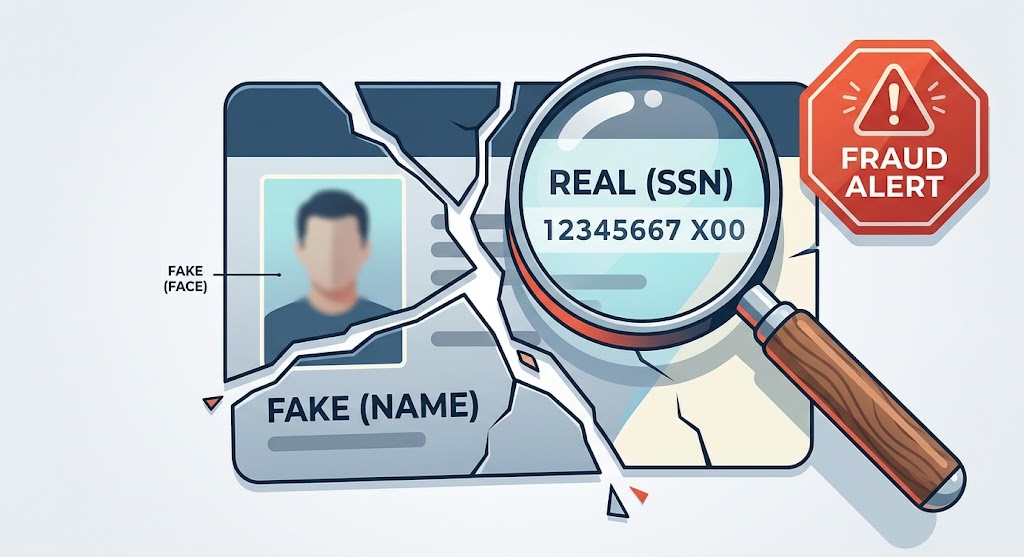
- Preventing synthetic identity fraud (using fabricated identities)
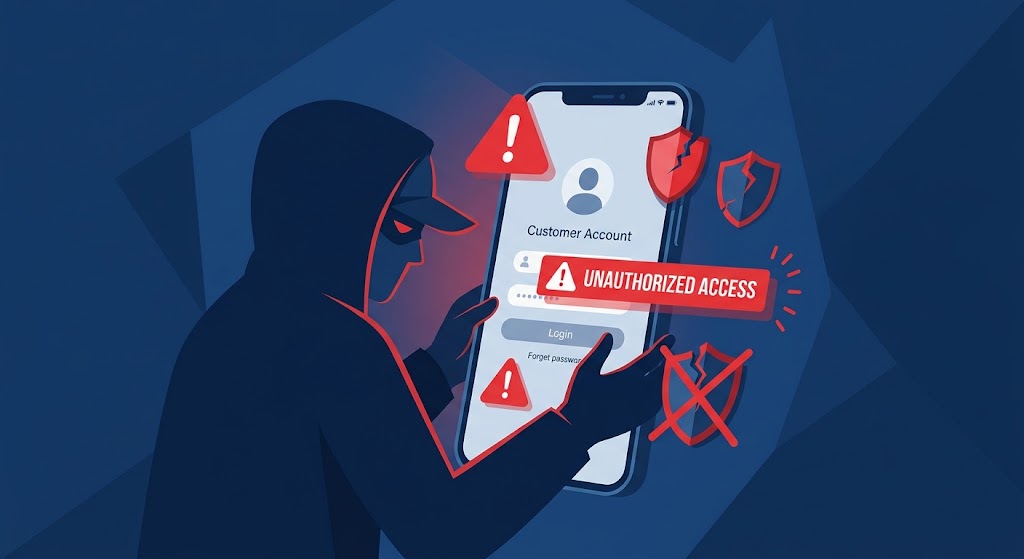
- Preventing account takeover (using stolen credentials to access existing accounts)
The Four Types of Identity Verification
1. Documentary Verification
Checking a government-issued photo ID — driver's license, passport, state ID card — to confirm the customer's identity. This is the most common and most reliable primary IDV method.
Modern documentary verification is largely automated: the customer photographs their ID, and AI-powered software:
- Extracts the data using OCR
- Checks the document for signs of tampering or forgery
- Matches the ID template against a global database of genuine document formats
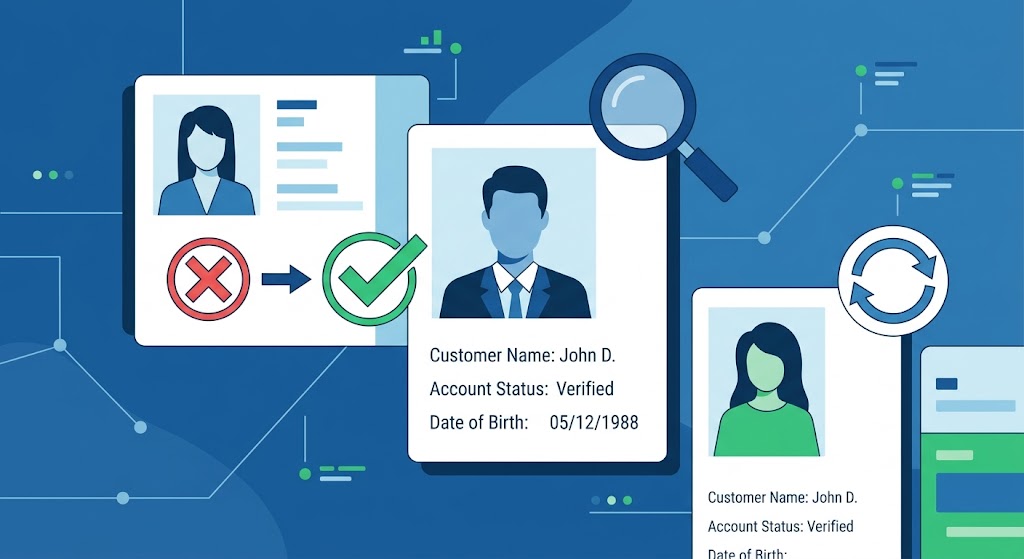
- Cross-checks the extracted data against what the customer entered
2. Biometric Verification
Using a customer's biological characteristics — most commonly their face — to confirm they're a real person and match their ID photo.
Facial recognition compares a selfie the customer takes during onboarding with the photo on their government ID. The match score (typically 90%+ for a confident match) confirms the person is genuinely the ID holder.
Liveness detection prevents fraud using static photos or masks. It confirms the selfie was taken of a live person in real time — either through active prompts (turn your head, blink) or passive AI analysis of image depth and movement patterns.
3. Database Verification (Non-Documentary)
Confirming identity by checking the customer's details against existing records held in external databases:
- Credit bureau records — do the name, address, and SSN match existing credit bureau data?
- Government ID databases — some providers have access to DMV or passport databases for direct ID number verification
- Telecom records — does the phone number match the name and address?
Database verification is typically used as a secondary method (for customers who can't provide documents) or as an additional layer alongside documentary verification.
4. Knowledge-Based Authentication (KBA)
Asking the customer questions that only the real person would know, based on data from their credit file. ("Which of the following addresses did you live at between 2015 and 2018?")
KBA has declined in use because the data it relies on is increasingly available through data breaches, making it a weaker fraud signal. It's generally used as a fallback method rather than a primary verification approach.
How Fintech IDV Flows Work in Practice
A typical consumer fintech IDV flow at account opening:
- Customer enters their name, date of birth, address, and SSN
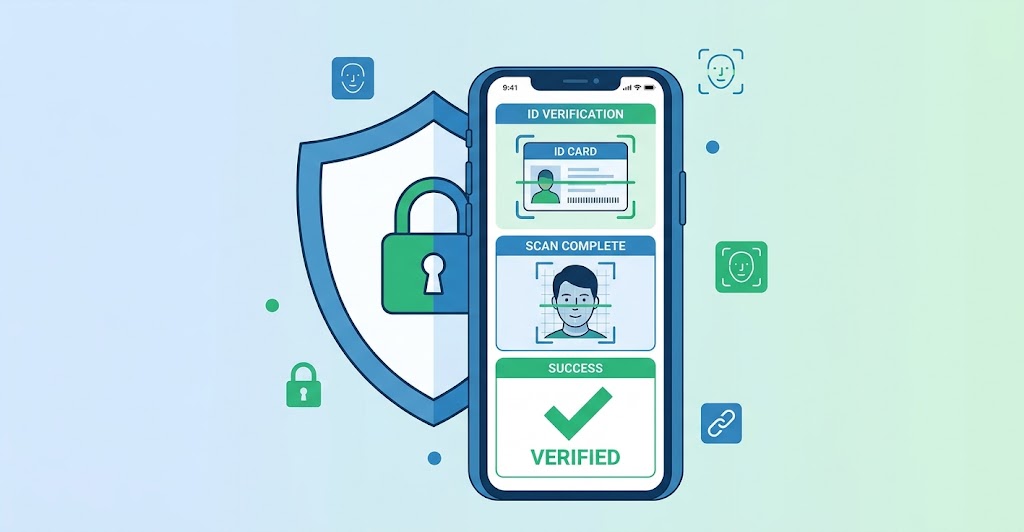
- Customer photographs their driver's license (front and back)
- Customer takes a selfie — biometric verification confirms they match the ID
- Automated checks run: document authenticity, database cross-check, OFAC screening, PEP screening
- Risk score assigned based on all checks
- Low-risk: auto-approved in under 2 minutes
- Medium/high-risk: flagged for manual review
The IDV vs. KYC Distinction
IDV is a component of KYC — specifically, the identity-proofing step. A complete KYC program includes:
- IDV (verifying who the customer is)
- CDD (understanding the customer relationship and expected activity)
- Risk scoring (assessing the customer's financial crime risk)
- Ongoing monitoring (watching for changes during the relationship)
Buying an IDV tool is not the same as building a KYC program. IDV covers the front door; KYC covers the full relationship.
How to Choose an IDV Solution
When evaluating identity verification vendors, consider:
Coverage: How many countries and document types are supported? If you serve international customers, global coverage is essential.
Pass rates: What percentage of legitimate customers pass verification automatically? A high pass rate minimizes the number of good customers who need manual review.
Fraud detection accuracy: What is the false negative rate — fraudulent identities that pass your checks? Ask vendors for benchmark data.
Liveness detection strength: Passive or active? What is the false acceptance rate for presentation attacks?
Integration: API, mobile SDK, or hosted web flow? How quickly can you integrate?
Compliance features: Does the solution produce a documented verification record with audit trail that satisfies CIP requirements?
Cost: Per-verification pricing, flat monthly fee, or volume-tiered? Map the cost model to your expected verification volume.
Leading IDV providers in the fintech market include Alloy, Persona, Socure, Onfido, Stripe Identity, Jumio, and IDology.
Frequently Asked Questions
Is IDV the same as fraud prevention?
They overlap significantly but aren't identical. IDV verifies a new identity at onboarding — its primary purpose is compliance. Fraud prevention covers a broader range of ongoing risk signals during the customer lifecycle. Many IDV vendors have expanded into broader fraud prevention capabilities.
Do I need to verify identity for every customer or just new ones?
CIP requires verification at account opening. Ongoing monitoring and periodic re-verification (particularly for high-risk customers) are part of your CDD obligations, but a full re-verification for all customers on a fixed schedule is not always required. Risk-based judgment applies.
What if my IDV provider misses fraud and a bad actor gets through?
The compliance obligation remains yours. Your IDV provider handling the technology doesn't transfer your regulatory liability. If a fraudulent account passes your verification, review what controls failed and remediate. If the fraud involved financial crime, a SAR may be required.
Can I use the same IDV tool for both consumer and business customers?
Consumer IDV and business KYB (Know Your Business) verification are different processes. Some vendors offer both; others specialize in one. Evaluate whether a single vendor can serve both use cases at the quality level you need.
This article is for educational purposes only and does not constitute legal or compliance advice. Regulations vary by jurisdiction and change frequently. Consult a qualified compliance professional or legal counsel for guidance specific to your business.