Account takeover (ATO) fraud occurs when criminals gain unauthorized access to existing customer accounts. This guide explains how ATO happens, the regulatory implications, and how fintechs can prevent it.
What Is Account Takeover Fraud? How Fintechs Can Prevent It
Account takeover fraud is one of the most damaging forms of financial crime facing fintechs. Unlike synthetic identity fraud, which creates new accounts, ATO targets real customers — and the consequences for both the customer and your institution can be severe.
What Is Account Takeover (ATO) Fraud?
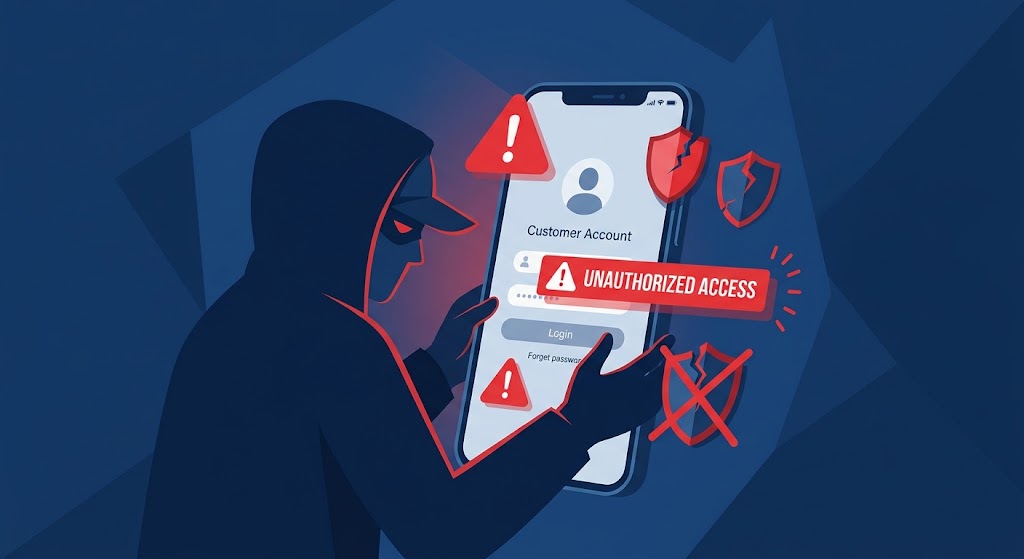
Account takeover fraud occurs when a criminal gains unauthorized access to an existing financial account — typically by obtaining the account holder's credentials — and uses that access to steal funds, make unauthorized transactions, or exploit the account for other purposes.
How Account Takeover Happens
Credential Stuffing
Automated tools test large lists of username/password combinations from data breaches at other companies against your login portal. Many people reuse passwords, so these attacks have meaningful success rates.
Phishing
Fraudulent emails, SMS, or fake websites trick customers into entering credentials or one-time passwords on pages controlled by the fraudster.
SIM Swapping
The fraudster convinces a mobile carrier to transfer a customer's phone number to their SIM card, allowing them to intercept SMS-based two-factor authentication codes.
Social Engineering
Fraudsters contact customer service and, using breached data, convince representatives to reset account credentials.
Malware
Malicious software on a customer's device captures keystrokes, screenshots, or session tokens.
Regulatory Implications
Regulation E Obligations
For fintechs offering accounts with electronic fund transfers, Regulation E creates obligations when customers report unauthorized transactions:
Customers have 60 days to report unauthorized transactions
You must provide provisional credit within 10 business days while investigating
Complete investigation within 45 days (90 days for new accounts or foreign transactions)
If unauthorized, correct it
SAR Filing
If ATO investigation reveals suspicious activity — particularly if stolen funds moved through patterns suggesting money laundering — a Suspicious Activity Report filing may be required.
GLBA Safeguards Rule
Large-scale ATO may indicate a failure in your information security program, potentially triggering breach notification obligations under GLBA.
How Fintechs Prevent Account Takeover
Multifactor Authentication (MFA): The single most effective ATO prevention measure. Use authenticator apps (TOTP) or hardware security keys rather than SMS-based OTP, which is vulnerable to SIM swapping.
Device Intelligence and Behavioral Analytics: Track device characteristics and compare login behavior against established patterns. A login from an unrecognized device in an unusual location warrants additional verification.
Credential Stuffing Detection: Implement rate limiting, CAPTCHA, and bot detection at your login endpoint.
Velocity Monitoring: Monitor for unusual post-login behavior — large transfers shortly after login, rapid changes to account information, or transfers to new payees.
Customer Education: Educate customers about phishing, password reuse, and SIM swapping.
Frequently Asked Questions
Who is liable when ATO results in customer losses?
Under Regulation E, if a consumer reports unauthorized transfers within required timeframes, the financial institution generally bears liability. Exceptions for customer negligence are narrow.
What's the difference between ATO and identity theft?
ATO involves unauthorized access to an existing account. Identity theft uses someone's identity to create new accounts. Both can happen to the same victim.
This article is for educational purposes only and does not constitute legal or compliance advice. Consult a qualified compliance professional or legal counsel for guidance specific to your business.