Crypto companies are subject to KYC requirements just like traditional financial institutions. Here is what KYC means in the crypto context, what is required, and how crypto companies build compliant identity verification programs.
What is KYC in Crypto? A Plain English Guide
Know Your Customer — KYC — is the process by which financial institutions and businesses verify the identity of their customers before allowing them to use their products. In the cryptocurrency industry, KYC has become a central compliance requirement, and the expectation that crypto companies will implement robust identity verification programs has grown significantly over the past several years.
This guide explains what KYC means in the crypto context, what information must be collected and verified, which crypto businesses are subject to KYC requirements, and how to build a compliant program.
Why KYC Applies to Crypto Companies
The foundation for crypto KYC requirements comes from FinCEN's 2013 guidance establishing that most cryptocurrency businesses qualify as Money Services Businesses under the Bank Secrecy Act. As MSBs, these businesses are required to implement AML compliance programs — and KYC is a core element of every AML program.
The Financial Action Task Force — FATF — has established that virtual asset service providers are subject to the same AML/KYC standards as traditional financial institutions. This international standard has been adopted by most major jurisdictions and increasingly shapes regulatory expectations for crypto companies globally.
What Crypto KYC Requires
Customer Identification
Crypto companies must collect specific identifying information from customers at onboarding. For individual customers, this typically includes full legal name, date of birth, residential address, and government-issued ID number — such as a passport, driver's license, or national identity document.
For business customers, KYC requires collecting the business's legal name, address, formation documents, and information about the beneficial owners who own or control the business.
Identity Verification
Collecting information is not enough — it must be verified. Verification typically means confirming that the identity document is genuine and that the document belongs to the person presenting it. This is commonly accomplished through document scanning and authenticity checks combined with biometric verification such as liveness detection and facial comparison.
Ongoing Monitoring
KYC is not a one-time event at onboarding. Crypto companies must monitor customer activity on an ongoing basis and update customer information when it becomes stale or when monitoring identifies changes in customer risk profile.
Which Crypto Businesses Must Implement KYC
Centralized cryptocurrency exchanges are subject to full KYC requirements. Custodial wallet providers — those that hold private keys on behalf of customers — are subject to KYC requirements. Crypto payment processors that hold and transmit customer funds are subject to KYC requirements. Crypto ATM operators are subject to KYC requirements.
Non-custodial wallets and purely decentralized protocols occupy a more complex regulatory space, but the trend across major jurisdictions is toward expanding the scope of businesses subject to KYC requirements.
Crypto KYC and the Travel Rule
The Travel Rule — BSA requirement 31 CFR 1010.410 — requires that certain identifying information travel with funds transfers above $3,000. FinCEN has confirmed that the Travel Rule applies to cryptocurrency transactions. This means crypto companies must collect, retain, and transmit originator and beneficiary information with qualifying crypto transfers — making KYC data not just a risk management tool but a compliance input into transaction processing.
Frequently Asked Questions
Do all crypto users need to complete KYC?
For regulated crypto businesses, yes — all customers must complete identity verification before accessing the product. There is typically no anonymous access permitted for centralized exchanges and custodial services regulated as MSBs. The specific thresholds and requirements vary by jurisdiction.
What is the difference between KYC and AML in crypto?
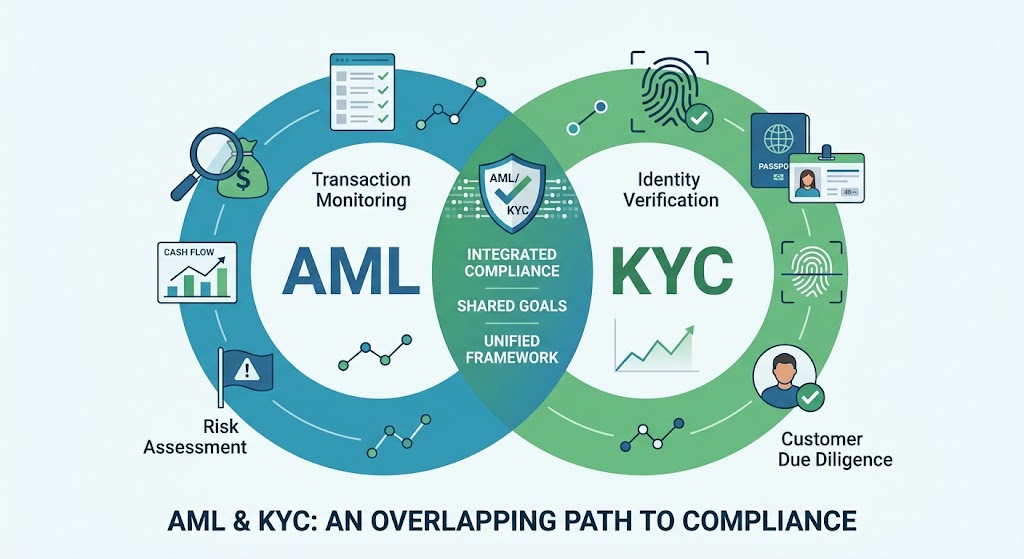
KYC is the process of identifying and verifying who your customers are. AML — anti-money laundering — is the broader compliance framework that uses KYC information along with transaction monitoring, SAR filing, and other controls to detect and report suspicious activity. KYC is a component of AML, not a substitute for it.
How does KYC work for DeFi platforms?
KYC requirements for decentralized finance — DeFi — platforms are an evolving regulatory question. Fully decentralized protocols without a controlling entity occupy a gray area. However, frontend interfaces, fiat on-ramps, and entities that exercise control over DeFi protocols are increasingly being held to KYC standards. Companies building DeFi products should seek qualified compliance counsel on their specific situation.
How ComplyOne Helps
ComplyOne helps crypto companies design and implement KYC programs that satisfy BSA and state regulatory requirements — from customer identification procedures through ongoing monitoring and AML program integration — through advisory services, compliance technology, or both.
Talk to the ComplyOne team to get started.
The information in this article is for general educational purposes and does not constitute legal or regulatory advice. Consult a qualified compliance professional for guidance specific to your situation.