KYC document verification is the process of authenticating government-issued ID documents during customer onboarding. This guide explains how it works, what technologies are used, and how to build a compliant verification flow.
What Is KYC Document Verification? How It Works for Fintechs
When a customer submits their driver's license or passport during onboarding, your fintech needs to do more than just read the name off the front. You need to verify that the document is real, that it belongs to the person submitting it, and that the identity checks out against external databases.
That process — document authentication, data extraction, and cross-referencing — is called KYC document verification.
What Is KYC Document Verification?
KYC document verification is the process of authenticating a government-issued identity document submitted by a customer during onboarding, and using that document to confirm the customer's identity as part of your BSA-required Customer Identification Program.
It's how your fintech moves from "the customer claims to be John Smith" to "we have high confidence that this person is actually John Smith."
Why Is Document Verification Required?
The CIP rule requires financial institutions to verify the identity of customers opening accounts. Document verification is the primary "documentary" method of meeting this requirement. While non-documentary verification (database checks, knowledge-based authentication) is also permitted, document verification is the most reliable and defensible method for most fintech onboarding flows.
What Documents Can Be Used?
The CIP rule requires unexpired government-issued photo IDs. Common acceptable documents include:
- Driver's license (US state-issued)
- Passport (any country)
- State-issued ID card
- Military ID
- Permanent resident card (Green Card)
For business customers, document verification extends to business registration documents, articles of incorporation, and beneficial ownership documentation.
How Document Verification Works: Step by Step
Step 1: Document Capture
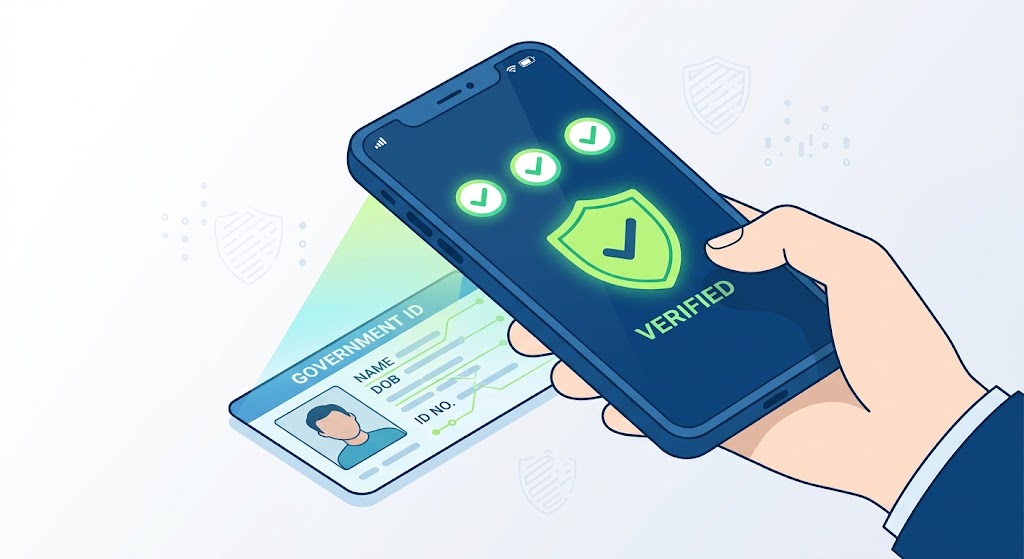
The customer submits a photo or scan of their ID document — typically through your mobile app or web interface. Document quality (lighting, focus, angle, glare) significantly affects verification accuracy. A well-designed capture experience guides users to submit usable images.
Step 2: Document Authentication
The verification system checks whether the document is genuine:
- Template validation: Comparing the document layout, fonts, and security features against a database of known genuine documents from that jurisdiction
- Security feature detection: Checking for holograms, microprint, UV patterns, and other security elements
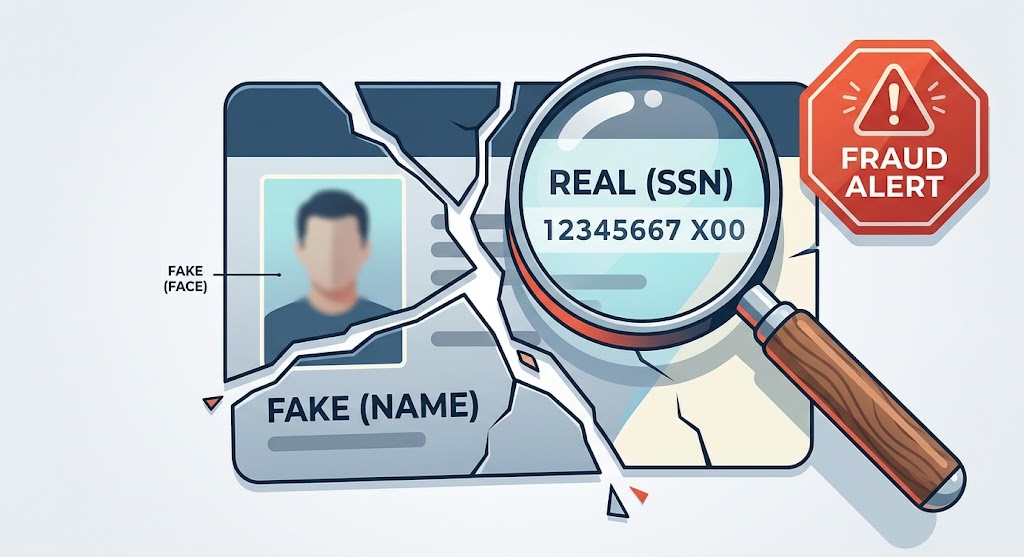
- Tamper detection: Using AI to identify signs of digital manipulation or physical alteration
- Expiration check: Confirming the document is not expired
Step 3: Data Extraction (OCR)
Optical Character Recognition (OCR) technology extracts the relevant data fields from the document: name, date of birth, address, ID number, issuing jurisdiction. This extracted data is compared against what the customer entered in your onboarding form — discrepancies trigger additional review.
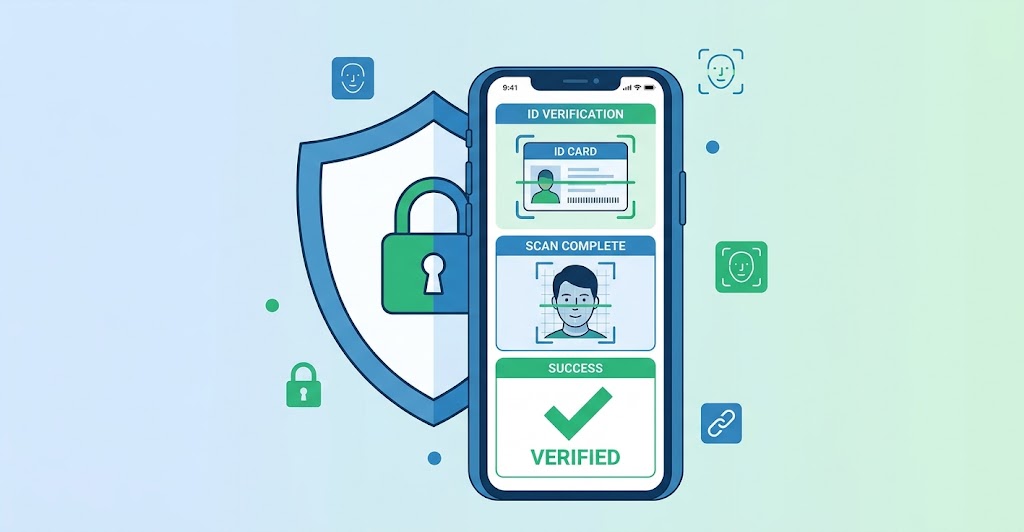
Step 4: Biometric Matching / Liveness Detection
Most modern document verification flows include a selfie or short video clip. The system compares the selfie to the photo on the ID document using facial recognition. Liveness detection confirms that the submission is from a live person present in real time, not a photo of a photo or a deepfake.
Step 5: Database Cross-Checking
The verified identity data is checked against external databases as part of your broader KYC checks — sanctions screening, CDD data, and identity verification databases to confirm the identity exists in credit bureau records.
Document Verification in a Compliant KYC Flow
Most fintechs integrate document verification through a third-party KYC provider — vendors like Persona, Onfido, Socure, Jumio, and Stripe Identity provide document verification as part of their broader KYC platforms. The provider returns a verification decision (pass/fail) and a confidence score, which feeds into your overall onboarding risk scoring.
Your CIP documentation should record: the type of document submitted, the verification method used, the result, and any manual review steps taken.
Common Document Verification Failures
- Poor image quality: Blurry, glare-affected, or partially captured documents fail verification
- Expired documents: Accepting expired IDs is a CIP failure
- Document-selfie mismatch: Facial comparison fails — either the documents are mismatched or the customer isn't who they claim to be
- Unsupported document types: Some verification tools cover fewer countries or document types than others — a gap in your vendor's database creates a gap in your KYC
- No record of the verification: CIP requires documentation of the method used and the result — failing to retain this record is a compliance failure
Frequently Asked Questions
Is document verification required for all customers?
Documentary verification is the primary method under CIP. Non-documentary methods (database checks, KBA) are permitted as alternatives or supplements. Most fintechs use document verification for all customers as the default, with fallback non-documentary methods for customers who can't provide documents.
How long must I retain document verification records?
CIP records, including document verification results, must be retained for a minimum of five years after the account is closed.
What's the difference between document verification and identity verification?
Document verification authenticates the document itself. Identity verification is the broader process of confirming that a real person with that identity exists — including database checks, biometric matching, and other methods. Document verification is one component of identity verification.
This article is for educational purposes only and does not constitute legal or compliance advice. Regulations vary by jurisdiction and change frequently. Consult a qualified compliance professional or legal counsel for guidance specific to your business.