Choosing the right KYC provider is one of the most important technology decisions a fintech makes. Here is what to look for, what questions to ask, and how to evaluate options against your compliance requirements.
How to Choose a KYC Provider: A Buyer's Guide for Fintechs
Your KYC provider is your compliance program's front door. It is the first compliance touchpoint in your customer's experience and the first line of defense against fraud, identity theft, and money laundering. Choosing the wrong provider creates compliance gaps, friction, and expensive problems to fix once you are operational.
This guide covers what KYC providers actually do, what features matter for fintech compliance, the critical questions to ask before committing, and how to evaluate options against your specific needs.
What Does a KYC Provider Actually Do?
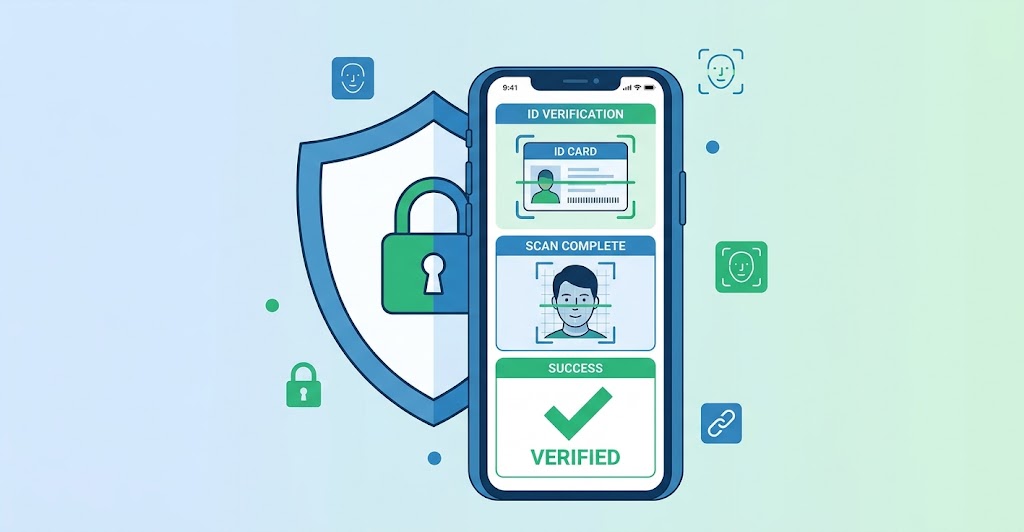
KYC providers — also called identity verification providers or IDV platforms — automate the customer identity verification process required by your Customer Identification Program under the BSA. Rather than manually reviewing customer documents and cross-referencing identity databases, a KYC provider does this automatically through technology in seconds rather than hours.
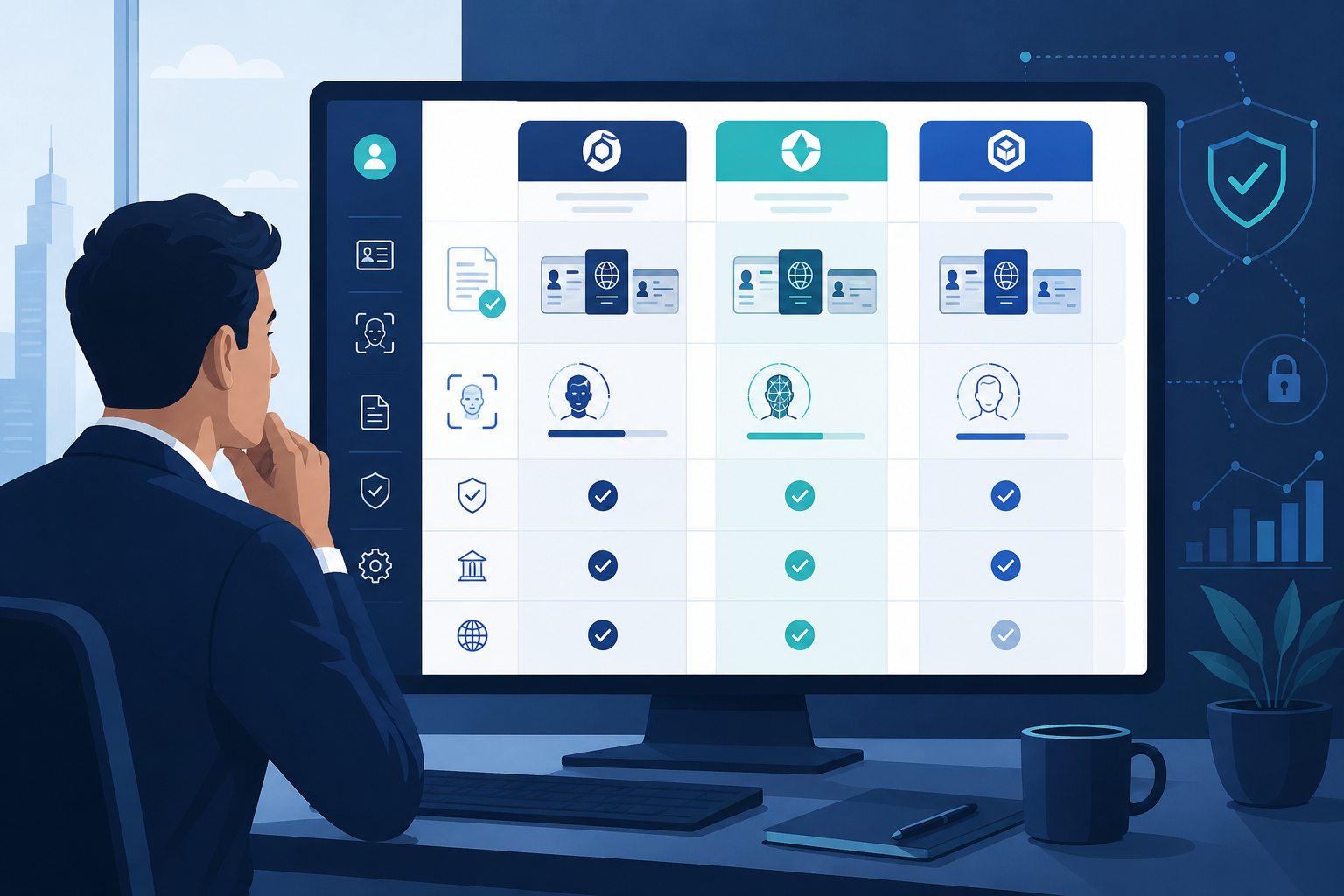
A full-featured KYC provider typically offers document verification, biometric verification, database verification, sanctions and PEP screening, risk scoring, and business verification for business customers.
Core Capabilities to Evaluate
Document Verification
The provider should support verification of the ID document types your customers will present — driver's licenses and state IDs for U.S. customers, passports for international customers, and other government-issued documents relevant to your customer base.
Key questions: What document types are supported? What is the acceptance rate for legitimate documents? How does the system handle damaged or non-standard documents? What is the false acceptance rate for fraudulent documents?
Biometric Verification
Biometric verification confirms that the person presenting the ID is the same person whose photo is on it — through facial comparison — and that they are a real, live person — through liveness detection.
Key questions: What liveness detection methods are used? What is the accuracy rate for facial matching? How does the system perform for diverse skin tones and image qualities?
Database Verification
Database verification cross-references customer-provided information against authoritative databases — credit bureaus, government identity records, utility records — to confirm the identity exists and matches.
Key questions: Which databases are accessed? What is the coverage for your specific customer geography? What happens when a customer has a thin file and cannot be verified through database checks alone?
Sanctions and PEP Screening
Most KYC providers include screening against OFAC sanctions lists and Politically Exposed Persons databases as part of the onboarding flow. This allows you to complete identity verification and initial compliance screening in a single integrated step.
Key questions: Which sanctions lists are screened? Does the platform include PEP and adverse media screening? What is the fuzzy matching capability? How are potential matches surfaced for review?
Risk Scoring
Some KYC providers generate a risk score for each customer based on the verification results — document quality, database match confidence, biometric match score, and screening results. Risk scores can feed directly into your CDD risk rating process.
Key questions: How is the risk score calculated? Can scoring criteria be customized to your risk profile? How does the risk score integrate with your downstream onboarding workflow?
Business Verification — KYB
For fintechs onboarding business customers, KYB capability is essential — verifying the legal existence of the entity, collecting and verifying beneficial ownership information, and screening the entity and its beneficial owners.
Key questions: What business registry data is accessed for entity verification? Does the platform support beneficial ownership collection and verification satisfying FinCEN's CDD Rule? What jurisdictions are covered for international business customers?
Questions to Ask Every KYC Vendor
What is your pass rate for legitimate customers?
High verification pass rates mean less friction and lower abandonment in your onboarding flow. Ask for data on acceptance rates for customers similar to your expected demographic.
What is your false positive rate for fraudulent documents?
How often does the system incorrectly pass fraudulent documents? Ask for data on detection rates for common fraud types including document manipulation and synthetic identities.
How does the system handle manual review cases?
No automated system catches everything. What happens when automated verification cannot reach a confident result? How are these cases surfaced for manual review and within what timeframe?
What does your audit trail look like?
In a BSA examination, you need to produce evidence that identity verification was conducted for each customer. Ask to see exactly what documentation the platform generates for each completed verification.
How does your pricing scale?
Most KYC platforms price per verification meaning your costs scale with onboarding volume. Understand the pricing structure across your growth trajectory before committing.
What is the integration path to our tech stack?
KYC verification must fit into your onboarding flow. Ask about API documentation, SDK availability for mobile platforms, typical integration timelines, and engineering resources required from your team.
Red Flags to Watch For
No transparency on accuracy metrics — vendors that cannot share data on pass rates and fraud detection rates are red flags. Compliance technology must be defensible with data.
One-size-fits-all approach — KYC requirements vary significantly by business model, customer type, and risk profile. A vendor that cannot customize their solution to your specific needs is not built for serious compliance use.
Limited document or geography coverage — if your customer base includes international customers or non-standard document types, confirm the vendor's coverage before committing.
Frequently Asked Questions
Do all fintechs need a KYC provider?
Any fintech required to implement a Customer Identification Program under the BSA needs a process for verifying customer identity. For most digital-first fintechs onboarding customers at any meaningful volume, automated identity verification technology is operationally necessary.
What is the difference between KYC and fraud prevention?
KYC is primarily a regulatory compliance function — verifying identity to meet BSA requirements and assess AML risk. Fraud prevention focuses on protecting the business from financial losses through account takeover and payment fraud. The technologies overlap significantly but the regulatory purpose of KYC is distinct from the business purpose of fraud prevention.
How long does KYC verification take for the customer?
With modern automated KYC platforms, a typical verification — document upload, liveness check, and database verification — can be completed by the customer in under 2 minutes. Manual review cases take longer depending on queue times and case complexity.
How ComplyOne Helps
ComplyOne helps fintechs evaluate KYC providers against their specific compliance requirements, implement and configure identity verification technology correctly for BSA compliance, and build the downstream CDD processes that turn verification data into a functioning compliance program — through advisory services, technology implementation support, or both.
Talk to the ComplyOne team to get started.
The information in this article is for general educational purposes and does not constitute legal or regulatory advice. Consult a qualified compliance professional for guidance specific to your situation.