All money transmitters are MSBs — but not all MSBs are money transmitters. Here is the difference between the two classifications, which one your fintech likely is, and why it matters for compliance.
MSB vs Money Transmitter: What Is the Difference?
The terms MSB and money transmitter are often used interchangeably in fintech conversations, which creates confusion about what licensing and compliance obligations actually apply. Understanding the precise relationship between these two classifications is essential for correctly determining your compliance requirements.
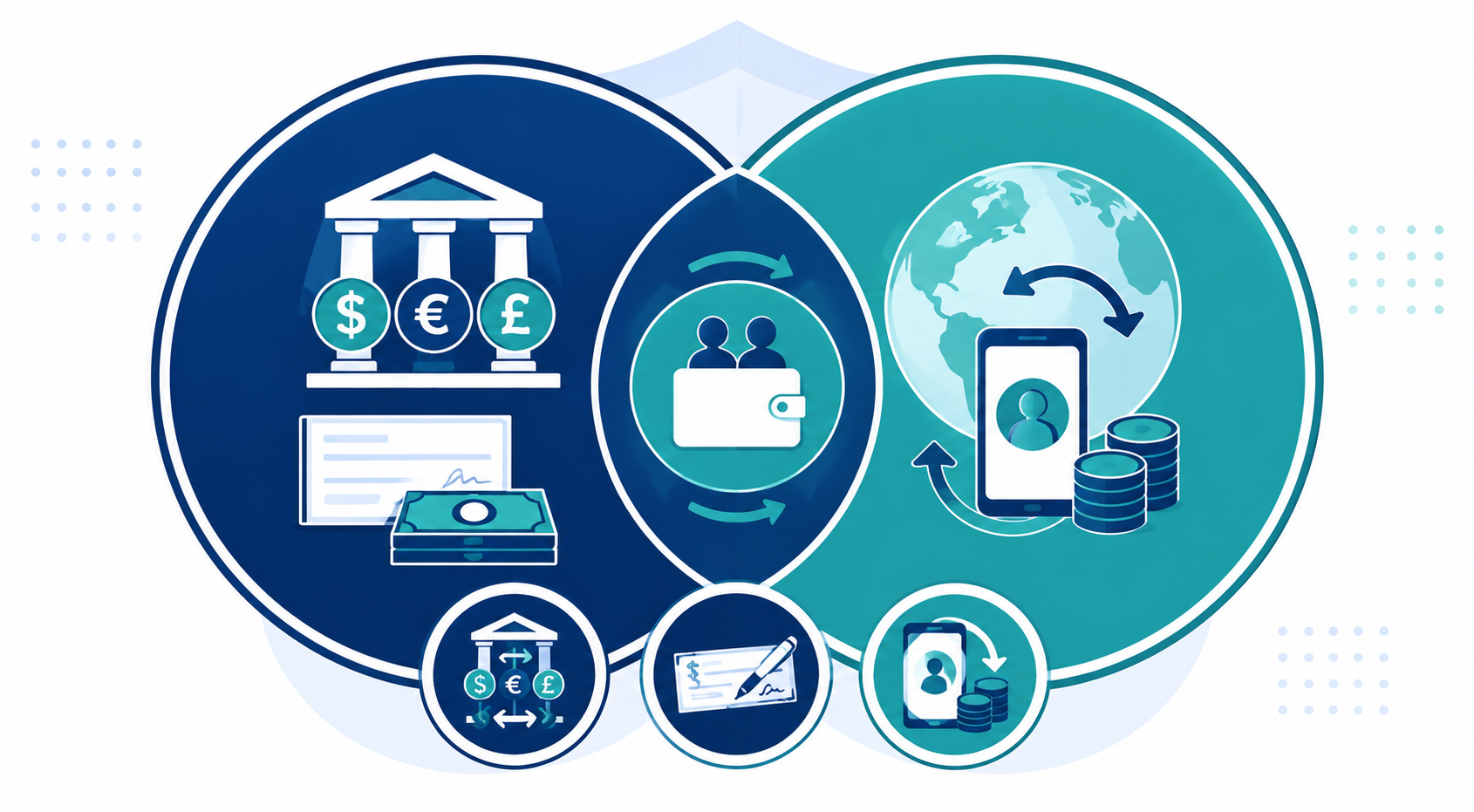
The Relationship: MSB Is the Parent, Money Transmitter Is a Subset
Money Services Business is the broad regulatory category. Money transmitter is one of seven specific activities within that category.
Every money transmitter is an MSB — because money transmission is one of the seven MSB activity types. But not every MSB is a money transmitter — there are six other MSB activity types that create MSB status without being money transmitters.
The Seven MSB Categories
FinCEN defines seven activities that qualify a business as an MSB:
Money transmitter — receiving and transmitting funds on behalf of the public, including digital payments, peer-to-peer transfers, and cryptocurrency transmission.
Currency dealer or exchanger — exchanging one currency for another, including crypto-to-fiat exchange.
Check casher — cashing checks, drafts, or money orders for a fee.
Issuer of monetary instruments or stored value — issuing money orders, traveler's checks, or prepaid cards.
Seller or redeemer of monetary instruments or stored value — selling or redeeming these instruments on behalf of issuers.
Dealer in foreign exchange — exchanging foreign currency as a primary business.
Cryptocurrency businesses — FinCEN has confirmed these qualify as money transmitters, making this category part of the first category rather than a separate one.
Why the Distinction Matters for Licensing
FinCEN registration is required for all seven MSB categories. State money transmitter licenses are specifically required for money transmission activities — not for all seven MSB categories.
A business that qualifies as an MSB through the check cashing or money order issuance categories may not need a money transmitter license from states — they may need a different state license specific to that activity, or in some states no specific license at all.
Conversely, a business that is a money transmitter — the most common fintech classification — needs both federal FinCEN registration and state money transmitter licenses in states where they operate.
Which Category Most Fintechs Fall Into
Most fintechs that move money qualify specifically as money transmitters — because they receive funds from one party and transmit them to another. This includes peer-to-peer payment platforms, digital wallet providers, cross-border payment companies, crypto exchanges, and most other payments fintechs.
The practical significance: if your fintech is a money transmitter, you need FinCEN registration AND state money transmitter licenses. If your fintech is an MSB through a different category, your state licensing obligations may differ.
Frequently Asked Questions
Can a fintech be both a money transmitter and another MSB category?
Yes. Many fintechs conduct multiple MSB activities simultaneously — for example, a crypto exchange that both exchanges currency and transmits cryptocurrency would qualify under multiple MSB categories. All applicable categories should be selected when completing FinCEN registration.
Does the MSB/money transmitter distinction affect BSA compliance requirements?
The core BSA compliance requirements — written AML program, SAR filing, recordkeeping — apply to all MSBs regardless of which specific category. The dollar thresholds for some requirements vary slightly between MSB categories.
How ComplyOne Helps
ComplyOne helps fintechs determine their correct MSB classification, complete FinCEN registration accurately, and build the compliance programs that their classification requires — through advisory services, compliance technology, or both.
Talk to the ComplyOne team to get started.
The information in this article is for general educational purposes and does not constitute legal or regulatory advice. Consult a qualified compliance professional for guidance specific to your situation.