Whether your app needs a money transmitter license depends on what it actually does with money — not what you call it. Here is how to determine if your specific product requires licensing.
Do I Need a Money Transmitter License for My App?
This is one of the most common and most consequential licensing questions early-stage fintech founders ask. The answer depends entirely on what your app actually does with money — not what you call it, not what category of app you think you are building, and not what your terms of service say about your role.
Operating an app that requires a money transmitter license without having one is not a technical compliance gap. It is an active violation of state law with serious consequences.
The Core Question: What Does Your App Do With Money?
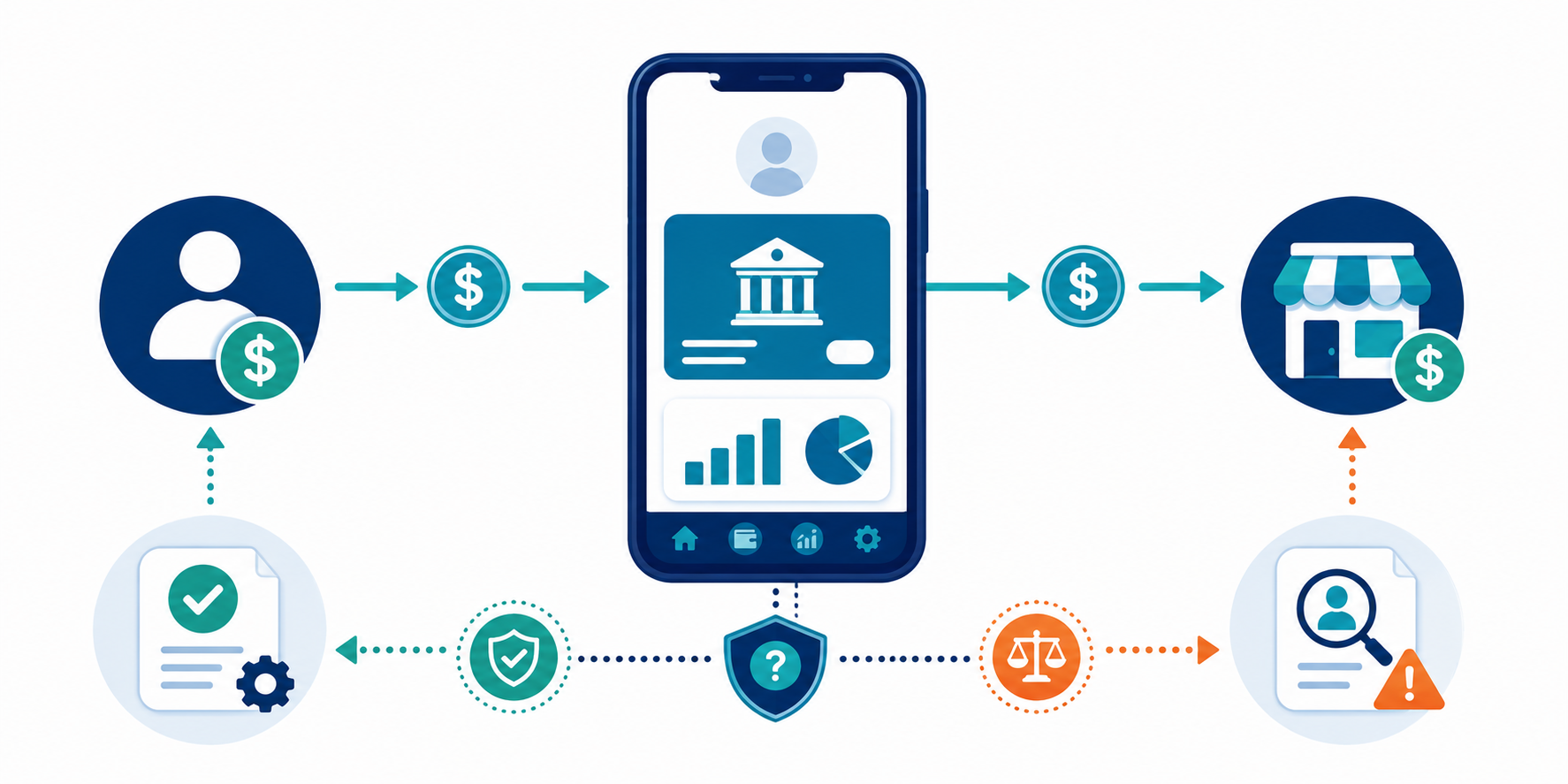
Money transmitter licensing requirements are triggered by specific activities — accepting money for the purpose of transmitting it to another person or location. The regulatory analysis always returns to this core question: does your app accept money from one party and transmit it to another?
If the answer is yes — and your business is doing this for the public rather than just moving your own funds — you are likely engaged in money transmission and likely need a license.
The technology you use does not matter. The name of your app does not matter. The size of your company does not matter. What matters is the economic substance of what the app does.
App Types That Typically Need a Money Transmitter License
Person-to-Person Payment Apps
If your app allows one user to send money to another user — splitting bills, sending payments to friends, or any other direct user-to-user transfer — you are almost certainly engaged in money transmission.
Digital Wallet Apps That Hold and Transfer Funds
If your app creates a stored balance for users — an in-app wallet that holds funds and allows users to spend, transfer, or withdraw — you are likely operating a stored value product that constitutes money transmission in most states.
Marketplace Apps That Hold Payments in Escrow
If your marketplace app holds payment from a buyer until a seller delivers, then releases the funds, you may be engaging in money transmission during the holding period.
Gig Economy and Freelance Payment Apps
Apps that receive payments from clients on behalf of freelancers or gig workers and hold and disburse those funds to workers are often engaged in money transmission.
International Remittance Apps
Any app that facilitates sending money across borders is engaged in money transmission regardless of the technology involved.
Crypto Apps That Transfer Value
Apps that allow users to buy, sell, or transfer cryptocurrency on behalf of others are generally classified as money transmitters under FinCEN's guidance.
App Types That May NOT Need a Money Transmitter License
Payment Processing Apps Acting as Merchant Agents
If your app processes payments on behalf of merchants — facilitating the payment for goods and services where the merchant has an established relationship with your platform and your app acts as the merchant's agent — you may qualify for the payment processor exemption.
This exemption requires that your app is acting as the merchant's agent, not as a principal holding consumer funds independently. If your app takes possession of consumer funds in a way not directly tied to a specific merchant transaction, the exemption likely does not apply.
Pure Software Apps That Do Not Hold Funds
If your app provides technology that connects users to a separately licensed money transmission service — but your company does not hold funds or act as the transmitter — you may not be a money transmitter.
Apps That Move Only Your Company's Own Money
An app that moves your company's own funds in the course of your business — not funds belonging to customers — is not engaged in money transmission.
What to Do If You Are Not Sure
Given the complexity of this determination, the right approach is to seek qualified legal counsel with fintech licensing experience before you launch or scale — not after a state regulator contacts you.
What Happens If You Need a License and Do Not Have One
Operating an app that constitutes money transmission without required state licenses exposes your business to cease and desist orders, civil money penalties, criminal exposure in some states, banking relationship termination, and reputational consequences from public enforcement actions.
Frequently Asked Questions
Does a small app or MVP need a money transmitter license?
Licensing requirements apply based on activity, not scale. An MVP that engages in money transmission is subject to the same licensing requirements as a fully scaled platform. Consider your licensing situation before you accept the first dollar from a user.
If I use Stripe or another payment processor, do I still need a license?
Using Stripe for your payment infrastructure does not eliminate your licensing obligation if your app itself constitutes money transmission. Stripe's license covers Stripe's own activities — not those of all the businesses that use its API.
Does my app need a license in every state?
If your app constitutes money transmission, you generally need a license in every state where you have users. See how long licensing takes and what it costs to understand the full scope of that obligation.
How ComplyOne Helps
ComplyOne works with app-based fintechs to determine whether their specific product requires money transmitter licensing, develop licensing strategies that support product launch timelines, and build the compliance programs that licensing requires — through advisory services, compliance technology, or both.
Talk to the ComplyOne team to get started.
The information in this article is for general educational purposes and does not constitute legal or regulatory advice. Licensing requirements vary significantly by state and business model. Consult qualified legal counsel for a determination specific to your app and business.