FinCEN is the U.S. bureau that administers and enforces BSA compliance. Here is what FinCEN is, what it does, what it oversees, and why every fintech needs to understand its role in financial regulation.
What Is FinCEN? A Guide for Fintech Founders
If you are building a fintech in the United States, FinCEN is one of the most important regulatory bodies you need to understand. It is the agency that writes and enforces the AML rules your compliance program is built around, the bureau that receives your SAR and CTR filings, and the regulator that can assess civil money penalties — or refer criminal cases — when companies fail to comply.
This article explains what FinCEN is, what it does, what it oversees, and what its relationship with your fintech actually looks like in practice.
What Is FinCEN?
FinCEN stands for the Financial Crimes Enforcement Network. It is a bureau of the U.S. Department of the Treasury, established in 1990 and operating under the authority of the Bank Secrecy Act.
FinCEN's mission is to safeguard the financial system from illicit use, combat money laundering, and promote national security through the collection, analysis, and dissemination of financial intelligence.
FinCEN operates at the intersection of the financial system and law enforcement. It is not a law enforcement agency itself — it does not arrest people or conduct criminal investigations directly. Instead it collects financial data from covered institutions, analyzes that data to identify financial crime patterns and networks, and shares intelligence with law enforcement agencies including the FBI, DEA, IRS Criminal Investigation, and Homeland Security Investigations.
What FinCEN Does
Rulemaking
FinCEN writes the regulations that implement the Bank Secrecy Act. When FinCEN issues a final rule — such as the 2016 CDD Rule adding beneficial ownership as a formal BSA requirement — covered financial institutions must comply. FinCEN also issues guidance documents, advisories, and frequently asked questions that clarify how existing regulations apply to specific situations and business models.
Collecting Financial Intelligence
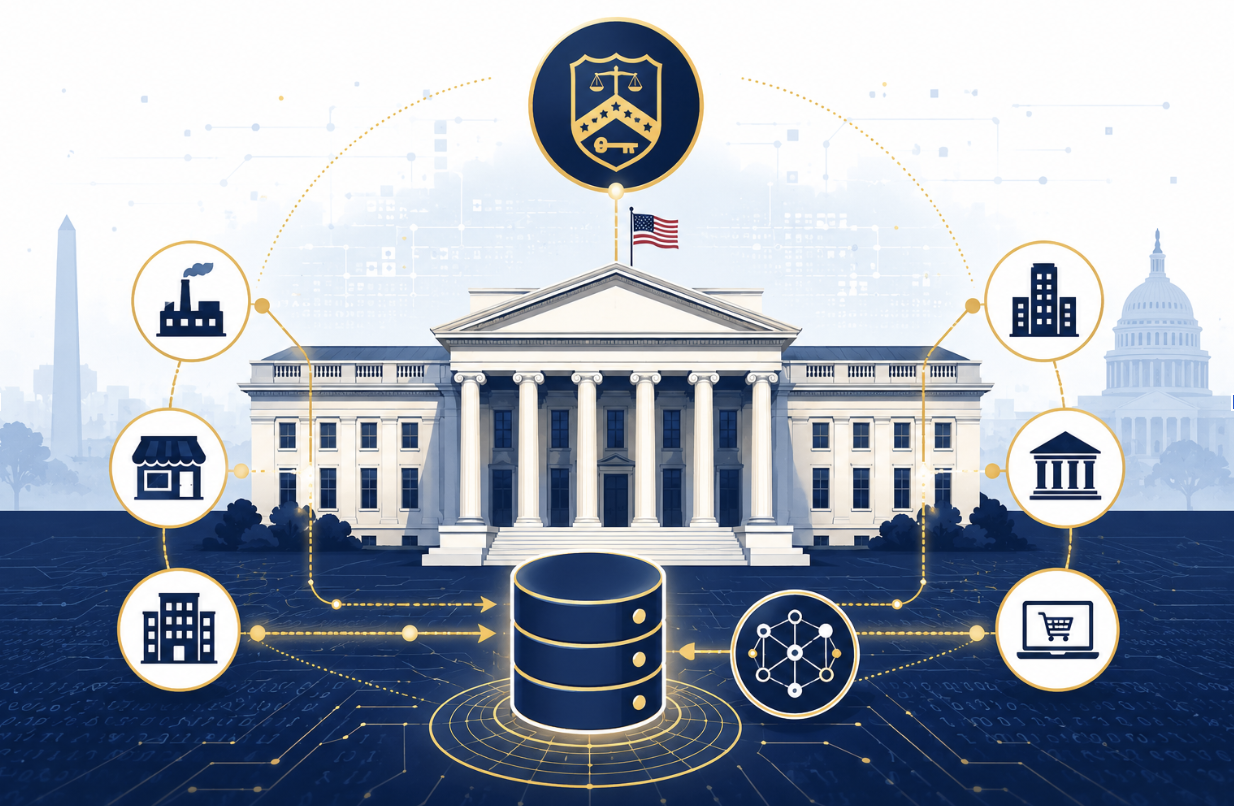
FinCEN is the central repository for BSA financial reports filed by covered institutions. Every SAR, every CTR, every FBAR, and every other required BSA filing flows to FinCEN's database — creating a comprehensive picture of financial activity across the U.S. financial system.
FinCEN makes this database available to authorized law enforcement and national security agencies for investigations. A SAR filed by your fintech may connect to a broader investigation involving dozens of institutions and thousands of transactions — connections only visible because of the centralized reporting system.
Enforcement
When covered financial institutions fail to comply with BSA requirements, FinCEN has authority to assess civil money penalties reaching tens of millions of dollars for serious or repeated violations. FinCEN enforcement actions are public — when FinCEN assesses a penalty, it publishes a detailed public notice describing the violations. This has lasting consequences for reputation, banking relationships, and capital raising ability.
MSB Registration
FinCEN administers the registration system for Money Services Businesses. When a business qualifies as an MSB and registers with FinCEN, that registration is maintained in a public database. FinCEN also has authority to examine MSBs directly.
Beneficial Ownership Information
Following the Corporate Transparency Act, FinCEN now administers the Beneficial Ownership Information registry — the federal database of beneficial ownership information reported by most U.S. companies.
FinCEN's Relationship With Your Fintech
You File Reports With FinCEN
If your fintech is a covered financial institution, you file SARs and CTRs directly with FinCEN through the BSA E-Filing System. These filings go into FinCEN's financial intelligence database. FinCEN does not respond to individual SAR filings — SAR filings are one-directional.
FinCEN Can Examine Your Business
FinCEN has examination authority over MSBs and other covered non-bank financial institutions. While many non-bank fintechs are examined primarily through their sponsor banks and state regulators, FinCEN can and does conduct direct examinations when it identifies compliance concerns.
FinCEN Issues Guidance That Shapes Your Program
FinCEN regularly issues guidance documents and advisories that clarify how BSA requirements apply to specific business models. This includes guidance specific to fintech, cryptocurrency, and emerging payment systems. Staying current with FinCEN guidance is an ongoing compliance obligation.
FinCEN Administers Your MSB Registration
If your fintech is an MSB, your registration with FinCEN is a direct relationship. You register through FinCEN's BSA E-Filing System, re-register every two years, and update your registration when business information changes.
FinCEN Enforcement — What It Looks Like in Practice
When FinCEN identifies BSA compliance failures, the enforcement process typically involves a period of investigation and information gathering, negotiation of a settlement or finding, assessment of a civil money penalty, and issuance of a public enforcement action. In serious cases FinCEN refers criminal violations to the Department of Justice for prosecution.
Voluntary self-disclosure — proactively reporting a compliance failure to FinCEN before it is discovered through examination — is recognized as a significant mitigating factor in penalty assessment.
Frequently Asked Questions
Is FinCEN the same as the CFPB?
No. FinCEN and the CFPB are separate federal agencies with different mandates. FinCEN focuses on financial crime prevention — AML compliance, SAR filing, CTR reporting, and beneficial ownership — operating under the Department of the Treasury. The CFPB focuses on consumer financial protection operating as an independent bureau. A fintech may be subject to both depending on its products and business model.
Does FinCEN regulate all fintechs?
FinCEN's BSA authority applies to financial institutions as defined by the BSA — a category including most fintechs that move money. Whether a specific fintech is subject to FinCEN's jurisdiction depends on whether it qualifies as a covered financial institution — most commonly as a money services business.
How does a fintech contact FinCEN?
Fintechs can contact FinCEN through the BSA E-Filing System for filing questions and through the FinCEN Resource Center for regulatory questions. FinCEN does not provide private letter rulings or individual compliance guidance in most circumstances — regulatory questions are typically best addressed through qualified compliance counsel.
How ComplyOne Helps
ComplyOne helps fintechs understand their obligations under FinCEN's regulatory framework, build BSA/AML compliance programs that meet FinCEN requirements, navigate MSB registration, and prepare for FinCEN examination — through advisory services, compliance technology, or both.
Talk to the ComplyOne team to get started.
The information in this article is for general educational purposes and does not constitute legal or regulatory advice. Consult a qualified compliance professional for guidance specific to your situation.