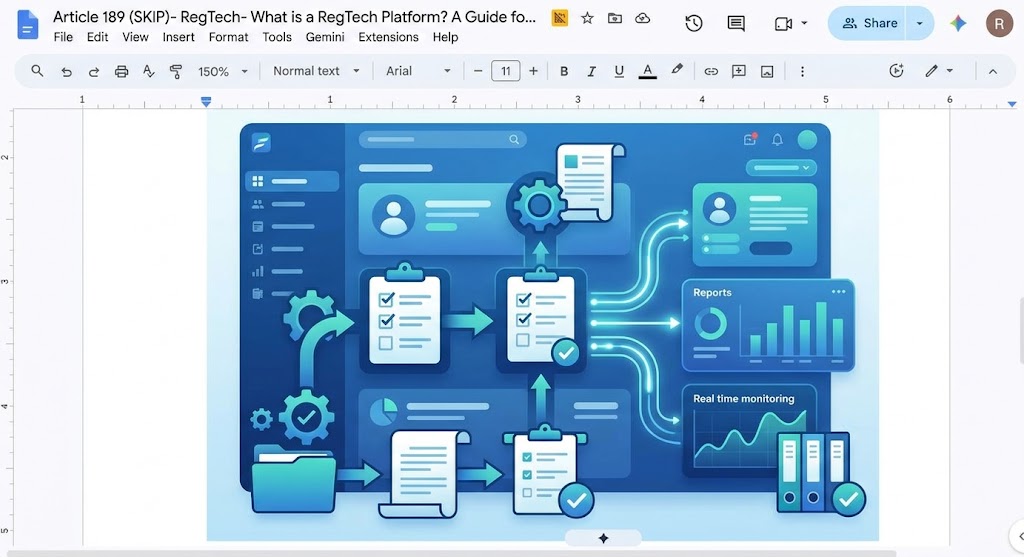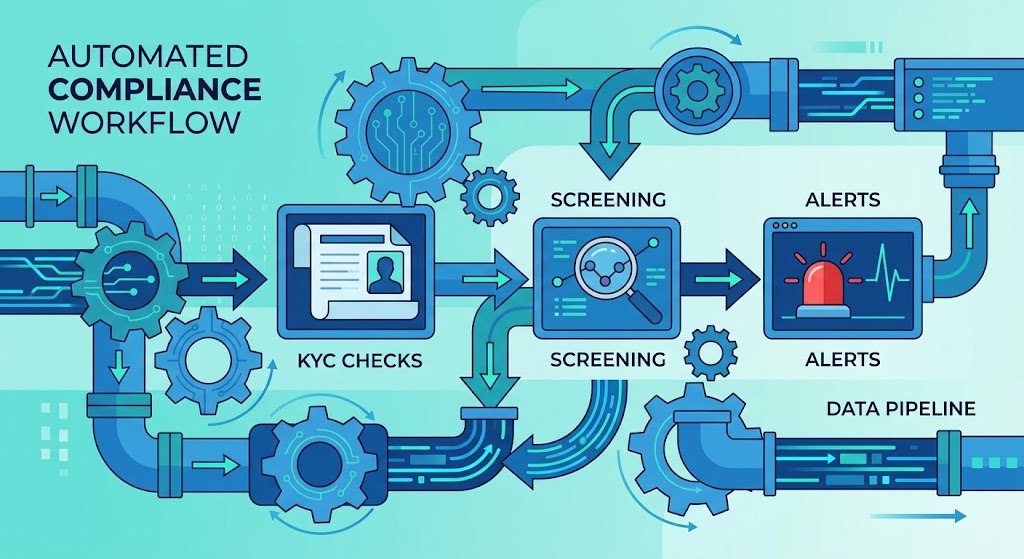
Compliance automation uses technology to execute regulatory tasks that were previously done manually — from KYC checks to transaction screening to report generation. This guide explains what can and can't be automated, and how to get started.
What Is Compliance Automation? A Guide for Fintechs
Manual compliance processes don't scale. A compliance team that can manage 500 customers manually will break under the weight of 50,000. Compliance automation is how fintechs grow without proportionally growing their compliance headcount.
Here's what compliance automation covers, where it works best, and where human judgment is still required.
What Is Compliance Automation?
Compliance automation is the use of technology to perform regulatory compliance tasks — such as identity verification, sanctions screening, transaction monitoring, and report generation — with minimal or no manual intervention for routine cases.
Automation doesn't replace your compliance program. It executes the repeatable, high-volume parts of it consistently, quickly, and at scale — freeing your compliance team to focus on judgment-intensive tasks like SAR decisions and complex case reviews.
What Can Be Automated in Fintech Compliance?
Identity Verification and KYC Onboarding
Automated document verification, liveness checks, database lookups, sanctions screening, and PEP checks — all executed in seconds when a customer applies for an account. Low-risk customers pass through automatically. Only complex or flagged cases require a human.
Sanctions Screening
Automated matching of customer names and (for crypto) wallet addresses against OFAC, UN, EU, and other sanctions lists. Can be set to run at onboarding and continuously as lists update — without any human involvement unless a match is found.
Transaction Monitoring Alerts
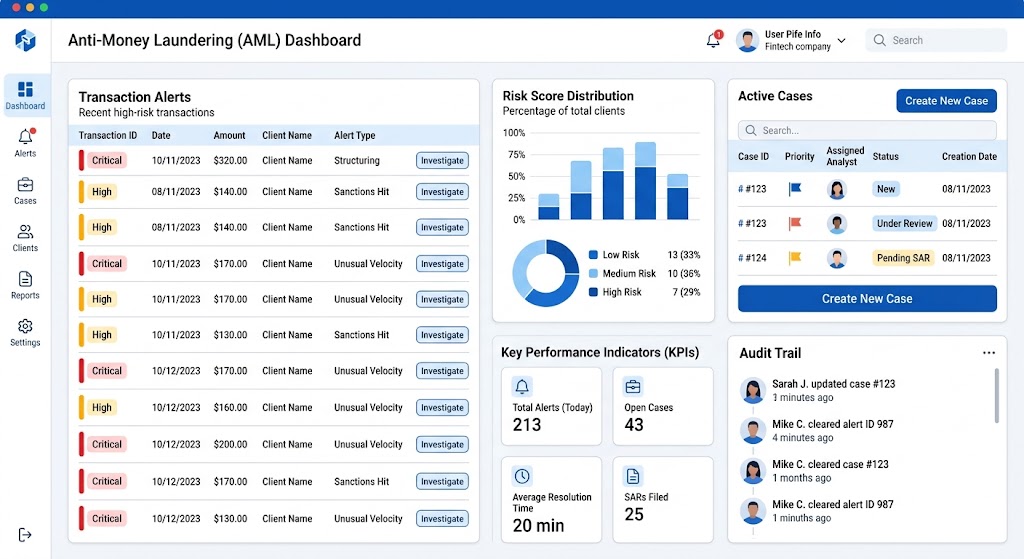
Rules-based and ML-based monitoring systems generate alerts automatically when transactions match suspicious patterns. The alert is generated without human input; a human is required to review and resolve it.
Currency Transaction Report (CTR) Preparation
For fintechs that handle cash, automated systems can identify reportable transactions and pre-populate CTR fields, reducing the manual effort to review and submit.
Adverse Media Re-Screening
Automated tools can continuously monitor news sources for mentions of your customers, flagging new adverse media without requiring manual periodic searches.
Customer Risk Re-Scoring
When new data arrives — a sanctions list update, an adverse media hit, a change in transaction behavior — automated systems can trigger a risk re-score and route high-risk customers to review queues.
Regulatory Reporting Preparation
Automated aggregation of transaction data and report generation for periodic regulatory filings — reducing the hours spent extracting and formatting data from multiple systems.
AML Training Tracking
Automated assignment and tracking of required AML training modules — ensuring everyone who needs annual training receives it, and creating completion records without manual spreadsheet management.
What Cannot Be Automated
Automation handles execution. Judgment requires a human. The following tasks cannot — and should not — be fully automated:
- SAR filing decisions — the decision to file or not file a SAR is a legal judgment call that must be made by a qualified human. Software can prepare the SAR and help you document the decision, but the decision itself is yours.
- EDD reviews — Enhanced Due Diligence for high-risk customers requires a human analyst to review source-of-funds documentation and make a risk-based approval decision.
- Risk assessment — the overall AML risk assessment for your institution requires human judgment about your business model, customer base, and risk environment.
- Regulatory relationships — responding to FinCEN inquiries, managing examinations, and communicating with regulators are human activities.
- Policy and program design — deciding what your compliance program should look like requires qualified human expertise.
Common Compliance Automation Mistakes
Over-automating decisions without review: Passing customers through fully automatically, even when risk indicators are present, because the system doesn't have a defined escalation path. Every automated approval process needs a human-reviewed exception queue.
Set-and-forget rule libraries: Automated monitoring rules need periodic review and updating. A rules library that was calibrated two years ago may miss new money laundering typologies or generate excessive false positives on legitimate transaction patterns.
No audit trail: If your automation doesn't log every decision and action — including automated approvals — you'll struggle in a regulatory examination. Every automated step should be logged and retrievable.
Automating compliance away entirely: Some fintechs rely so heavily on technology that no human has meaningful insight into what the system is doing. When regulators ask questions, no one can answer them clearly.
Getting Started With Compliance Automation
A practical approach for fintechs building automation into their compliance program:
- Start with KYC onboarding — automated identity verification is the highest-impact automation for most early-stage fintechs and the most available through commercial providers
- Add sanctions screening — automate ongoing re-screening as OFAC updates lists
- Implement transaction monitoring — deploy a fintech-native monitoring platform with baseline rules before you scale
- Add case management — organize alert review into a structured workflow with audit trails
- Automate reporting — as volume grows, automate CTR preparation and other regulatory report generation
Frequently Asked Questions
Does compliance automation reduce my regulatory liability?
Technology doesn't reduce your regulatory liability — your compliance program does. Automation helps your program function more effectively and consistently, which reduces the risk of violations, but your institution remains responsible for the outcomes.
How do I know if my automated monitoring is working?
Test it. Periodically run known-suspicious transaction scenarios through your monitoring system to confirm they generate alerts. This is part of your program's independent testing and quality assurance.
Can a small fintech justify the cost of compliance automation?
Yes — especially for KYC and sanctions screening, where commercial tools are available at very low per-check pricing. The cost of manual KYC for 1,000 customers quickly exceeds the cost of automated verification.
This article is for educational purposes only and does not constitute legal or compliance advice. Regulations vary by jurisdiction and change frequently. Consult a qualified compliance professional or legal counsel for guidance specific to your business.