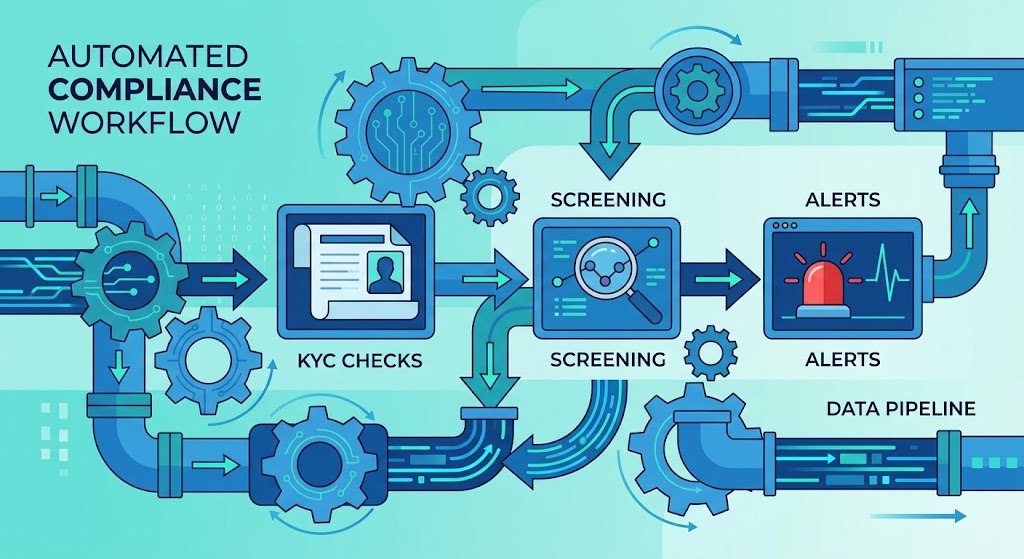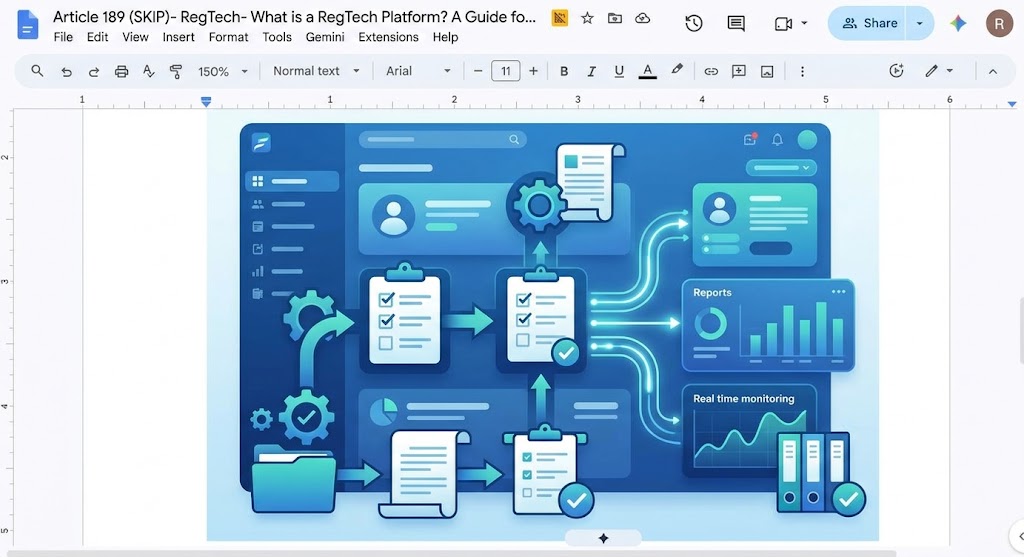
AML software helps fintechs automate transaction monitoring, case management, and SAR filing. This guide explains what AML software does, what features matter, and how to choose the right solution for your program.
Best AML Software for Fintechs — A Buyer's Guide
Every fintech subject to the Bank Secrecy Act needs a transaction monitoring program. The question isn't whether to have AML software — it's which type fits your stage, risk profile, and budget.
This guide explains what AML software does, what capabilities to prioritize, and how to evaluate your options.
What Does AML Software Do?
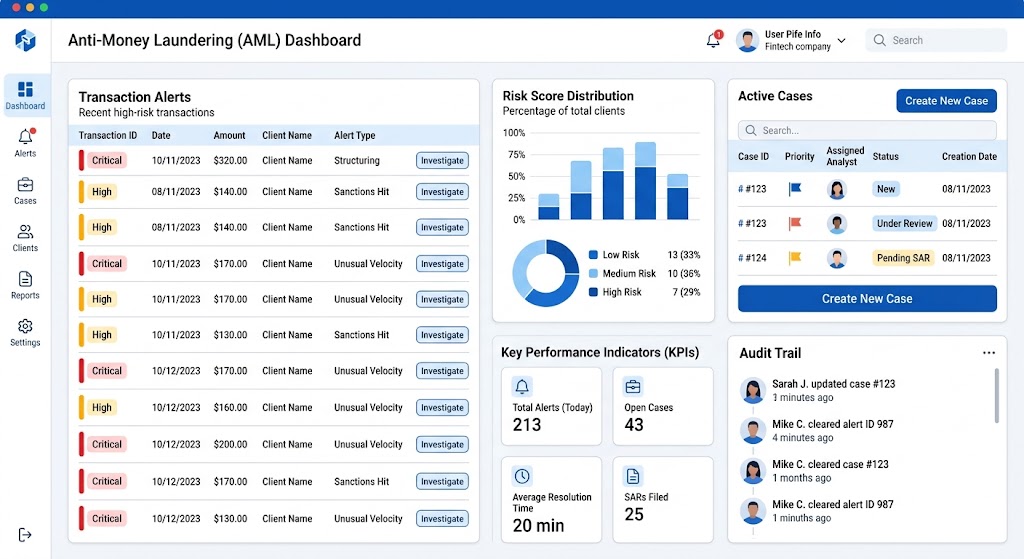
AML (Anti-Money Laundering) software automates the detection, investigation, and reporting of suspicious financial activity. At its core, it does three things:
- Monitors transactions — analyzing payment data in real time or in batches to detect patterns that match money laundering typologies or rule-based thresholds
- Manages cases — organizing and tracking alerts from detection through investigation to resolution
- Facilitates SAR filing — streamlining the preparation and submission of Suspicious Activity Reports to FinCEN
Depending on the platform, AML software may also handle customer risk scoring, CTR filing, sanctions screening integration, and regulatory reporting.
Why Fintechs Can't Skip AML Software
Manual transaction monitoring — reviewing every transaction in a spreadsheet — is not a compliance program. It's also not what regulators expect. A manual review process cannot:
- Analyze thousands of transactions per day at the speed required
- Consistently apply complex detection rules across all activity
- Produce the audit trail regulators need to see during examinations
- Scale with your customer base
Even at early stages, some form of automated monitoring is expected. The sophistication of your monitoring should be commensurate with the complexity and volume of your transactions — but manual-only is not sufficient once you have more than a handful of active customers.
Key Features to Look For
Transaction Monitoring Engine
The core capability. Look for:
- Rule-based detection — configurable rules that flag specific patterns (velocity, threshold breaches, geographic risk)
- Scenario-based detection — pre-built scenarios based on known money laundering typologies
- Machine learning / AI capabilities — adaptive models that learn from your transaction data and reduce false positives over time
- Real-time vs. batch processing — real-time is better for high-risk products; batch is adequate for many consumer use cases
Alert Management and Case Management
After an alert is generated, a human (or workflow) needs to review it:
- Alert queue management — triage by risk level
- Case creation — grouping related alerts into a reviewable investigation file
- Workflow tools — assigning cases to analysts, tracking status, documenting decisions
- Audit trail — every action on every alert recorded for examination readiness
SAR Workflow
The path from investigation conclusion to SAR submission should be built into the platform:
- SAR drafting tools with pre-populated fields from the case file
- Narrative guidance and templates
- Direct FinCEN BSA E-Filing integration
- SAR tracking and deadline management
Regulatory Reporting
Beyond SARs:
- CTR filing for cash-intensive products
- OFAC hit logging
- Examination-ready reporting on alert volumes, dispositions, and filing rates
Integration Capabilities
Your AML software needs to connect to your transaction data source — your core ledger, payment processor, or data warehouse. Evaluate:
- API connectivity
- Native integrations with your tech stack
- Real-time data ingestion vs. daily batch files
Categories of AML Solutions for Fintechs
Full-Suite Enterprise Platforms
Comprehensive AML platforms covering monitoring, case management, SAR filing, and reporting. Best for larger fintechs with high transaction volumes. Examples: NICE Actimize, Verafin (now part of Fiserv).
Modern Fintech-Native AML Platforms
Built specifically for the fintech stack — API-first, faster to implement, and designed for modern data environments. Examples: Unit21, Sardine, Hawk AI.
Core Banking / BaaS Platform AML Modules
Some BaaS platforms and core banking providers include AML monitoring as part of their broader product suite. May be convenient but evaluate whether the monitoring depth is sufficient for your risk profile.
Point Solutions
Some fintechs use separate point solutions for different components — a KYC tool, a separate transaction monitoring engine, and a case management system — and integrate them. This provides flexibility but requires more integration work.
How to Choose: Questions to Ask Every Vendor
- What is your false positive rate on a customer base like mine? Ask for benchmarks or references from fintechs with similar products.
- How long does implementation take? Time-to-compliance matters — you need to be live before you're regulatory operational.
- How are monitoring rules configured? Can you customize rules yourself, or do you need vendor professional services for every change?
- What does your FinCEN E-Filing integration look like? Is SAR submission automated, or does it export a PDF you manually upload?
- What examination support do you provide? When regulators ask about your monitoring program, what documentation does the vendor provide?
- What is your pricing model? Per alert, per account, per transaction, or flat annual fee?
The Right Tool for Your Stage
Frequently Asked Questions
Can I use my KYC provider's transaction monitoring feature instead of a separate AML platform?
Some KYC providers offer basic transaction monitoring as an add-on. Evaluate whether the depth — detection rules, case management, SAR workflow — meets your regulatory obligations and risk profile before relying on it.
Does AML software replace a compliance officer?
No. AML software generates alerts; a qualified human must review those alerts and make SAR filing decisions. The software makes your compliance team more effective — it doesn't replace the judgment and accountability of a human compliance officer.
What does a typical AML software implementation timeline look like?
Simple API integrations with fintech-native platforms can go live in 2–4 weeks. Full enterprise implementations can take 3–6 months.
This article is for educational purposes only and does not constitute legal or compliance advice. Regulations vary by jurisdiction and change frequently. Consult a qualified compliance professional or legal counsel for guidance specific to your business.