RegTech platforms use technology to automate and streamline regulatory compliance. This guide explains what RegTech covers, how it helps fintechs, and how to evaluate solutions for your compliance program.
What Is a RegTech Platform? A Guide for Fintechs
Compliance is one of the most resource-intensive parts of running a fintech — and one of the most consequential if it goes wrong. RegTech platforms exist to make compliance faster, more consistent, and more scalable.
But "RegTech" covers a wide range of tools. Here's how to think about it and what to look for.
What Is RegTech?
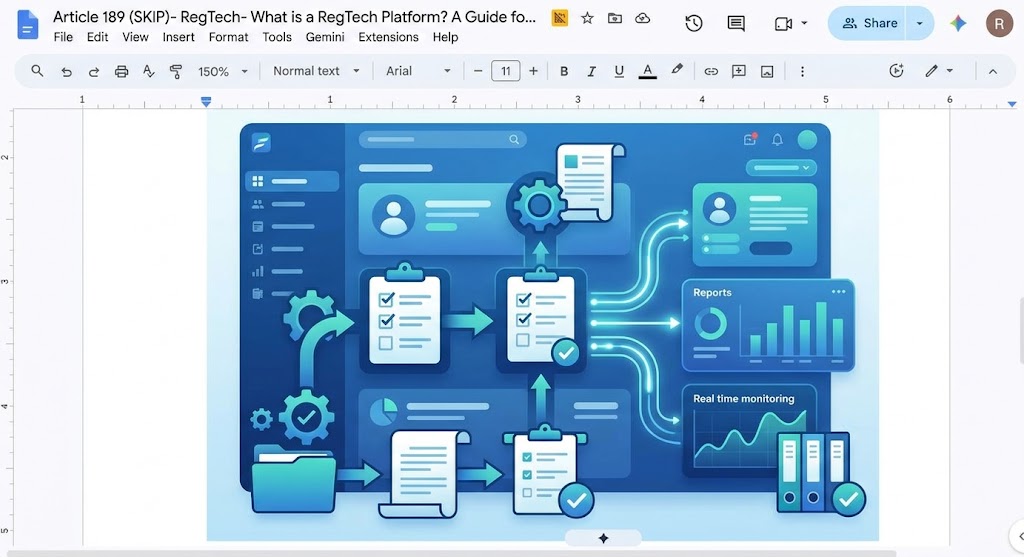
RegTech (short for Regulatory Technology) refers to the use of technology to help businesses comply with regulatory requirements more efficiently, accurately, and cost-effectively than manual processes allow.
The term was coined in the aftermath of the 2008 financial crisis, when a surge in new regulations created enormous compliance burdens for financial institutions. Technology emerged as the primary way to manage that burden at scale.
For fintechs specifically, RegTech addresses the challenge of building a compliance program from scratch — without the infrastructure of a traditional bank — while still meeting the same regulatory standards.
What Do RegTech Platforms Do?
RegTech encompasses several distinct capability areas:
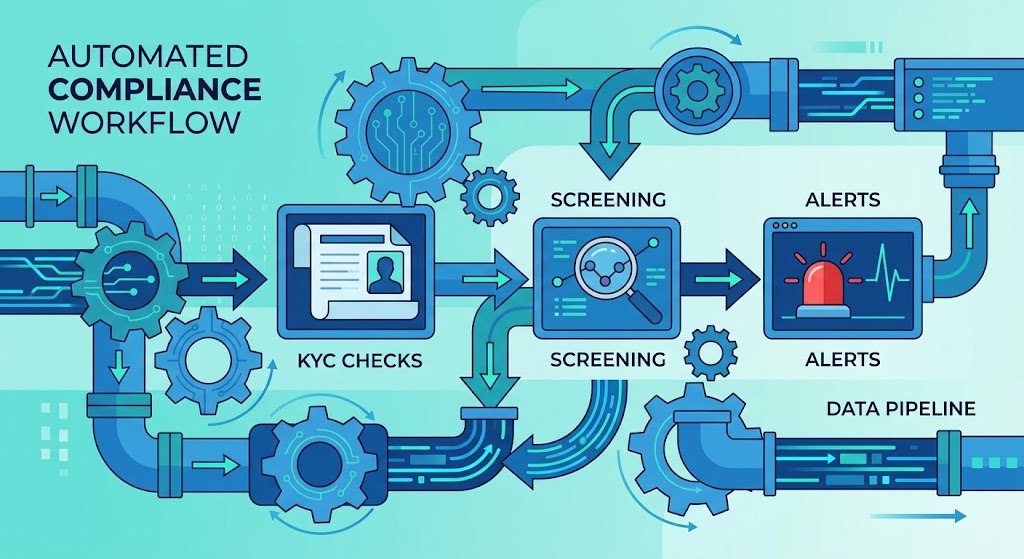
KYC and Identity Verification
Platforms that automate customer identity verification at onboarding — document scanning, liveness checks, database lookups, and risk scoring. Examples: Alloy, Persona, Socure, Onfido.
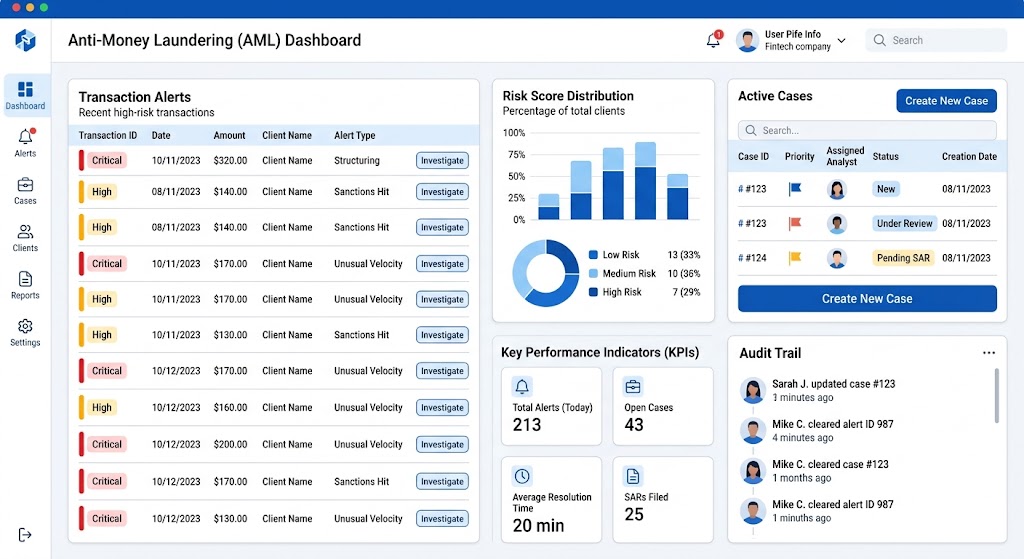
AML Transaction Monitoring
Software that analyzes transaction data in real time, applies rules and machine learning models to detect suspicious patterns, and generates alerts for compliance team review. Examples: Featurespace, NICE Actimize, Unit21, Sardine.
Sanctions Screening
Tools that match customer names, entity names, and (for crypto) wallet addresses against OFAC, UN, EU, and other sanctions lists. Examples: Refinitiv, Dow Jones Risk & Compliance, Accuity.
SAR Filing and Case Management
Platforms that streamline the investigation and reporting workflow — from alert triage to SAR submission via FinCEN E-Filing. Examples: NICE Actimize, Verafin, Unit21.
Regulatory Reporting
Tools that automate the preparation and submission of required regulatory reports — CTRs, SARs, NMLS filings, and others. Examples: AxiomSL, Wolters Kluwer.
Compliance Training
Digital training platforms that deliver and track AML, KYC, and other compliance training for all relevant staff. Examples: ACAMS, Compliance Wave, KnowledgeCity.
Policy and Controls Management
Platforms that help compliance teams manage policies, procedures, control testing, and audit trails. Examples: LogicGate, VComply, 6clicks.
Crypto Blockchain Analytics
Tools specifically for analyzing blockchain transactions, scoring wallet risk, and meeting crypto-specific AML and sanctions screening requirements. Examples: Chainalysis, Elliptic, TRM Labs.
The Value RegTech Delivers
Manual compliance processes don't scale. As your customer base grows from 1,000 to 100,000 to 1 million users, you can't hire proportionally more compliance staff to keep up. RegTech breaks that linear relationship:
RegTech also improves consistency — automated rules apply the same logic every time, reducing the human variability that creates compliance gaps.
How to Evaluate a RegTech Platform
When assessing any RegTech solution for your fintech, ask:
- Does it cover your specific regulatory requirements? A KYC tool built for European GDPR compliance may not meet US CIP requirements.
- How does it integrate with your existing stack? REST API? SDK? Native integration with your core banking or payment platform?
- What is the false positive rate? For transaction monitoring, high false positives mean your compliance team is buried in noise. Ask vendors for benchmark data.
- Is it auditable? Regulators will want to see how decisions were made. The platform must produce a complete, auditable trail.
- What are the data security and compliance certifications? SOC 2 Type II is a baseline expectation for fintech RegTech vendors.
- What does implementation look like? Time to deploy, support model, and ongoing maintenance requirements matter for a lean compliance team.
RegTech vs. Compliance as a Service (CaaS)
RegTech is technology. Compliance as a Service (CaaS) is the combination of technology plus human expertise — where a provider manages your compliance program on an ongoing basis, not just provides software.
For early-stage fintechs without a dedicated compliance team, CaaS can be a more practical starting point than stitching together multiple RegTech point solutions.
Frequently Asked Questions
Do I need a RegTech platform as a startup?
Even at very early stages, some RegTech is usually necessary — at minimum a KYC/identity verification tool and sanctions screening. What you don't need from day one is every capability. Start with what your immediate regulatory obligations require and expand as you grow.
How much does RegTech cost?
It varies widely. Entry-level KYC verification tools may charge per verification ($0.50–$5 per check). Enterprise AML platforms can cost $100,000+ annually. Transaction monitoring tools typically price per alert or per transaction volume.
Can RegTech replace a compliance officer?
No. RegTech automates processes, but compliance judgment — deciding whether to file a SAR, managing regulatory relationships, making risk-based decisions — requires a qualified human. RegTech makes your compliance officer more effective, not unnecessary.
This article is for educational purposes only and does not constitute legal or compliance advice. Regulations vary by jurisdiction and change frequently. Consult a qualified compliance professional or legal counsel for guidance specific to your business.