Blockchain AML refers to the anti-money laundering compliance requirements and tools that apply to cryptocurrency businesses. Here is what blockchain AML means, what it requires, and how crypto companies build compliant programs.
What is Blockchain AML? Crypto Compliance Explained
Blockchain AML — anti-money laundering compliance in the context of cryptocurrency and blockchain-based businesses — refers to the set of legal requirements, compliance programs, and analytical tools that crypto companies must implement to detect and prevent money laundering and other financial crimes.
Blockchain AML is not a separate legal framework from traditional AML. The Bank Secrecy Act applies to cryptocurrency businesses in the same way it applies to banks and money services businesses. What is different is the technology, the transaction patterns, and the specialized tools required to apply AML principles to the blockchain environment.
Why Crypto Companies Are Subject to AML Requirements
FinCEN's 2013 guidance established that most cryptocurrency businesses qualify as Money Services Businesses. As MSBs, they are required to implement AML compliance programs, file Suspicious Activity Reports, file Currency Transaction Reports where applicable, and follow KYC requirements for all customers.
The FATF has established that Virtual Asset Service Providers are subject to AML standards equivalent to traditional financial institutions. This global standard reinforces and extends the BSA framework into the crypto context. See our comprehensive guide on AML compliance for crypto companies for a full overview of the requirements that apply.
What Blockchain AML Requires
Written AML Program
Every crypto company that qualifies as an MSB must have a written AML program covering the five core BSA program elements: internal controls, a designated compliance officer, employee training, independent testing, and customer due diligence.
KYC and Customer Due Diligence
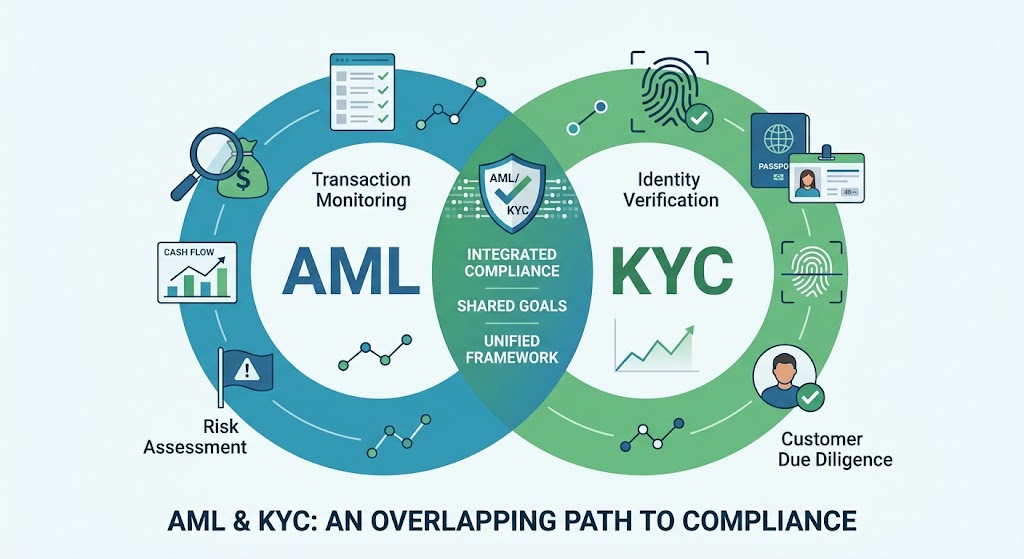
Crypto companies must verify the identity of all customers at onboarding. This means collecting and verifying identity information, conducting risk assessments, and applying enhanced due diligence to higher-risk customers. In the crypto context, KYC is implemented through automated identity verification solutions. See our guide on KYC in crypto for a detailed breakdown of what is required.
Transaction Monitoring
Crypto companies must monitor customer transactions for suspicious activity. This means establishing monitoring rules calibrated to crypto-specific red flags — unusual transaction volumes, patterns suggesting layering, transactions to or from high-risk jurisdictions, and use of mixing or tumbling services.
In the blockchain context, transaction monitoring involves both analysis of on-platform activity and blockchain analytics tools that assess the origin and destination of funds across the public blockchain ledger.
Blockchain Analytics
Blockchain analytics is a core AML tool specific to the crypto context. These tools trace the provenance of cryptocurrency funds across the public blockchain, flag funds that have passed through sanctioned entities, darknet markets, ransomware addresses, or other high-risk sources, and assign risk scores to wallet addresses based on their transaction history.
Major blockchain analytics providers include Chainalysis, Elliptic, and TRM Labs. Integrating blockchain analytics into your compliance workflow is considered a standard practice for crypto companies with meaningful transaction volumes.
Sanctions Screening
Crypto companies must screen all customers and transactions against OFAC's sanctions lists. In the crypto context, OFAC has specifically sanctioned certain blockchain wallet addresses — so OFAC screening must include both individual/entity name screening and blockchain address screening.
SAR Filing
Suspicious activity must be reported to FinCEN through Suspicious Activity Reports. Crypto-specific SAR filing requirements are the same as for other MSBs — but the patterns of suspicious activity that trigger filings include blockchain-specific red flags such as use of privacy coins, mixing services, and high-velocity layering through multiple wallets.
Frequently Asked Questions
Is blockchain AML the same for DeFi as for centralized exchanges?
No — and this is an area of evolving regulatory guidance. Centralized exchanges with clear controlling entities are straightforwardly subject to AML requirements. Decentralized protocols without controlling entities occupy a more complex regulatory space, though regulatory pressure to extend AML requirements to DeFi is growing globally.
How does blockchain analytics differ from traditional transaction monitoring?
Traditional transaction monitoring analyzes on-platform behavior — what a customer does within your system. Blockchain analytics traces what happens on the public blockchain ledger — including activity that occurred before the funds arrived at your platform. The combination of both gives crypto companies a more complete picture of the funds they are handling and the customers they are serving.
How ComplyOne Helps
ComplyOne helps crypto companies design and implement blockchain AML programs — from written policies through KYC, transaction monitoring, blockchain analytics integration, and SAR filing — through advisory services, compliance technology, or both.
Talk to the ComplyOne team to get started.
The information in this article is for general educational purposes and does not constitute legal or regulatory advice. Consult a qualified compliance professional for guidance specific to your situation.