A compliance risk assessment identifies where your business faces the greatest regulatory risk across all applicable frameworks — not just AML. Here is what it covers, how it differs from an AML risk assessment, and how to build one.
What Is a Compliance Risk Assessment? A Guide for Fintechs
Most fintechs are familiar with the AML risk assessment — the BSA-required analysis of money laundering risk that forms the foundation of their AML program. But a compliance risk assessment is broader. It maps regulatory risk across your entire business — not just AML — and identifies where your greatest exposures lie across every applicable regulatory framework.
For fintechs operating in a complex regulatory environment covering AML, consumer protection, licensing, data privacy, and more, a comprehensive compliance risk assessment is a foundational governance tool that senior management and boards increasingly expect to see.
Compliance Risk Assessment vs. AML Risk Assessment
The AML risk assessment is a specific, BSA-mandated analysis focused narrowly on money laundering risk across your products, customers, geographies, and delivery channels. It feeds directly into your AML program design.
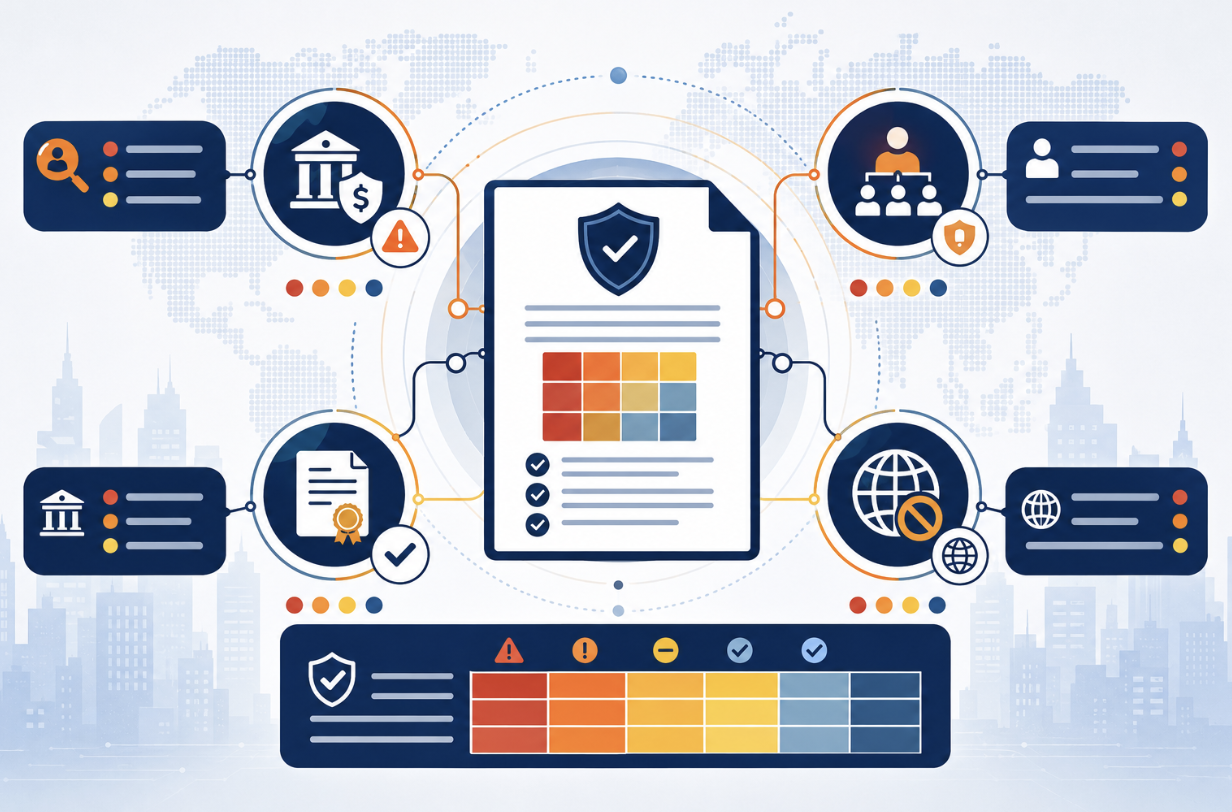
The compliance risk assessment is broader. It covers the full universe of regulatory obligations your business faces and assesses the risk your business faces in each area based on the likelihood of a violation and the potential severity of consequences.
The AML risk assessment is typically a component of — or feeds into — the broader compliance risk assessment. Both are needed. They serve different but complementary purposes.
What a Compliance Risk Assessment Covers
AML and BSA Compliance Risk
The risk that your business fails to meet its Bank Secrecy Act obligations — inadequate AML program, SAR filing failures, CTR failures, or recordkeeping deficiencies.
Consumer Protection Risk
The risk that your consumer-facing products or practices violate UDAAP standards, Regulation E, Regulation Z, or other consumer financial protection laws. Particularly significant for any fintech with a consumer-facing product and large customer base.
Sanctions Compliance Risk
The risk of processing transactions with OFAC-sanctioned parties through inadequate screening, fuzzy matching failures, or insufficient ongoing monitoring.
Licensing Risk
The risk of operating in states or for products without required licenses — including both the risk of unlicensed operation and non-compliance with ongoing obligations of existing licenses.
Data Privacy and Cybersecurity Risk
The risk of violating applicable data privacy laws including state privacy laws, GLBA financial data protection requirements, and potentially GDPR for companies with European customers.
Third-Party Risk
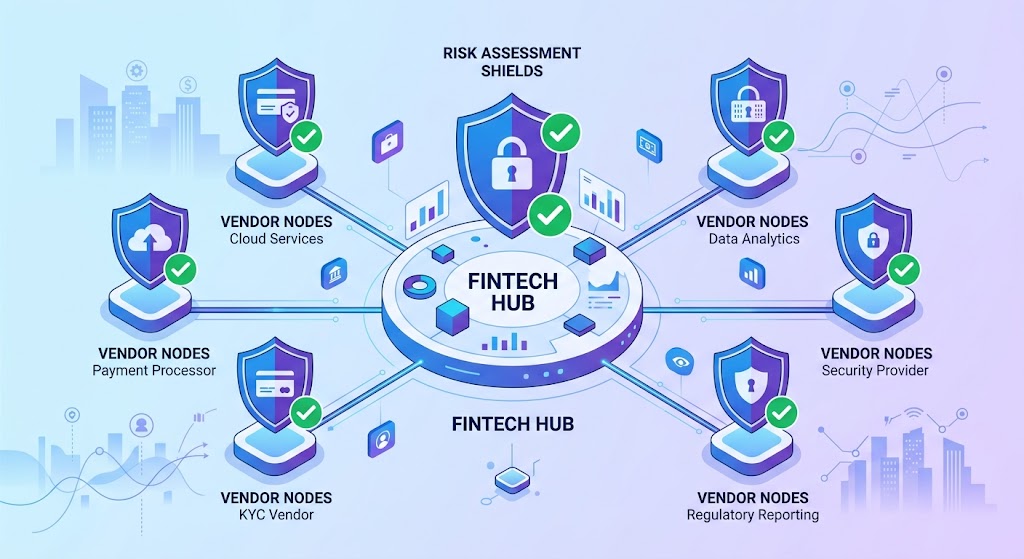
The risk arising from relationships with vendors, service providers, and partners. If a KYC provider, payment processor, or other critical vendor has compliance failures, those failures can create regulatory risk for your business.
Corporate Governance Risk
The risk that your business lacks adequate governance structures — board oversight, compliance reporting, policy approval processes, and internal controls — to meet regulatory expectations.
How to Conduct a Compliance Risk Assessment
Step 1 — Map Your Regulatory Universe
Identify every regulatory framework that applies to your business based on your products, business model, customer types, and geographies. This is your regulatory inventory — the complete set of obligations against which you will assess your risk.
Step 2 — Assess Inherent Risk in Each Area
For each regulatory area, assess the inherent risk your business faces before any controls are applied. Inherent risk is determined by the complexity of the regulatory requirements, your historical compliance track record, the volume of activity subject to each requirement, and the severity of consequences for violation.
Step 3 — Evaluate Your Control Environment
For each area of identified inherent risk, assess the strength of the controls you have in place — policies, procedures, technology, training, monitoring, and testing.
Step 4 — Determine Residual Risk
For each regulatory area, determine your residual risk — the risk that remains after your controls are applied. Areas where residual risk is high indicate compliance gaps requiring additional controls, resources, or remediation.
Step 5 — Prioritize and Act
Use the residual risk assessment to prioritize compliance investments — where to spend time, resources, and budget to reduce the most significant exposures first.
Step 6 — Document and Present to Senior Management
The compliance risk assessment must be documented in writing and presented to senior management. Senior management needs to understand the business's compliance risk profile and approve the approach to managing high-risk areas.
How Often Should the Assessment Be Updated?
Your compliance risk assessment should be reviewed and updated at least annually. Updates are also triggered by the launch of new products, entry into new markets, significant changes to the regulatory environment, material growth in transaction volume, and any significant compliance event.
Frequently Asked Questions
Is a compliance risk assessment required by regulation?
The BSA specifically requires a risk assessment as part of a compliant AML program. A broader compliance risk assessment is not always explicitly required by name under specific regulations, but the expectation that financial institutions understand and manage their full compliance risk profile is embedded in examination standards and supervisory expectations. Sponsor banks increasingly expect to see a comprehensive compliance risk assessment.
Who should conduct the compliance risk assessment?
The compliance risk assessment is typically led by the compliance function with input from legal, operations, technology, and business leadership. For early-stage fintechs without a dedicated compliance team, an external compliance consultant can lead or support the assessment. The final document must be reviewed and approved by senior management.
How does a compliance risk assessment support fundraising?
Investors — particularly institutional investors — increasingly expect evidence of structured compliance risk management as part of due diligence. A well-documented compliance risk assessment demonstrates that the company understands its regulatory obligations and has built controls to manage risk — a meaningful signal of operational maturity.
How ComplyOne Helps
ComplyOne helps fintechs conduct comprehensive compliance risk assessments covering the full regulatory universe applicable to their business — identifying gaps, prioritizing remediation, and building documentation that satisfies sponsor bank and investor due diligence requirements — through advisory services, compliance technology, or both.
Talk to the ComplyOne team to get started.
The information in this article is for general educational purposes and does not constitute legal or regulatory advice. Consult a qualified compliance professional for guidance specific to your situation.