A compliance audit systematically evaluates a fintech's compliance program against applicable requirements. Here is what compliance audits cover, how they differ from independent AML reviews, and what they produce.
What Is a Compliance Audit? A Fintech Overview
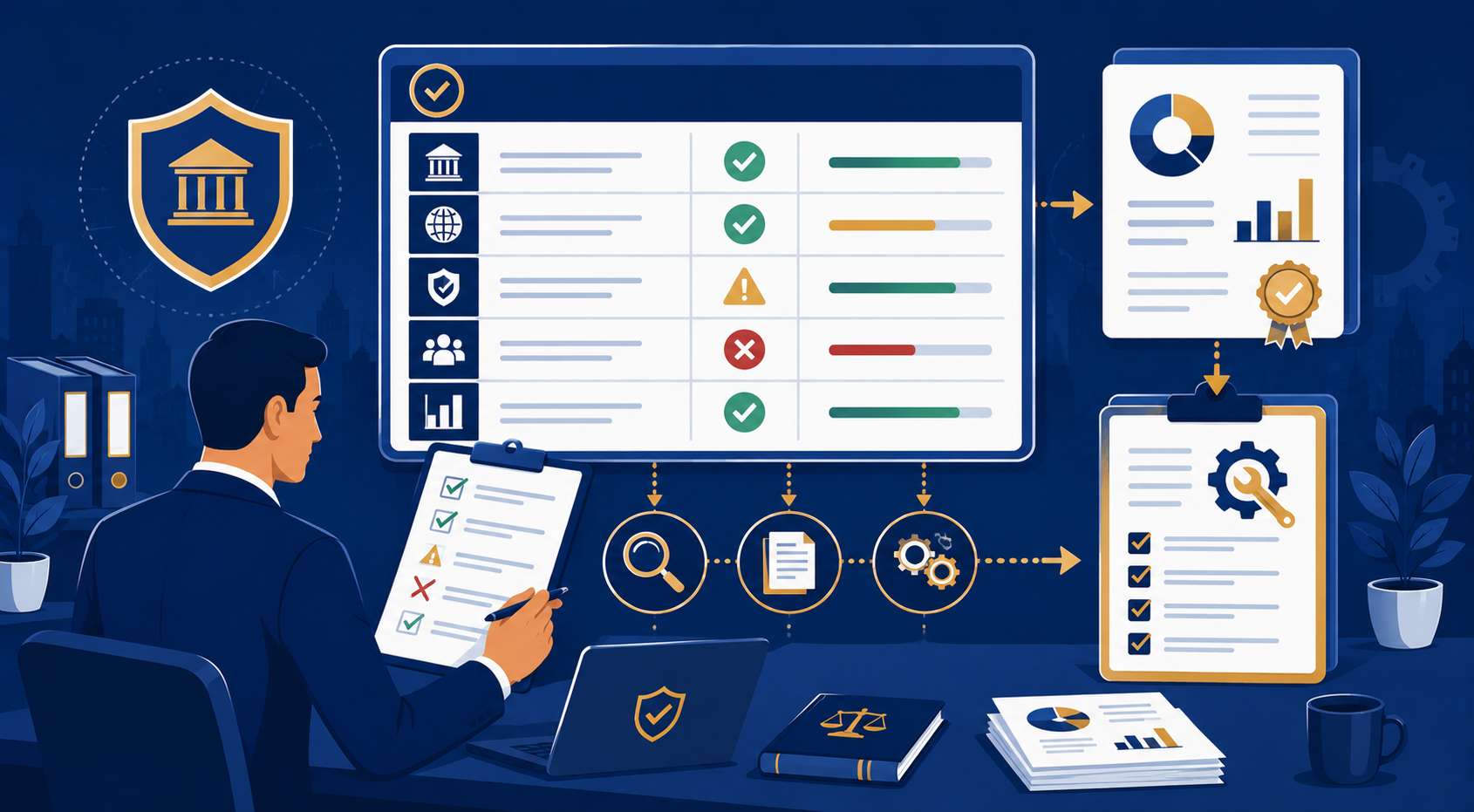
A compliance audit is a systematic, structured review of a fintech's compliance program against the regulatory requirements applicable to its business. Compliance audits identify gaps, evaluate the effectiveness of controls, and produce findings that drive remediation and program improvement.
How Compliance Audits Relate to Independent AML Reviews
The BSA's fourth pillar requirement — independent testing — is satisfied through an AML independent review, which is a specific type of compliance audit focused on the BSA/AML program. When people in fintech compliance use the term "compliance audit," they may mean the independent AML review specifically, or they may mean a broader assessment that covers multiple compliance frameworks beyond just BSA/AML.
The key characteristics are the same regardless of terminology: it is systematic, it is conducted against defined standards, it is independent of the function being assessed, and it produces written findings.
Types of Compliance Audits for Fintechs
BSA/AML independent review — specifically required by the BSA, assessing the AML program against all five required pillars and FinCEN's compliance standards.
Broad compliance audit — covering multiple regulatory frameworks simultaneously, including BSA/AML, consumer protection compliance, licensing compliance, and data privacy obligations.
Pre-examination audit — conducted specifically to prepare for an anticipated FinCEN, state, or sponsor bank examination, focused on identifying and remediating gaps before external scrutiny.
Thematic audit — focused on a specific compliance area or risk — for example, a KYC-focused audit that evaluates the entire KYC function in depth.
What a Compliance Audit Produces
A well-conducted compliance audit produces a written findings report that describes the scope and methodology of the review, each finding identified with supporting evidence, a risk rating for each finding based on regulatory exposure and severity, specific recommendations for remediating each finding, and the auditor's overall assessment of program adequacy.
The findings report is presented to senior management and must be retained as part of the compliance program's documentation. Management's formal response — acknowledging findings and committing to remediation timelines — is part of the compliance record.
Internal vs External Compliance Audits
Internal compliance audits can be conducted by a compliance team member who is not responsible for the function being audited. They are faster and less expensive than external audits but provide less independence and may be less thorough on areas where internal knowledge is limited.
External compliance audits — conducted by outside firms — provide greater independence, broader perspective, and typically greater credibility with regulators and sponsor banks. External audits are required to satisfy the BSA's independent testing requirement.
Most fintechs use external audits for their annual independent testing and may supplement with internal reviews for more frequent compliance monitoring.
Frequently Asked Questions
How long does a compliance audit take?
The duration depends on the scope and complexity of the program. A focused BSA/AML independent review for an early-stage fintech typically takes 2 to 4 weeks. A broader compliance audit covering multiple frameworks for a more complex business may take 4 to 8 weeks.
How ComplyOne Helps
ComplyOne conducts compliance audits for fintechs — from BSA/AML independent reviews through broad multi-framework assessments — through advisory services, compliance technology, or both.
Talk to the ComplyOne team to get started.
The information in this article is for general educational purposes and does not constitute legal or regulatory advice. Consult a qualified compliance professional for guidance specific to your situation.