Money transmitter license and MSB status are related but distinct concepts. Here is the exact relationship between them, what each requires, and why both matter for your compliance program.
Money Transmitter License vs MSB: Understanding the Difference for Fintechs
"Money transmitter license" and "MSB" are two terms that appear throughout fintech compliance conversations, often used in ways that suggest they are the same thing. They are related — but they are not identical. Understanding the precise difference helps fintechs correctly identify their compliance obligations and avoid confusion about what is required.
What MSB Means
MSB — Money Services Business — is a broad regulatory classification created by FinCEN under the Bank Secrecy Act. An MSB is any business that falls into one of seven activity categories: money transmitter, currency dealer or exchanger, check casher, issuer of monetary instruments or stored value, seller or redeemer of monetary instruments or stored value, dealer in foreign exchange, or cryptocurrency business operating as a money transmitter.
MSB status has a specific federal consequence: if you are an MSB, you are required to register with FinCEN and maintain a BSA/AML compliance program.
What a Money Transmitter License Is
A money transmitter license is a state-issued authorization to conduct money transmission activities within a specific state. It is issued by state banking regulators through processes like the Nationwide Multistate Licensing System. It is separate from federal MSB status and satisfies an entirely different obligation.
Money transmitter licenses are state licenses — not federal registrations. They are required by individual states for businesses conducting money transmission within those states, regardless of federal MSB registration status.
The Key Distinction
MSB status is determined by your activities — what your business actually does. It is a federal classification with federal compliance consequences.
A money transmitter license is a state permission — a state government authorizing you to conduct specific regulated activities within that state.
You can be an MSB without having a money transmitter license — but operating as an MSB without a required license is a state law violation. Conversely, having a money transmitter license in one state does not make you an MSB — your activities determine that.
What Each Requires
MSB status requires completing federal FinCEN registration within 180 days of establishing the business, maintaining a written BSA/AML compliance program, filing SARs when required, and maintaining required BSA records.
A money transmitter license requires applying to individual states, meeting financial requirements including minimum net worth and surety bonds, maintaining a compliance program meeting state standards, and satisfying ongoing annual reporting and renewal obligations.
How They Work Together
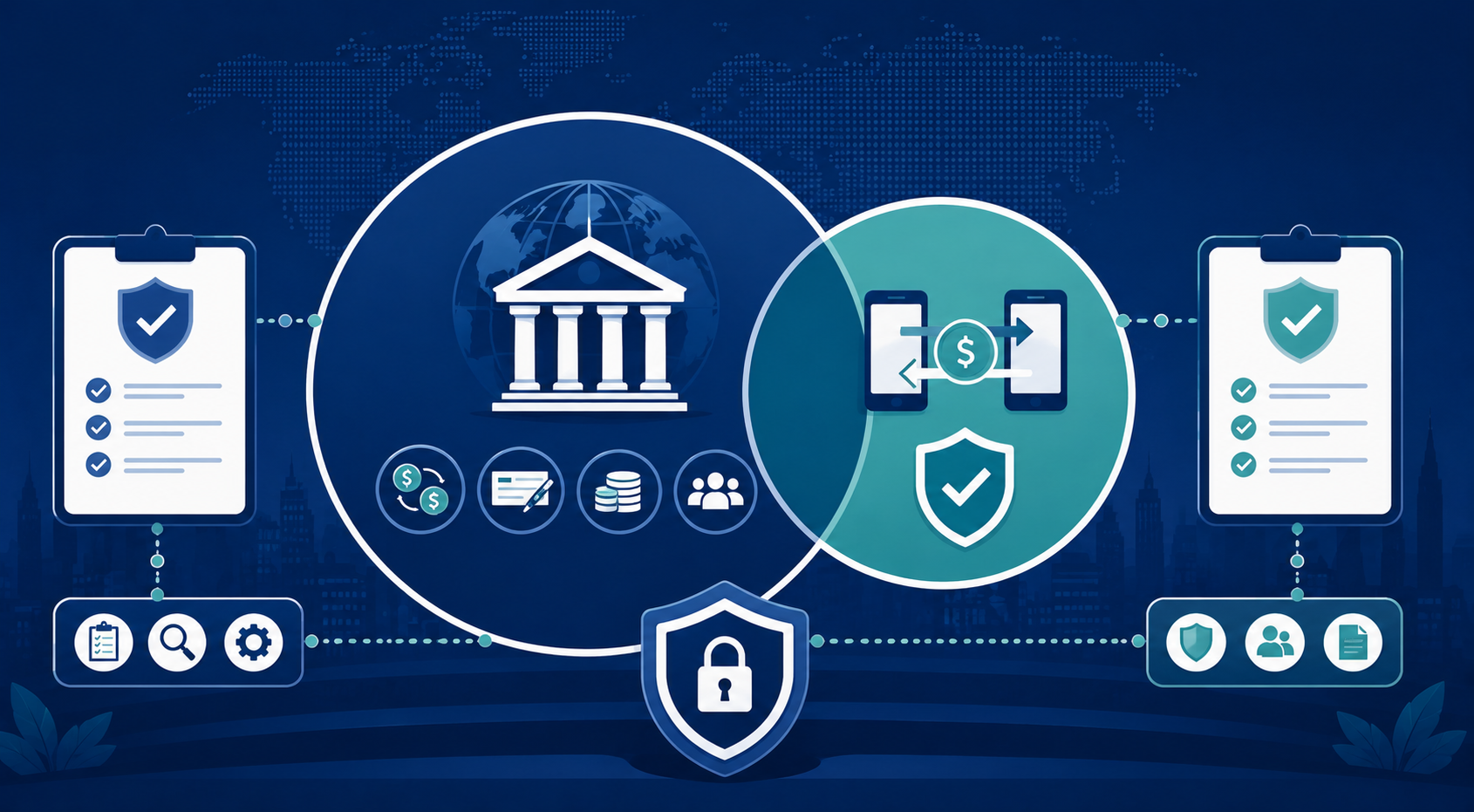
For most fintechs that conduct money transmission, both are required simultaneously. Federal MSB status triggers FinCEN registration and BSA compliance. State licensing requirements trigger applications to individual states. Neither satisfies the other.
The practical compliance program for a money transmitting fintech addresses both federal and state obligations within a unified compliance framework.
Frequently Asked Questions
If I have money transmitter licenses in 20 states, am I automatically an MSB?
No — your activity determines MSB status, not your licenses. However, if you hold money transmitter licenses, you are very likely engaging in money transmission, which almost certainly makes you an MSB. Confirm your MSB status through a formal analysis of your activities rather than inferring it from your licenses.
Does FinCEN registration replace state money transmitter licenses?
No. Federal FinCEN registration and state money transmitter licenses are entirely separate obligations administered by entirely different regulatory bodies. Neither replaces or satisfies the other.
How ComplyOne Helps
ComplyOne helps fintechs understand and address both their federal MSB status and state licensing obligations — through advisory services, compliance technology, or both.
Talk to the ComplyOne team to get started.
The information in this article is for general educational purposes and does not constitute legal or regulatory advice. Consult a qualified compliance professional for guidance specific to your situation.