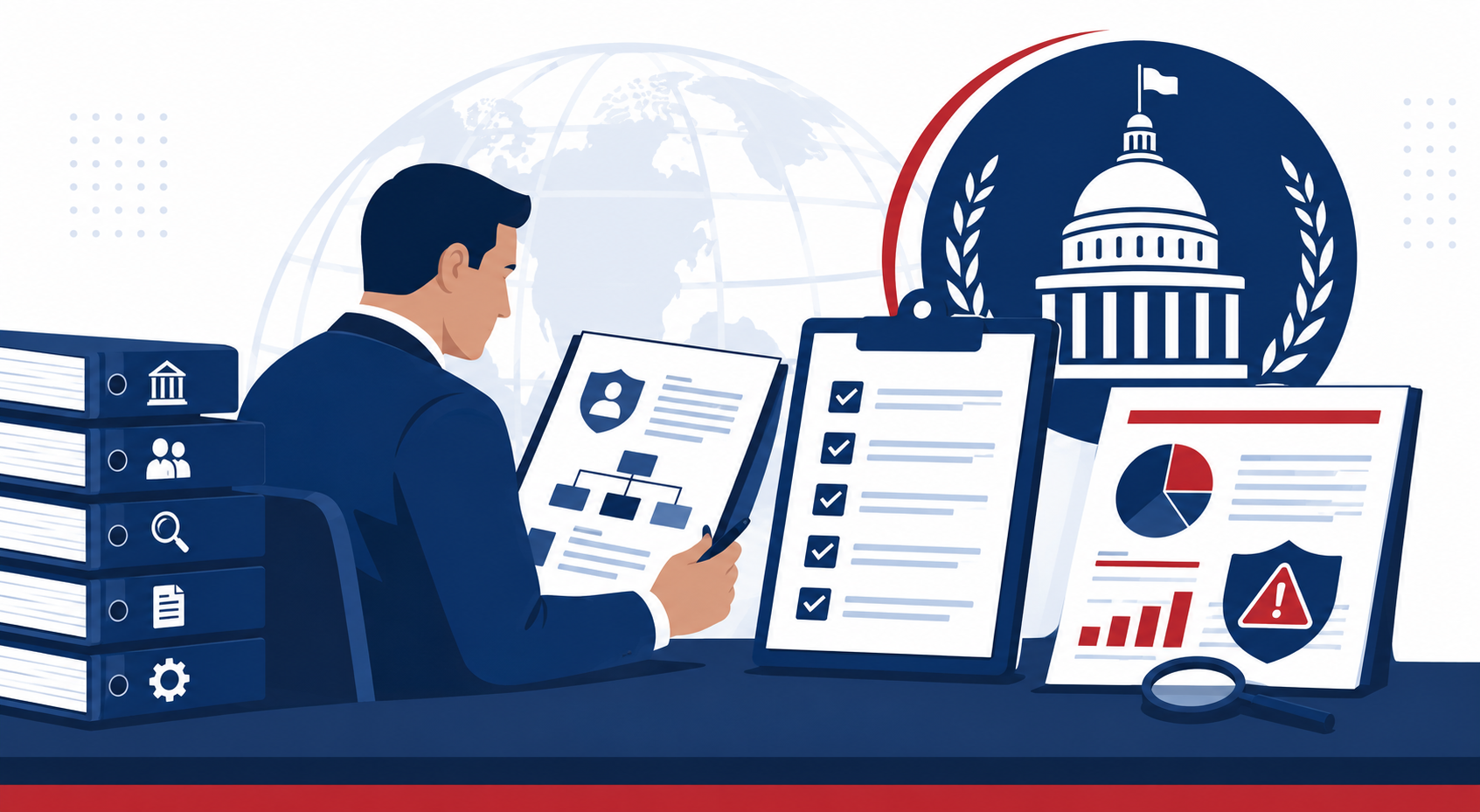
A BSA examination is a regulatory review of your AML compliance program. Here is how BSA examinations work, what examiners focus on, how to prepare, and what happens when findings are issued.
What Is a BSA Examination? What Fintechs Should Expect
A BSA examination is a formal review of your compliance program conducted by a regulatory authority to assess whether your business is meeting its Bank Secrecy Act obligations. For fintechs, this examination can come from FinCEN directly, from state regulators in states where you hold money transmitter licenses, or indirectly through your sponsor bank's own regulatory examinations.
Understanding what BSA examinations involve — before one arrives — is the most effective form of exam preparation.
Who Conducts BSA Examinations of Fintechs
FinCEN has direct examination authority over Money Services Businesses and other covered non-bank financial institutions. In practice, many fintechs are examined indirectly through their sponsor bank's regulatory relationship — when the OCC, FDIC, or Federal Reserve examines the sponsor bank, examiners review the bank's oversight of its fintech partners as part of that examination.
State regulators conduct separate examinations of licensed money transmitters as part of their oversight of licensees. These state examinations often cover both state-specific compliance and BSA/AML program adequacy.
How the Examination Process Works
BSA examinations typically follow a predictable structure regardless of which regulatory authority conducts them.
An information request is issued covering your compliance documentation — AML policy, risk assessment, KYC procedures, transaction monitoring documentation, SAR filings, training records, and independent testing reports. The examiner reviews this documentation to understand your program before any on-site work begins.
A review phase follows where examiners may conduct interviews with compliance personnel, review sample customer files, test transaction monitoring alerts, and assess whether your program is functioning as documented.
A findings phase produces a formal report identifying any compliance deficiencies. Findings are typically categorized by severity — significant deficiencies that require immediate remediation versus observations that should be addressed over time.
What Examiners Focus On
Examiners assess BSA compliance against the five pillars of a required AML program. The most common examination focuses include whether your AML program is tailored to your specific business rather than a generic template, whether your KYC procedures are being consistently followed across your entire customer base, whether your transaction monitoring rules are appropriately calibrated for your risk profile, whether SAR filings are being made accurately and within the 30-day deadline, and whether your independent testing is genuine and findings are being remediated.
The gap between documented policies and actual operations is the most common and most serious examination finding category. Examiners specifically look for situations where your compliance program says one thing and your actual operations reflect something different.
How to Prepare
Maintain your compliance program examination-ready at all times — not just when examination notice arrives. Know your own program well enough that compliance personnel can explain every element to an examiner clearly. Conduct your own internal compliance review at least annually. Complete independent testing at least annually. Remediate all testing findings promptly and document the remediation.
When examination notice does arrive, organize your documentation package proactively. Respond to information requests completely and promptly. Treat the examiner as a professional engagement — not as an adversary.
Frequently Asked Questions
How often are fintechs examined?
There is no fixed schedule. FinCEN selects MSBs for examination based on risk indicators, transaction volumes, prior compliance history, and periodic sweeps of specific business categories. Being proactive about compliance reduces examination risk over time.
What happens if an examination finds significant deficiencies?
Significant deficiencies result in formal findings requiring remediation within a specified timeframe. More serious violations may result in civil money penalties, consent orders, or referral for criminal prosecution. Proactive, cooperative engagement with examiners and documented remediation efforts are treated as mitigating factors.
How ComplyOne Helps
ComplyOne provides BSA examination preparation services — gap assessments, documentation organization, examination coaching, and remediation support — through advisory services, compliance technology, or both.
Talk to the ComplyOne team to get started.
The information in this article is for general educational purposes and does not constitute legal or regulatory advice. Consult a qualified compliance professional for guidance specific to your situation.