California's money transmitter license is required for most fintechs that move money in the state. Here is what DFPI requires, how the application process works, and what to expect on timing and costs.
How to Get a Money Transmitter License in California
California is one of the largest and most active states for fintech companies — and one of the most important money transmitter license jurisdictions in the country. The California Department of Financial Protection and Innovation — DFPI — regulates money transmission under the California Money Transmission Act, and any business that transmits money in California must be licensed unless a specific exemption applies.
This guide covers who needs a California money transmitter license, what DFPI requires, how to apply, and what to expect in terms of timeline and post-licensing obligations.
Who Needs a California MTL
Any person or entity that receives money or monetary value for transmission in California — or transmits money or monetary value — is required to be licensed by DFPI under the California Money Transmission Act.
This covers digital payment platforms, peer-to-peer transfer services, digital wallets that hold customer funds, and payment processors whose models involve accepting and transmitting customer money.
Certain exemptions apply — banks, credit unions, and other state or federally chartered financial institutions are generally exempt. Some payment processors may qualify for exemptions, but these require careful legal analysis. The payment processor exemption in California has specific conditions and does not broadly apply to most fintech business models.
California does not have a separate cryptocurrency-specific licensing framework comparable to New York's BitLicense. Cryptocurrency businesses that involve money transmission in California are generally required to hold a California MTL. A regulatory sandbox option exists for certain early-stage innovations — see our guide on fintech regulatory sandbox programs for more detail.
California MTL Requirements
Net Worth
DFPI requires licensed money transmitters to maintain a minimum tangible net worth. The minimum amount starts at $250,000 and scales upward based on the volume of California transmission. High-volume transmitters may be required to maintain significantly higher net worth.
Security Device
A surety bond, securities, or other approved security device is required. The amount is determined by DFPI based on your transmission volume in California.
Background Investigations
Individuals who own 10% or more of the business, and all executive officers and directors, must submit background investigation forms as part of the application.
AML Program
A written AML compliance program and policies must be prepared and submitted as part of the application. DFPI reviews your compliance program documentation during application review.
Business Plan and Financial Information
A detailed business plan and financial information including audited financial statements for operating companies are required. New companies without operating history may be able to substitute projected financial statements and pro forma documentation.
How to Apply
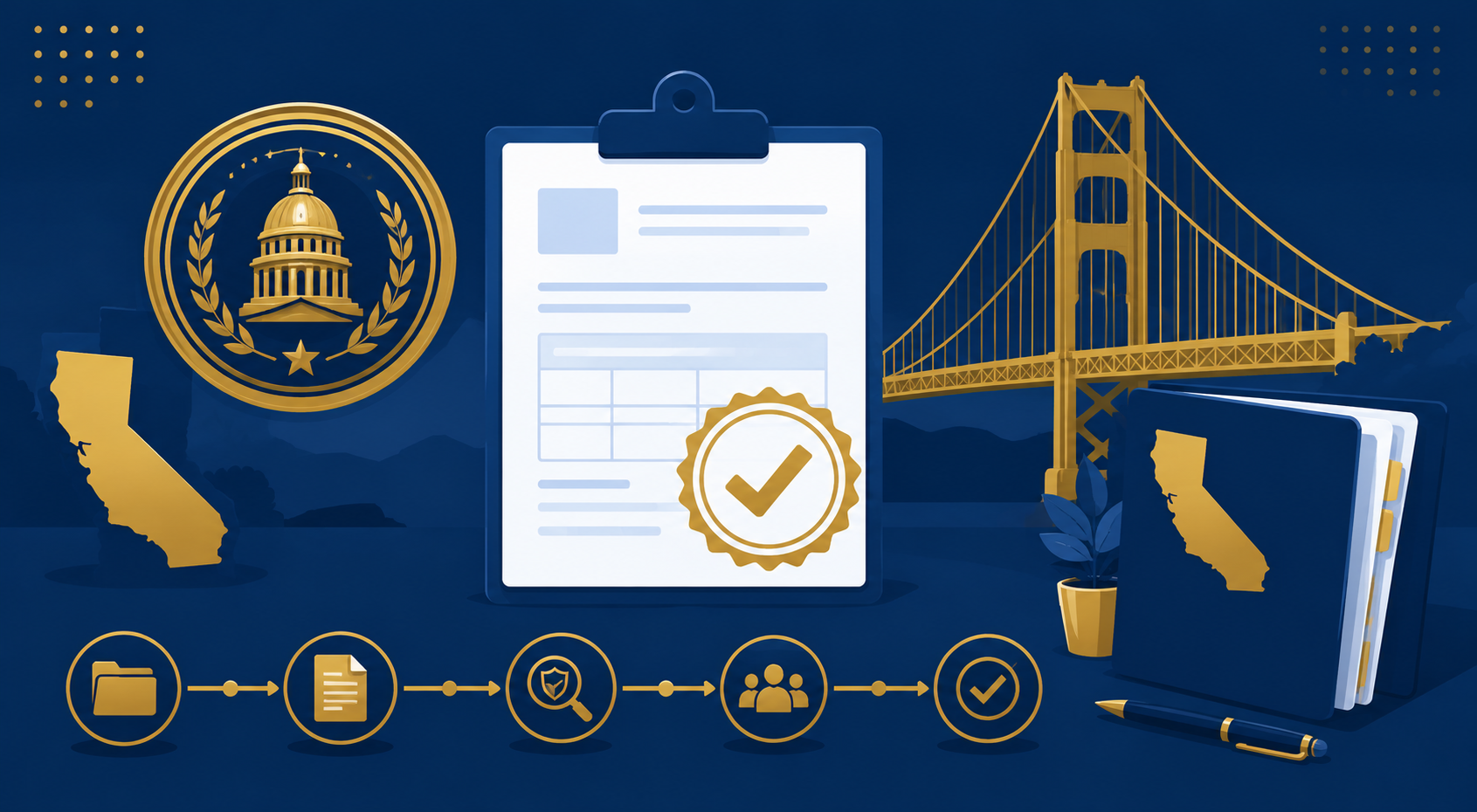
California MTL applications are submitted through NMLS. The application package includes the California-specific application form and checklist, background investigation forms for all required individuals, financial statements, the surety bond or security instrument, the written AML program, the business plan and operational description, and the application fee.
DFPI typically reviews the application and may issue comments or requests for additional information before making a licensing decision.
Timeline
California MTL applications typically take 6 to 12 months to process from submission to license issuance for well-prepared applications. Applications with missing documents, complex business models, or background investigation complications take longer. For an overview of timelines across states, see our guide on how long money transmitter licenses take.
Post-Licensing Obligations
After licensure, California requires annual reporting through NMLS, annual audited financial statements, quarterly financial reports for higher-volume licensees, prompt notice of material business changes, and compliance with DFPI examination requests.
Frequently Asked Questions
Can I operate in California while my application is pending?
No. You must be licensed before you transmit money in California. There is no provisional operating period. Operating without a license is a violation of the California Money Transmission Act and can result in enforcement action and criminal penalties.
Does California require a separate license for cryptocurrency?
California does not have a standalone cryptocurrency license like New York's BitLicense. Cryptocurrency businesses that engage in money transmission activities in California are generally required to hold a standard DFPI money transmitter license. DFPI has published guidance on its approach to digital asset businesses.
How ComplyOne Helps
ComplyOne helps fintechs navigate the California MTL application process — from initial assessment through application preparation, DFPI follow-up management, and post-licensing compliance maintenance — through advisory services, compliance technology, or both.
Talk to the ComplyOne team to get started.
The information in this article is for general educational purposes and does not constitute legal or regulatory advice. Consult a qualified compliance professional for guidance specific to your situation.