Cryptocurrency licensing in the US is complex and fragmented — requirements vary dramatically from state to state. Here is what crypto companies need to know about US licensing requirements and how to build a compliant licensing strategy.
How to Get a Crypto License in the US: A State-by-State Guide
There is no single federal cryptocurrency license in the United States. Instead, crypto companies must navigate a fragmented, state-by-state licensing landscape — where requirements, timelines, and interpretations of what constitutes a regulated crypto activity vary significantly from one state to the next.
This guide explains the US crypto licensing framework, what licenses apply to crypto businesses, and how to build a practical licensing strategy.
The Federal Framework: MSB Registration
At the federal level, most cryptocurrency businesses must register with FinCEN as Money Services Businesses. FinCEN's 2013 guidance confirmed that virtual currency businesses that accept and transmit value qualify as money transmitters under the Bank Secrecy Act.
FinCEN registration is the starting point for US crypto compliance — but it is the floor, not the ceiling. Most states require separate state-level licensing in addition to federal registration.
For a detailed guide to FinCEN MSB registration, see our guide on how to register as an MSB.
State Licensing: Money Transmitter Licenses
Most states require cryptocurrency businesses to hold a state money transmitter license — the same license required for fiat money transmitters — for any activities involving the transmission of value on behalf of customers.
Obtaining money transmitter licenses across all states where you serve customers is the core of a US crypto licensing program. See our guide on cryptocurrency licensing requirements by state for the specific requirements in each state.
State-Specific Crypto Licenses
New York: BitLicense
New York has a separate cryptocurrency-specific licensing framework — the BitLicense — administered by NYDFS. The BitLicense applies to any virtual currency business activity involving New York residents. It is one of the most demanding crypto licenses in the country. For a detailed guide, see our article on how to get a BitLicense.
States Without Crypto-Specific Requirements
Some states have no specific cryptocurrency licensing requirements and regulate crypto businesses under their standard money transmission statutes. Others have explicitly stated that no license is required for certain crypto activities. The states without specific crypto requirements are covered in detail in our article on states without crypto license requirements.
High-Priority States for Crypto Licensing
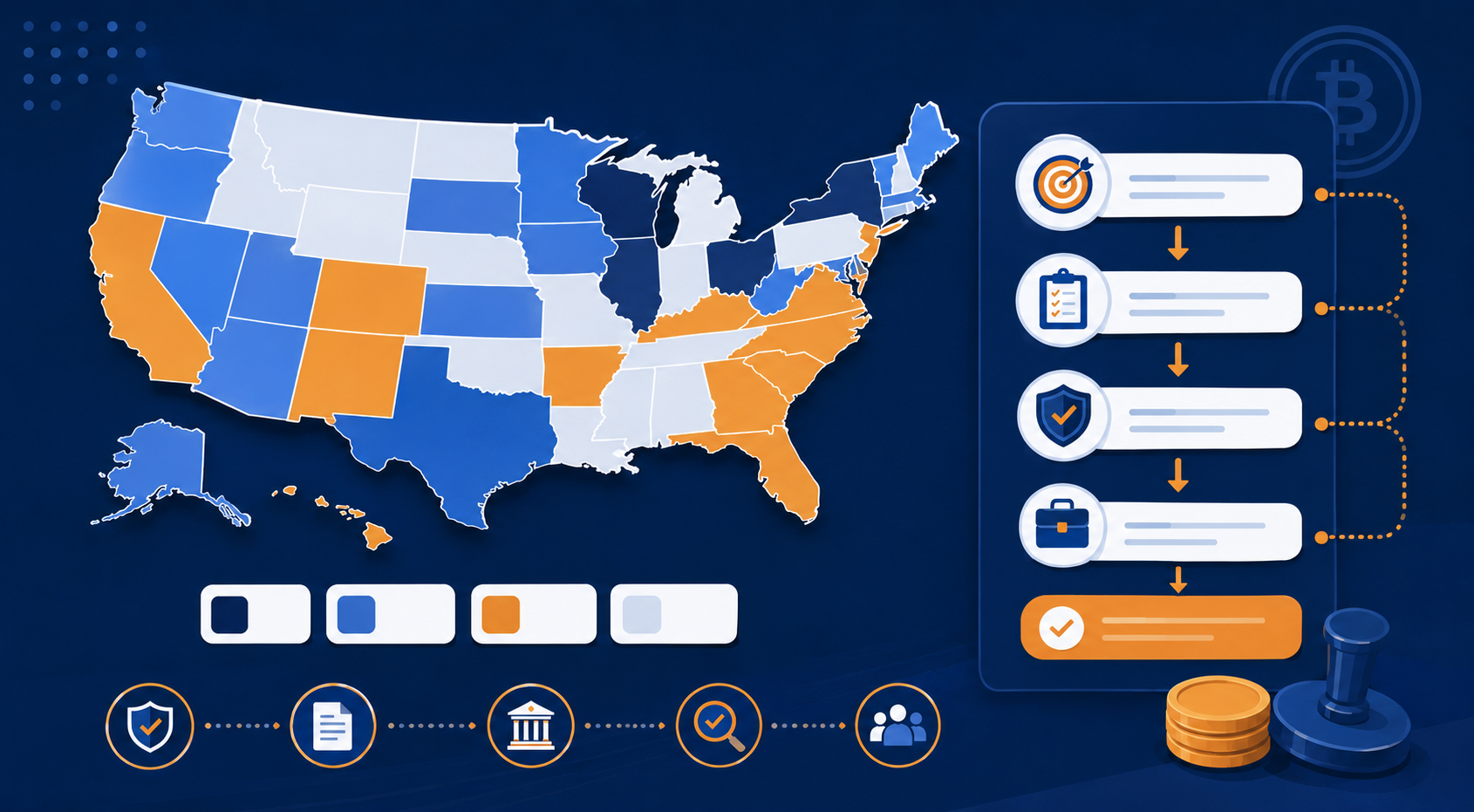
Not all states are equal in terms of licensing priority. When building a crypto licensing strategy, companies typically prioritize states with large user populations, states where regulators actively enforce unlicensed activity, and states where the licensing process is feasible within their current capital and operational capacity.
New York, California, Texas, Florida, and Illinois are typically among the highest priority states for crypto companies serving US customers — both because of large market size and because of active regulatory enforcement. New York in particular has historically taken enforcement action against crypto companies operating without a BitLicense.
Building a Practical Licensing Strategy
Very few crypto companies obtain licenses in all 50 states simultaneously. A practical licensing strategy involves assessing your capital and operational readiness against state requirements, prioritizing high-value or high-enforcement states for early licensing, and expanding the licensing footprint over time as the business scales.
See our guide on how to prioritize your state licensing applications for a framework for making these decisions.
Frequently Asked Questions
Do I need a money transmitter license and a BitLicense in New York?
It depends on your business model and activities. Some crypto businesses need both; others operate solely under the BitLicense framework. NYDFS has jurisdiction over both and has issued guidance on which framework applies in different scenarios. Prior engagement with NYDFS is often advisable for complex business models.
Can I serve US customers while my license applications are pending?
The answer varies by state. Most states do not allow unlicensed operation during the application period. New York's no-action policy for pending BitLicense applications has also evolved over time. You should obtain qualified legal advice on whether and how you can operate while applications are pending in each specific state.
What compliance requirements come with crypto licensing?
Licensing comes with ongoing AML compliance, KYC, sanctions screening, and transaction monitoring obligations, in addition to annual reporting and examination by state regulators.
How ComplyOne Helps
ComplyOne helps crypto companies build and execute practical US licensing strategies — from FinCEN MSB registration through state-by-state MTL and BitLicense applications, and the compliance programs that licensing requires — through advisory services, compliance technology, or both.
Talk to the ComplyOne team to get started.
The information in this article is for general educational purposes and does not constitute legal or regulatory advice. Consult a qualified compliance professional for guidance specific to your situation.