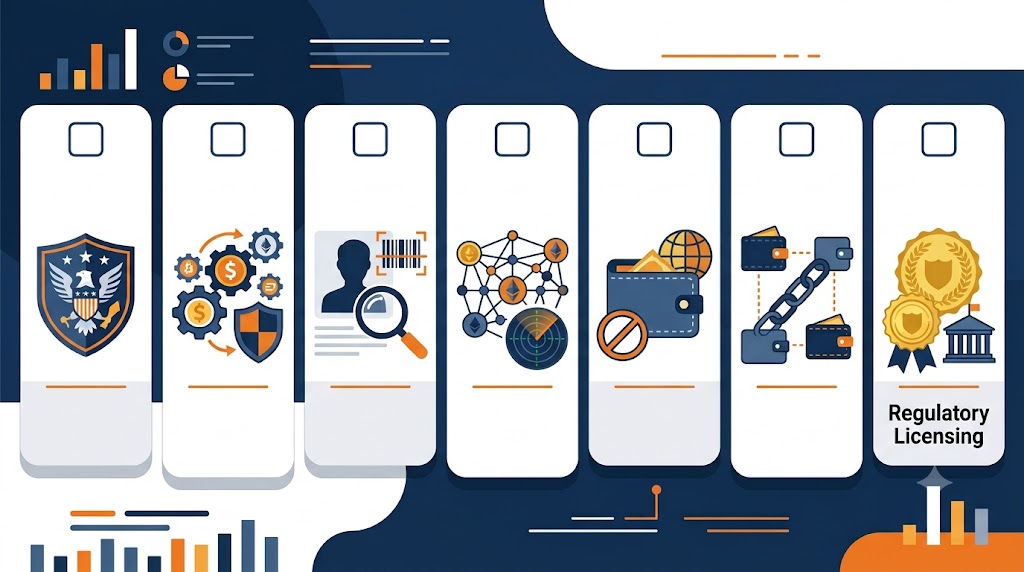
Crypto companies face a unique set of compliance requirements spanning AML, KYC, sanctions, licensing, and the Travel Rule. Here is a complete crypto compliance checklist for 2025.
Crypto Compliance Checklist for Fintechs: What You Need in 2025
Cryptocurrency companies face compliance requirements that span multiple regulatory frameworks — the BSA, OFAC sanctions regulations, state licensing laws, and the emerging Travel Rule regime. Missing any element creates serious compliance exposure.
This checklist covers everything a crypto company needs to address. Use it to assess your current compliance posture and identify gaps. For a broader overview, see our guide on AML compliance for crypto companies.
Federal FinCEN Registration
☐ Determine whether your business qualifies as an MSB — specifically as a money transmitter
☐ Complete FinCEN registration within 180 days of establishing the business
☐ Add two-year re-registration deadline to compliance calendar
☐ Confirm your business appears in FinCEN's public MSB registrant database
BSA/AML Program
☐ Written AML policy covering all five pillars — specific to your crypto business model, not a generic template
☐ AML risk assessment addressing crypto-specific risks including pseudonymous transactions, blockchain characteristics, and specific digital asset types
☐ Designated BSA Officer with genuine authority and appropriate AML expertise
☐ Annual employee training documented for all relevant staff
☐ Independent testing completed within the past 12 months
☐ Enrollment in FinCEN's BSA E-Filing System
Crypto KYC Program
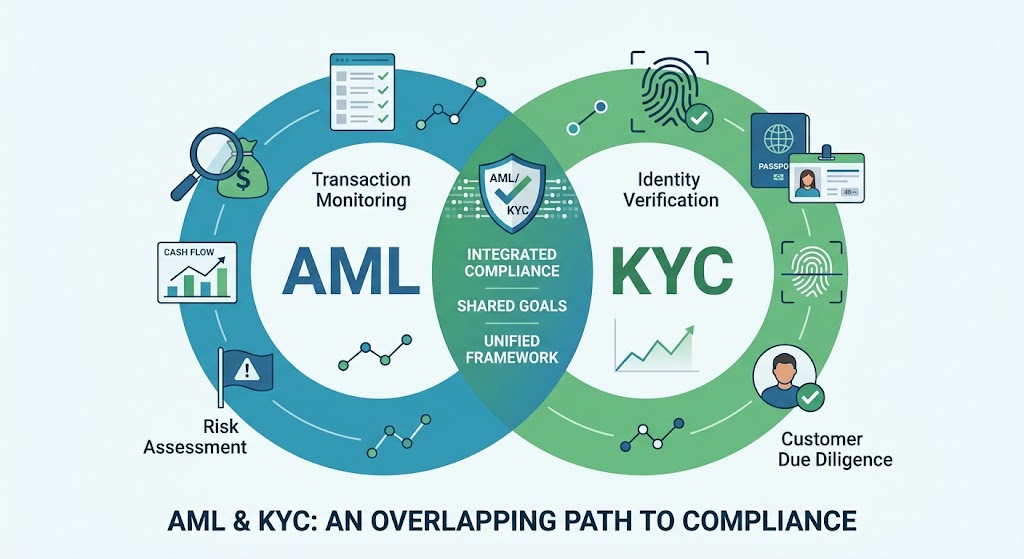
☐ Written Customer Identification Program covering both individual and business customers
☐ Identity verification technology integrated into onboarding — document verification, biometric checking, database verification
☐ PEP and sanctions screening at onboarding
☐ Customer risk rating methodology defined and applied consistently
☐ EDD procedures for PEPs, high-risk geographies, and customers using privacy coins or mixing services
☐ Beneficial ownership collection and verification for business customers
Blockchain Analytics
☐ Blockchain analytics platform selected and integrated
☐ Wallet address screening against OFAC's published SDN List designations
☐ On-chain risk scoring incorporated into customer risk rating
☐ Ongoing wallet monitoring for existing customers
OFAC Sanctions Compliance
☐ Customer name screening against OFAC SDN List at onboarding
☐ Wallet address screening against OFAC's published cryptocurrency address designations
☐ Ongoing re-screening when lists update
☐ Hit review workflow with documented false positive clearance process
☐ OFAC reporting procedures for blocked and rejected transactions
Transaction Monitoring
☐ Transaction monitoring platform configured with crypto-specific rules
☐ Monitoring rules addressing structuring, rapid fund movement, darknet market wallet connections
☐ Alert review SLAs defined and enforced
☐ SAR filing workflow connected to monitoring alerts
☐ Rule tuning process established
Travel Rule Compliance
☐ Travel Rule solution selected for transfers above $3,000
☐ Originator and beneficiary information collection process for covered transfers
☐ Protocol for transmitting information to receiving regulated institutions
☐ Approach to unhosted wallet transfers documented
State Licensing
☐ Licensing obligations determined for all states where you serve customers
☐ License applications filed in priority states
☐ BitLicense application filed if serving New York residents with virtual currency activity
☐ Sponsor bank coverage confirmed for unlicensed states during licensing buildout
☐ License management calendar with renewal and reporting deadlines
Frequently Asked Questions
Does a DeFi company need to complete this checklist?
Whether DeFi platforms have BSA compliance obligations depends on whether they exercise sufficient control over value transmission to qualify as money transmitters. Seek qualified legal counsel for DeFi-specific analysis — the regulatory analysis is fact-specific and evolving.
What is the highest priority item on this checklist for a new crypto company?
FinCEN registration if you qualify as an MSB — because failure to register is a federal crime with a hard 180-day deadline. Immediately followed by your AML program — because your sponsor bank will not go live without one.
How ComplyOne Helps
ComplyOne helps crypto companies work through this checklist systematically — building compliance programs that address both standard BSA requirements and crypto-specific obligations — through advisory services, compliance technology, or both.
Talk to the ComplyOne team to get started.
The information in this article is for general educational purposes and does not constitute legal or regulatory advice. Consult a qualified compliance professional for guidance specific to your situation.