he Corporate Transparency Act requires most US companies to file Beneficial Ownership Information (BOI) reports with FinCEN. This guide explains who must file, what to report, and the deadlines that apply to your fintech.
BOI Reporting Requirements — What Fintechs Must Know
The Corporate Transparency Act (CTA) introduced a significant new compliance obligation for millions of US businesses: the requirement to file Beneficial Ownership Information (BOI) reports with the Financial Crimes Enforcement Network (FinCEN).
For fintechs, BOI reporting is relevant in two ways: as a company that may itself be required to file, and as a financial institution that asks customers for beneficial ownership information during onboarding. This article focuses on the first: your obligations as a reporting company.
What Is BOI Reporting?
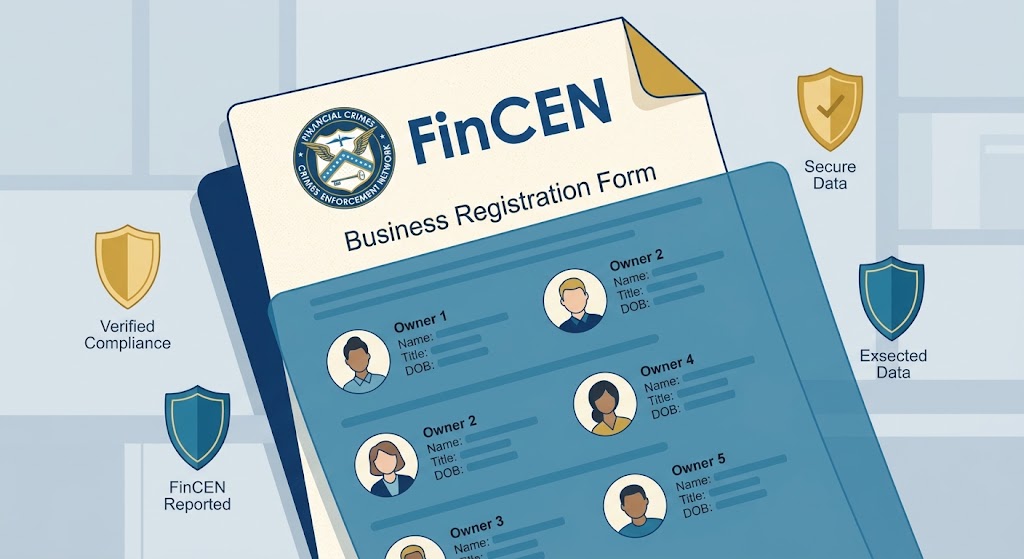
BOI reporting requires covered companies to disclose information about their beneficial owners — the individuals who ultimately own or control the company — to FinCEN's secure database. This information is not publicly available; it's accessible only to law enforcement and certain other authorized users.
The goal is to prevent criminals from hiding behind shell companies to launder money, evade taxes, and engage in other financial crimes.
Who Is Required to File?
The BOI reporting rule applies to "reporting companies" — defined as corporations, limited liability companies (LLCs), and other entities formed by filing with a state or tribal government.
This means most fintechs that are incorporated as LLCs or corporations in the United States are required to file.
Who Is Exempt?
There are 23 categories of exemptions. The most relevant for fintechs include:
- Large operating companies: Companies with more than 20 full-time US employees, more than $5 million in annual gross receipts or sales, and a physical office in the United States
- Regulated financial institutions: Banks, credit unions, broker-dealers, investment advisers, and other entities already regulated by federal or state financial regulators (including SEC-registered companies)
- Inactive companies: Companies that have been in existence for more than one year, have no ongoing business activity, no foreign ownership, and no assets
- Subsidiaries of exempt entities: Subsidiaries wholly owned by exempt entities
Most early-stage and mid-stage fintechs do not qualify for the large operating company exemption and are therefore required to file. If you hold a money transmitter license but are not SEC-registered or bank-chartered, you are likely a reporting company.
What Must You Report?
For the Company:
- Full legal name of the company
- Any trade names or DBA names
- Principal place of business address
- State or tribal jurisdiction of formation
- IRS Taxpayer Identification Number (EIN)
For Each Beneficial Owner (individuals owning 25%+ or exercising substantial control):
- Full legal name
- Date of birth
- Residential address
- Government-issued ID (driver's license or passport) — including an image of the document
Who Is a Beneficial Owner?
A beneficial owner is any individual who either: (1) directly or indirectly owns or controls at least 25% of the company's ownership interests, or (2) exercises substantial control over the company (typically senior officers, including CEO, CFO, COO, and General Counsel).
Filing Deadlines
Important: BOI reporting has faced legal challenges and regulatory updates. Always verify current deadlines and requirements directly at fincen.gov.
What Are the Penalties for Non-Compliance?
Civil penalties of up to $591 per day for each day of willful non-compliance. Criminal penalties of up to $10,000 and two years imprisonment for willful violations. These are serious — even small fintechs should prioritize filing compliance.
Frequently Asked Questions
Does BOI reporting affect my customers?
Not directly. BOI reporting is your obligation as a company. Separately, your KYC/CDD program requires you to collect beneficial ownership information from your business customers — that's a different requirement. Both apply.
How often do I need to update my BOI report?
You must file an updated report within 30 days of any change in beneficial ownership — including a new investor crossing the 25% threshold, a change in address, or a change in senior officer.
Where do I file?
BOI reports are filed through FinCEN's secure online filing system at boiefiling.fincen.gov. Filing is free.
This article is for educational purposes only and does not constitute legal or compliance advice. BOI reporting rules have been subject to litigation and regulatory changes — always verify current requirements at fincen.gov or with qualified legal counsel.