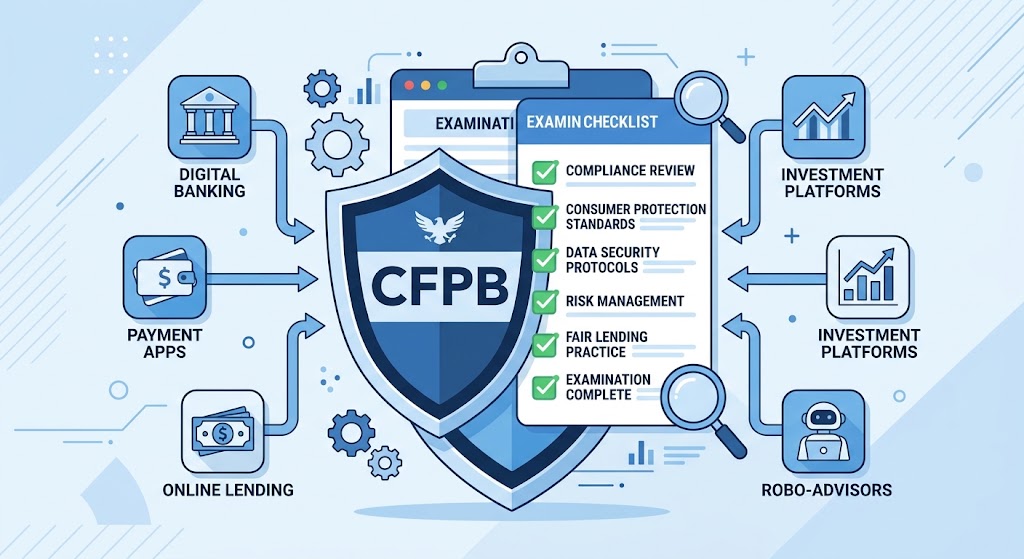
UDAAP — Unfair, Deceptive, or Abusive Acts or Practices — gives regulators broad authority over how fintechs treat consumers. Here is what it covers, how the CFPB enforces it, and what fintechs need to do to stay compliant.
What Is UDAAP? Consumer Protection Compliance for Fintechs
If your fintech serves individual consumers — not just businesses — UDAAP is one of the most important compliance frameworks you need to understand. It stands for Unfair, Deceptive, or Abusive Acts or Practices, and it gives the Consumer Financial Protection Bureau broad authority to take action against financial companies that harm consumers — even when no specific rule has technically been violated.
UDAAP is intentionally broad. That is the point. It is designed to catch harmful practices that might slip through the gaps of more specific regulations. For fintechs building consumer-facing products, it means that compliance is not just about following specific rules — it is about treating your customers genuinely fairly.
The Legal Foundation
UDAAP authority comes from two federal laws.
The Federal Trade Commission Act — Section 5 prohibits unfair or deceptive acts or practices across industries — often called UDAP without the A. The FTC enforces this against non-bank financial companies.
The Dodd-Frank Wall Street Reform and Consumer Protection Act of 2010 — added the abusive standard and gave the CFPB authority to enforce UDAAP against both banks and non-bank financial companies including fintechs. Dodd-Frank also prohibited abusive practices as a distinct category separate from unfair and deceptive.
The result is overlapping federal authority. The CFPB has UDAAP authority over most consumer-facing fintechs, and the FTC has parallel UDAP authority. State attorneys general also have authority to enforce UDAP standards under state law in their respective jurisdictions.
The Three Standards Explained
Unfair
A practice is unfair if it causes or is likely to cause substantial injury to consumers, the injury is not reasonably avoidable by consumers acting reasonably, and the injury is not outweighed by countervailing benefits to consumers or competition.
The key concept is harm that consumers cannot reasonably protect themselves from. Real-world examples include charging fees that are not disclosed until after the consumer has already committed to the product, processing transactions in a sequence specifically designed to maximize overdraft or NSF fees, failing to cancel recurring charges after a consumer has clearly and repeatedly requested cancellation, and denying claims or benefits that consumers are entitled to without adequate investigation.
Deceptive
A practice is deceptive if there is a representation, omission, or practice that is likely to mislead consumers, the misleading element is material meaning it would likely affect a consumer's decision, and the consumer is acting reasonably under the circumstances.
Deception does not require intent. An honest mistake that misleads consumers can still be a UDAAP violation. Real-world examples include advertising a product as free when fees apply in certain circumstances, describing account terms in ways that obscure material limitations or conditions, marketing credit products with prominently featured low rates that apply only to a tiny fraction of customers, and omitting material information that would affect a consumer's decision to use the product or service.
Abusive
The abusive standard was added by Dodd-Frank and is the newest and least defined of the three categories. A practice is abusive if it materially interferes with consumers' ability to understand a term or condition of a product or service, or takes unreasonable advantage of a consumer's lack of understanding of the material risks, costs, or conditions of the product, a consumer's inability to protect their own interests in selecting or using the product, or a consumer's reasonable reliance on the institution to act in their interest.
Abusive practices typically involve exploitation of information asymmetries or power imbalances — particularly targeting financially vulnerable consumers or using complex product structures that prevent consumers from making genuinely informed decisions.
What UDAAP Means for Fintechs in Practice
UDAAP touches virtually every consumer-facing element of your fintech business.
- Marketing and Advertising — every claim about your product, rates, fees, features, and benefits must be accurate and cannot be materially misleading. Fine print that contradicts prominent headline claims is a classic UDAAP issue that the CFPB and FTC have consistently pursued.
- Disclosures — material terms must be disclosed in a way that consumers can actually understand and act on. Burying fee disclosures in lengthy terms and conditions that consumers are unlikely to read, or using confusing language that obscures the true cost of a product, creates UDAAP exposure.
- Onboarding and Account Opening — account terms consumers agree to must be clearly presented. Consent mechanisms that obscure what the consumer is actually agreeing to, or default opt-in features that consumers are unlikely to notice, create UDAAP risk.
- Fee Practices — fee structures must be fully disclosed before consumers commit and applied consistently with disclosures. Unexpected fees, fees applied in ways inconsistent with disclosures, and fees that are difficult to avoid create significant UDAAP exposure.
- Customer Service and Complaints — how you handle consumer complaints is a UDAAP consideration. Patterns of unresolved complaints, inadequate dispute resolution processes, or practices that discourage consumers from escalating issues draw CFPB attention.
- Collections and Account Actions — account freezes, funds holds, and collection practices must be fair and consistent with disclosed terms.
- Dark Patterns — design choices that manipulate consumers into decisions against their own interests — such as difficult cancellation flows, confusing opt-out mechanisms, or interfaces designed to obscure fees — are an increasing CFPB enforcement focus.
Building a UDAAP Compliance Program
UDAAP compliance is not a standalone set of policies — it is embedded throughout your product design, marketing, disclosure, and customer experience functions.
- Pre-launch product review — before launching any new product or feature, review it through a UDAAP lens. Could any element mislead a reasonable consumer? Could any fee or term be considered unfair? Could the product structure take unreasonable advantage of consumers' limited understanding?
- Marketing review process — all consumer-facing marketing materials should be reviewed for accuracy and potential deception before publication. This includes digital ads, landing pages, email campaigns, and in-app messaging.
- Disclosure adequacy review — regularly review your fee schedules, terms and conditions, and account agreements to ensure they are accurate, complete, and written in language that consumers can reasonably understand.
- Complaint monitoring — track consumer complaints across all channels including direct complaints and complaints filed through the CFPB's public complaint database. Patterns in complaint data are early warning signals for UDAAP issues.
- Employee training — customer-facing staff need specific training on what representations they can and cannot make to consumers about your products.
Frequently Asked Questions
Does UDAAP apply to all fintechs or only consumer-facing ones?
UDAAP applies specifically to the provision of consumer financial products and services. If your fintech serves only business customers and does not offer products to individual consumers, UDAAP is less directly relevant. However, most fintechs that touch consumer payments, lending, prepaid products, or digital wallets are squarely within UDAAP's scope.
Can a fintech violate UDAAP even if it did not intend to deceive anyone?
Yes. The deceptive standard does not require intent — only that a reasonable consumer would be likely to be misled. A fintech that genuinely believed its disclosures were adequate can still be found to have engaged in deceptive acts if those disclosures would mislead a reasonable consumer. This makes proactive disclosure review and consumer testing important compliance practices.
What are the consequences of a UDAAP violation?
CFPB enforcement actions can result in civil money penalties, mandatory consumer remediation requiring refunds or other compensation to affected customers, binding consent orders requiring specific program changes and ongoing monitoring, and public disclosure of the enforcement action. State attorney general actions can add parallel state-level penalties and remediation requirements.
How does UDAAP relate to specific regulations like Regulation E or Regulation Z?
UDAAP is a broad standard that applies independently of more specific regulations. A fintech can comply with every specific requirement of Regulation E or Regulation Z and still commit a UDAAP violation if its overall practices are unfair, deceptive, or abusive. UDAAP operates as an additional overlay on top of specific regulatory requirements.
How ComplyOne Helps
ComplyOne helps consumer-facing fintechs build UDAAP compliance programs that protect customers and satisfy CFPB and FTC expectations — including product and marketing review, disclosure adequacy assessments, complaint monitoring programs, and consumer protection compliance training — through advisory services or compliance technology.
Talk to the ComplyOne team to get started.
The information in this article is for general educational purposes and does not constitute legal or regulatory advice. Consult a qualified compliance professional for guidance specific to your situation.