AML screening refers to the automated processes fintechs use to check customers and transactions against watchlists and risk indicators. Here is what it covers, how it works, and what your program needs to include.
What is AML Screening? A Guide for Payment Fintechs
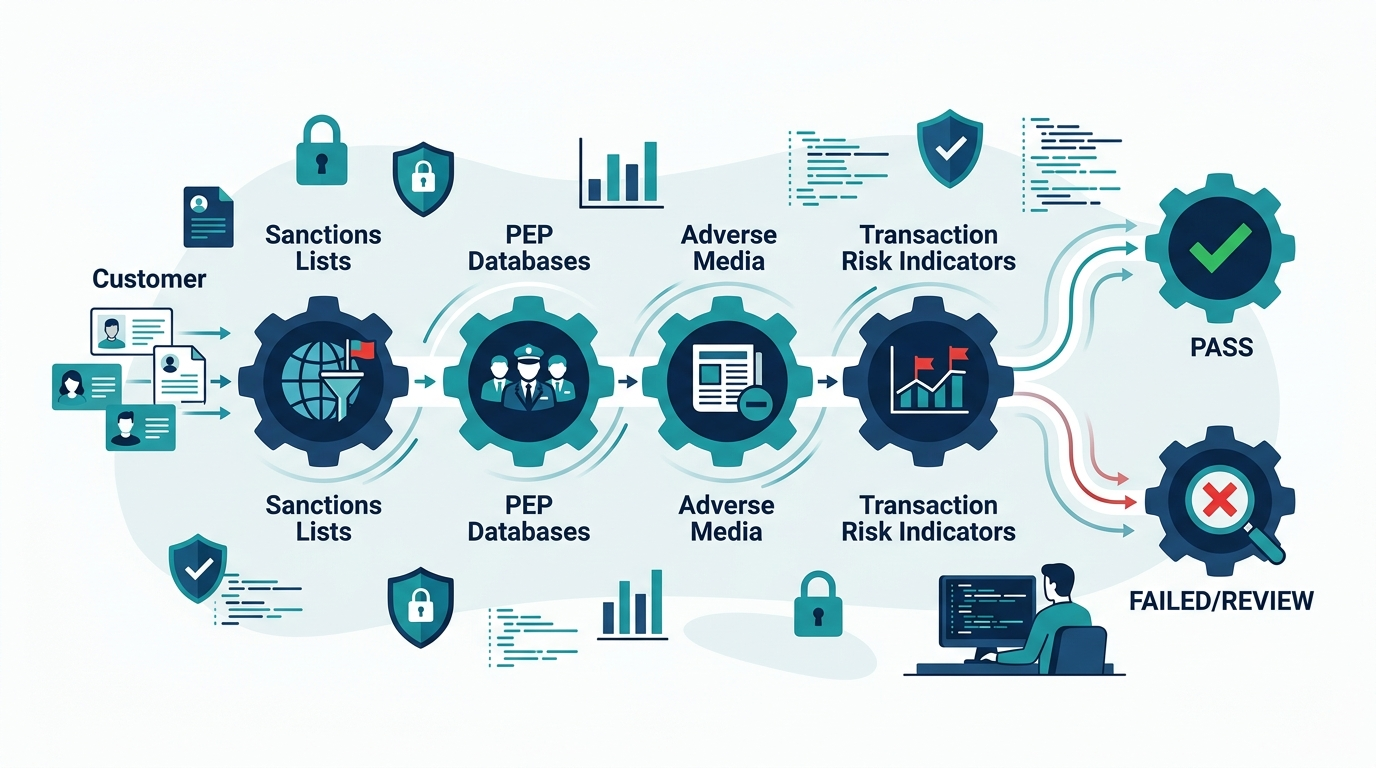
AML screening is a broad term that covers the automated processes financial institutions use to check customers, transactions, and counterparties against risk indicators — including government sanctions lists, databases of politically exposed persons, adverse media, and other sources of financial crime risk intelligence.
For payment fintechs specifically, AML screening is not a single control but a suite of interconnected screening functions that together form a critical component of the BSA/AML compliance program.
The Components of AML Screening
Sanctions Screening
OFAC sanctions screening checks customers, beneficial owners, and transaction counterparties against OFAC's Specially Designated Nationals List and other applicable government sanctions lists. The objective is to ensure the institution is not doing business with prohibited parties.
Sanctions screening must occur at onboarding, for transactions where counterparty information is available, and on an ongoing basis when sanctions lists are updated. The technical requirement for fuzzy matching — not just exact name matching — is essential for effective sanctions screening.
PEP Screening
PEP screening checks customers against databases of current and former senior government officials, their family members, and their close associates. PEP status triggers Enhanced Due Diligence requirements — it does not prohibit the relationship.
PEP screening at onboarding should be followed by ongoing re-screening as PEP databases are updated and as individuals enter and exit political positions.
Adverse Media Screening
Adverse media screening checks customers against news databases and media monitoring tools for negative coverage related to financial crime, fraud, regulatory violations, corruption, or other relevant issues. Adverse media findings can inform risk ratings and trigger EDD even for customers who do not appear on sanctions or PEP lists.
Transaction Screening
Transaction screening — distinct from transaction monitoring — refers to real-time or near-real-time checks on transaction counterparties as payments are processed. For payment fintechs, this typically means screening the originator and beneficiary of wire transfers and ACH payments against sanctions lists before the transaction is completed.
Transaction screening is particularly important for cross-border payments and any payment type where counterparty information is available.
How AML Screening Works in Practice
At Onboarding
All new customers are screened against sanctions lists, PEP databases, and adverse media sources as part of the onboarding flow. Screening results inform the customer's initial risk rating. Potential matches — hits — are reviewed by compliance staff who determine whether the hit is a true match or a false positive.
True matches to sanctions lists block the account from being opened. True PEP matches trigger EDD before onboarding proceeds. Adverse media findings are assessed in the context of the overall customer profile.
On an Ongoing Basis
Existing customers are re-screened as lists and databases are updated. Sanctions lists update frequently — sometimes multiple times per week — meaning customers who were clean at onboarding may be added to the SDN List during the customer relationship.
Most compliance technology platforms automate ongoing re-screening so that when a list is updated, existing customers are automatically checked against the new entries.
At Transaction Processing
For payment fintechs, transaction-level screening occurs as transactions are processed — checking originator and beneficiary information against sanctions lists in real time or near-real time before transactions are completed.
What Payment Fintechs Specifically Need
Payment fintechs have specific AML screening requirements that differ in some ways from consumer-focused platforms.
High transaction volumes require screening technology that can operate at scale without creating bottlenecks in payment processing. Real-time or near-real-time sanctions screening at transaction processing is essential.
Counterparty screening for payments — not just customer screening at onboarding — is a specific requirement for payment fintechs. The origin and destination of funds must be screened, not just the identity of the direct customer.
Correspondent and intermediary bank screening for international payments adds a layer of complexity that domestic-only payment processors do not face.
Common Gaps in AML Screening Programs
Exact-name-only matching — not using fuzzy matching, resulting in sanctioned parties evading detection through minor name variations.
Onboarding screening only — not re-screening existing customers when lists update.
No transaction-level screening — screening customers at onboarding but not screening transaction counterparties during payment processing.
Inadequate hit review — generating hits but not having a documented process for reviewing and clearing them with appropriate documentation.
Frequently Asked Questions
Is AML screening the same as transaction monitoring?
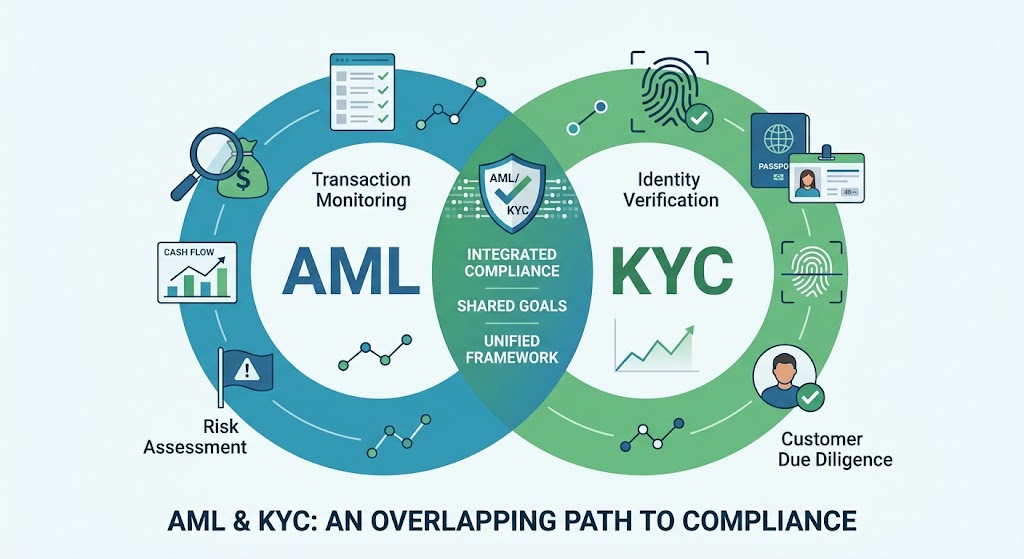
No. AML screening refers to checking customers and transactions against specific watchlists and databases — sanctions lists, PEP databases, adverse media. Transaction monitoring refers to ongoing analysis of customer activity over time to identify behavioral patterns consistent with financial crime. Both are required components of an AML compliance program but they serve different functions.
How often should existing customers be re-screened?
Existing customers should be re-screened whenever the sanctions lists they were screened against are updated. For the OFAC SDN List — which updates frequently — this means re-screening should occur on a near-continuous basis, automated through your screening technology platform.
What technology is needed for AML screening?
Most fintechs address AML screening through purpose-built compliance technology platforms that include integrated sanctions and PEP screening, fuzzy matching capability, automated re-screening, and a hit review workflow. Standalone screening tools that integrate with your core infrastructure are also available. For a practical guide on how to conduct OFAC screening, see our step-by-step guide. For payments-specific requirements, see our guide on AML compliance for payments.
How ComplyOne Helps
ComplyOne helps fintechs implement comprehensive AML screening programs — from sanctions and PEP screening at onboarding through transaction-level screening and ongoing re-screening — through compliance technology and advisory services.
Talk to the ComplyOne team to get started.
The information in this article is for general educational purposes and does not constitute legal or regulatory advice. Consult a qualified compliance professional for guidance specific to your situation.