New York is one of the most demanding states for money transmission licensing. Here is what you need to know about the New York money transmitter license — who needs it, how to apply, and what it takes to maintain it.
How to Get a Money Transmitter License in New York
New York is widely regarded as one of the most demanding states for financial services licensing. The New York Department of Financial Services — NYDFS — maintains a rigorous licensing process for money transmitters, and for cryptocurrency companies, adds an additional layer through the BitLicense framework.
This guide covers who needs a New York money transmitter license, what NYDFS requires, how the application process works, and what you need to maintain the license after you get it.
Who Needs a New York Money Transmitter License
Any person or entity engaged in the business of money transmission in New York — receiving money for transmission or transmitting money — must be licensed by NYDFS unless a specific exemption applies.
This includes digital payment platforms, peer-to-peer transfer services, payment processors that hold customer funds, and most fintech companies whose products involve moving money on behalf of customers.
Banks, trust companies, and other entities already subject to NYDFS oversight are typically exempt from separate money transmission licensing. Certain payment processors that qualify under narrow agent-of-payee definitions may also claim exemption, but this determination requires careful legal analysis of your specific business model.
For cryptocurrency businesses in New York, the BitLicense is a separate framework that covers virtual currency businesses. Some crypto businesses hold a BitLicense instead of a traditional money transmitter license; others hold both. For a full comparison, see our article on how to get a BitLicense.
New York MTL Requirements
Net Worth
NYDFS requires money transmitters to maintain a minimum net worth. The specific amount varies depending on the scale and nature of your operations — NYDFS has discretion to require higher net worth for businesses with larger transaction volumes or higher risk profiles. Net worth must be demonstrated through audited financial statements.
Surety Bond
A surety bond or approved alternative security instrument is required. The bond amount is based on your transmission volume and NYDFS's assessment of your risk profile.
Background Checks
All principals, officers, directors, and controlling shareholders must submit to background investigations. NYDFS is particularly rigorous in its review of the backgrounds of individuals who will oversee a licensed entity.
AML Program
A written anti-money laundering compliance program is required before licensure and must be maintained throughout the license period. NYDFS reviews your AML program as part of the application.
Business Plan
A detailed business plan describing your products, target markets, transmission volumes, risk management approach, and operational infrastructure is required.
How to Apply
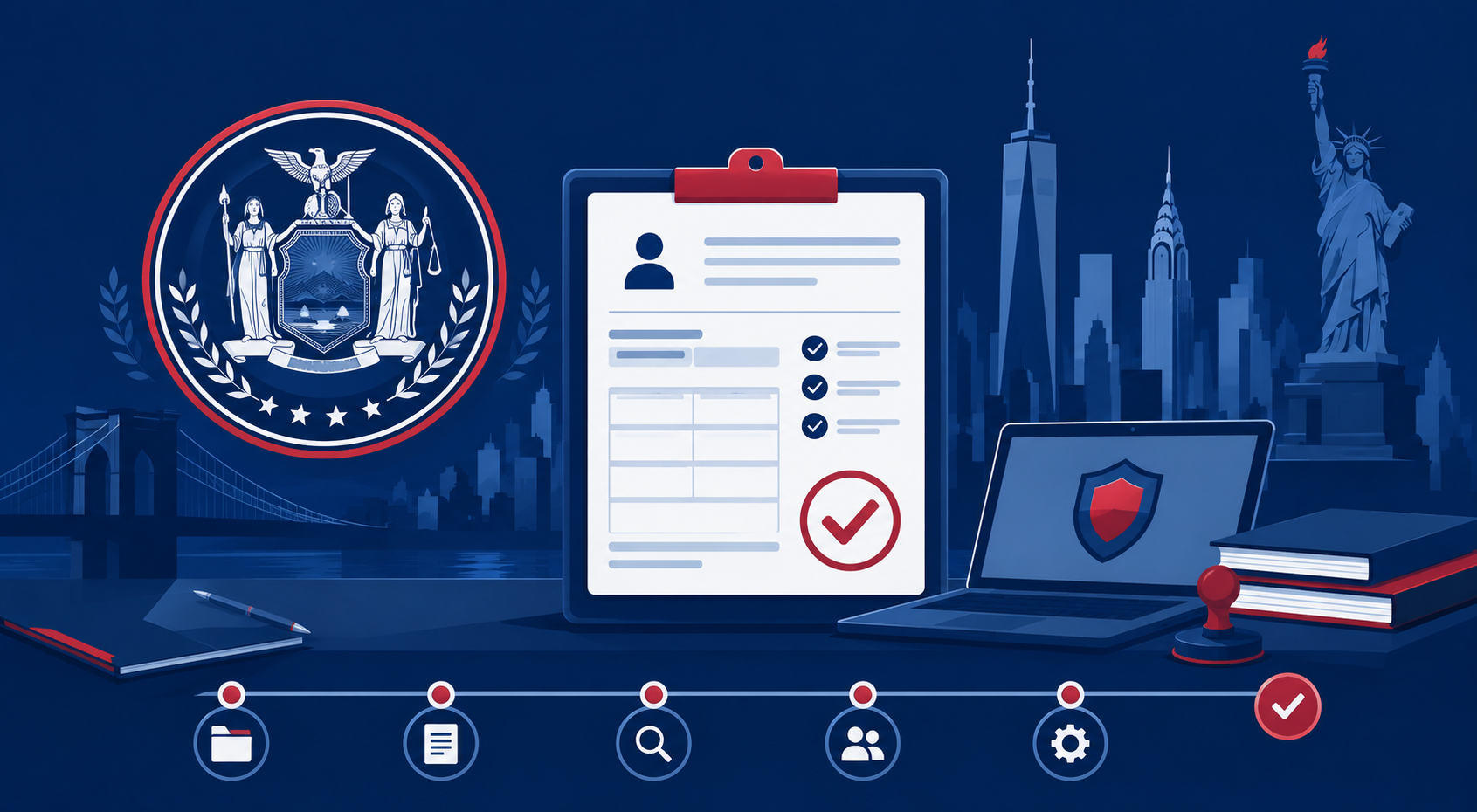
New York money transmitter license applications are submitted through the Nationwide Multistate Licensing System — NMLS. The application requires creation of an NMLS account, completion of the New York-specific application checklist, payment of the application fee, submission of all required documentation, and management and owner background investigation forms.
NYDFS is known for detailed follow-up questions and may request additional information after initial submission. Response time and quality on these follow-up requests significantly affects processing timeline.
How Long Does New York MTL Licensing Take
New York is one of the longer licensing timelines in the country. Most applicants should expect 6 to 18 months from application submission to license issuance, depending on application completeness, NYDFS workload, and the complexity of the business model. Applicants that submit incomplete applications or respond slowly to NYDFS follow-up will see timelines extend further.
For how long licensing takes across states, see our guide on how long money transmitter licenses take.
Maintaining Your New York License
After licensing, NYDFS requires annual reporting, ongoing financial reporting, and compliance with NYDFS examination requests. Changes to ownership, control, key personnel, or business activities generally require prior NYDFS approval. NYDFS conducts regular examinations of licensees.
Frequently Asked Questions
Can I operate in New York while my application is pending?
Generally, no. You must have a license before transmitting money in New York. There is no provisional license period. Operating without a license while your application is pending may jeopardize your application and expose you to enforcement action.
Do I need both a BitLicense and a money transmitter license in New York?
It depends on your activities. NYDFS has jurisdiction over both. If your business involves fiat money transmission and cryptocurrency activities, you may need both. If you operate purely in cryptocurrency, a BitLicense may be the applicable framework. NYDFS has issued guidance on this and prior engagement with the regulator is often advisable for complex business models.
How ComplyOne Helps
ComplyOne helps fintechs navigate the New York MTL application process — from initial readiness assessment through application preparation, NYDFS follow-up management, and post-licensing compliance support — through advisory services, compliance technology, or both.
Talk to the ComplyOne team to get started.
The information in this article is for general educational purposes and does not constitute legal or regulatory advice. Consult a qualified compliance professional for guidance specific to your situation.