A sanctions compliance program is required for any fintech with US customers or dollar transactions. This guide explains OFAC's five framework components and how to build a program that protects your business.
How to Build a Sanctions Compliance Program for Your Fintech
OFAC sanctions compliance isn't optional. If your fintech has US customers, processes US dollar transactions, or operates through US banking infrastructure, you're subject to OFAC's requirements — and you need a compliance program that can demonstrate it.
What Is a Sanctions Compliance Program?
A sanctions compliance program is a set of policies, procedures, controls, and processes designed to ensure that your fintech does not transact with prohibited persons, entities, or jurisdictions listed by OFAC.
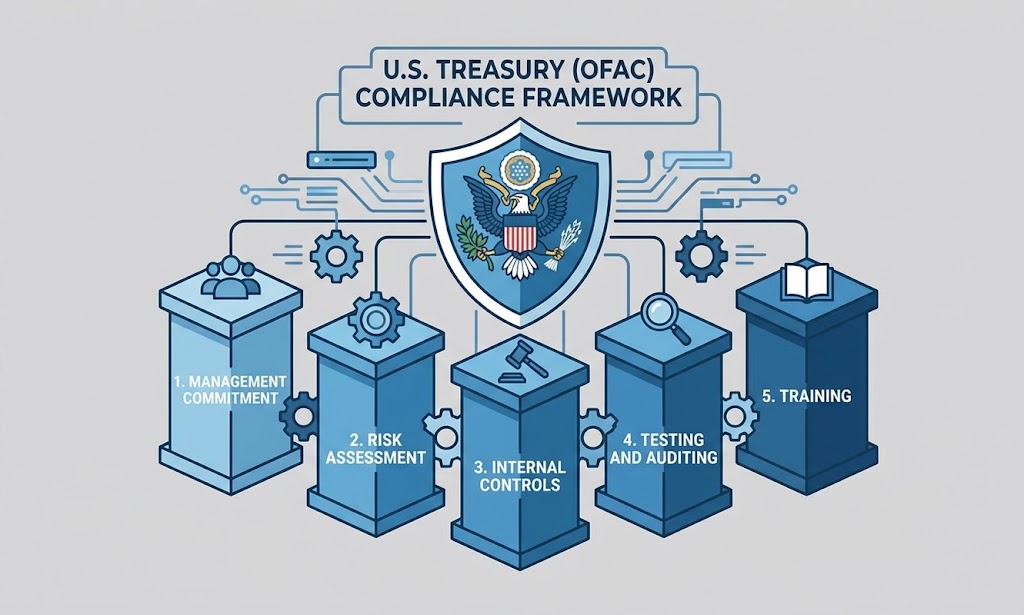
In 2019, OFAC published its A Framework for OFAC Compliance Commitments, which outlines five essential components of an effective sanctions compliance program. That framework is now the standard against which regulators assess whether your program is adequate.
OFAC's Five Framework Components
1. Management Commitment
Senior leadership must visibly support and be accountable for the sanctions compliance program. This means the board and executives have reviewed and approved the sanctions compliance policy, a designated compliance officer is responsible for the program, adequate resources are allocated to compliance, and compliance is treated as a business priority.
2. Risk Assessment
A sanctions risk assessment covers: products and services (which could be exploited by sanctioned parties), customers (geographic, industry, and risk profile), geographies (serving customers in or connected to sanctioned countries), transaction types (international wires, crypto transactions), and counterparties (foreign financial institutions that could expose you to secondary sanctions risk).
3. Internal Controls
The operational core of your program — the actual mechanisms that prevent you from transacting with sanctioned parties. This includes customer screening against the OFAC SDN List at onboarding and ongoing, ongoing customer re-screening as OFAC updates its lists, transaction screening for payment instructions, and clear procedures for what to do when a sanctions hit is confirmed (block funds, file a report with OFAC).
4. Testing and Auditing
Your program needs regular testing: periodic internal audits of your screening process, alert handling, and documentation; independent testing (having a third party assess your sanctions program at least annually); and transaction testing confirming your screening system would have caught known sanctions violators. Testing should be documented with deficiencies tracked through to remediation.
5. Training
Everyone who could encounter a sanctions-related decision needs to be trained: customer-facing staff, compliance and operations teams, technology teams building payment products, and senior management. Training should be conducted at onboarding and refreshed annually. Keep records of completion.
What a Fintech Sanctions Program Looks Like in Practice
- A written sanctions policy — documenting commitment, risk assessment findings, and procedures
- A screening tool — integrated into onboarding and payment processing, updated daily from OFAC's published lists
- An alert management process — how alerts are triaged, reviewed, and resolved
- Blocking procedures — what to do when a true match is found
- Annual training for all relevant staff
- Annual independent review of the program
What Happens When You Violate Sanctions?
OFAC can impose civil penalties even without intent. Voluntary self-disclosure is a significant mitigating factor — contacting OFAC proactively before they contact you can reduce penalties by up to 50%.
Frequently Asked Questions
Do I need a separate sanctions compliance program if I already have an AML program?
Yes. AML and sanctions compliance are distinct. Your AML program covers money laundering detection and reporting. Your sanctions program covers prohibited transactions and persons. They need to be addressed separately in your policy documentation.
Does a small fintech need a formal sanctions program?
Yes. OFAC's requirements apply regardless of company size. While the program can be simpler and more risk-proportionate for a smaller company, the obligation to screen and comply exists from day one.
How do I handle secondary sanctions risk?
Secondary sanctions apply to non-US persons who engage with sanctioned parties. Assess your third-party relationships for secondary sanctions exposure, particularly with foreign financial institutions. See also our guides on OFAC sanctions screening and how to conduct OFAC screening.
This article is for educational purposes only and does not constitute legal or compliance advice. Regulations vary by jurisdiction and change frequently. Consult a qualified compliance professional or legal counsel for guidance specific to your business.