Fintechs face a complex web of federal and state regulatory requirements. Here is a complete overview of what applies to most U.S. fintechs — AML, consumer protection, licensing, data privacy, and more.
Fintech Regulatory Requirements: A Complete Overview for 2025
The U.S. fintech regulatory landscape is one of the most complex in the world. Unlike many countries with a single unified financial regulator, the United States has a layered system of federal and state regulators with overlapping and sometimes competing jurisdiction over fintech companies.
Understanding which regulatory requirements apply to your specific fintech — and how they interact with each other — is the foundation of any effective compliance program. This article provides a complete overview of the major regulatory frameworks most U.S. fintechs face.
The Federal Regulatory Framework
FinCEN and the Bank Secrecy Act
The Financial Crimes Enforcement Network administers the Bank Secrecy Act — the foundation of U.S. anti-money laundering compliance. Most fintechs that move money qualify as Money Services Businesses subject to FinCEN oversight and full BSA compliance obligations.
BSA requirements include maintaining a written AML compliance program, implementing customer identification and due diligence procedures, filing Suspicious Activity Reports when warranted, filing Currency Transaction Reports for cash transactions over $10,000, maintaining required records for five years, and registering with FinCEN as an MSB.
The BSA applies from the moment you begin conducting regulated activity — not from the moment you decide to build your compliance program.
OFAC Sanctions
The Office of Foreign Assets Control administers U.S. economic and trade sanctions. OFAC sanctions obligations apply to all U.S. persons and businesses — including every fintech, regardless of size, stage, or business model.
OFAC requires screening customers and transaction counterparties against the Specially Designated Nationals List and other applicable sanctions lists, blocking transactions and accounts when confirmed matches are identified, and reporting blocked and rejected transactions to OFAC within 10 business days.
OFAC applies strict liability for sanctions violations — meaning penalties can be imposed even for unintentional violations. This makes robust sanctions screening technology and processes non-negotiable.
The Consumer Financial Protection Bureau
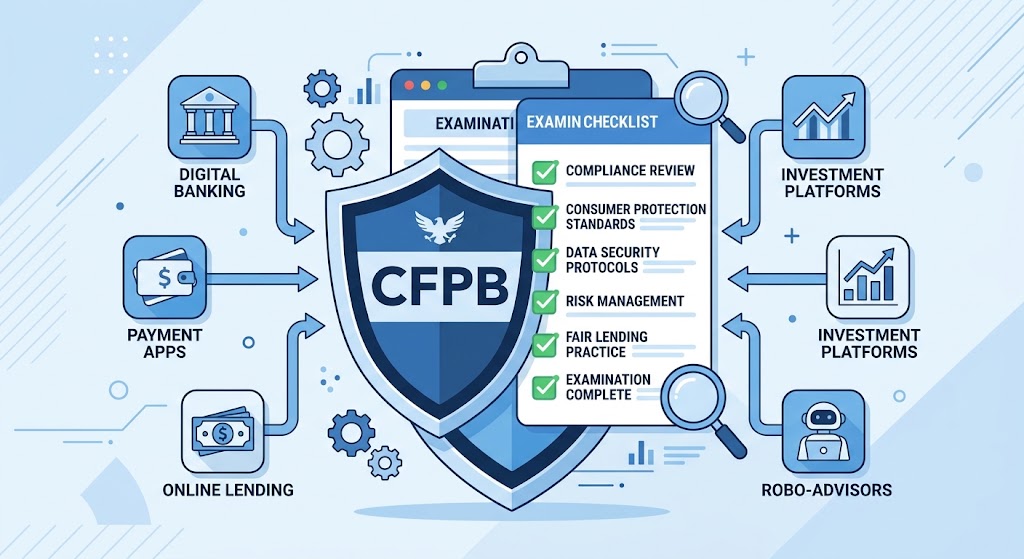
The CFPB has broad authority over consumer-facing financial products and services. For fintechs, CFPB oversight applies most directly through UDAAP authority — the prohibition on unfair, deceptive, or abusive acts or practices — and through specific regulations applicable to the products you offer.
Key CFPB regulations for fintechs include Regulation E covering electronic fund transfers and digital wallet products, Regulation Z covering consumer credit products, the Prepaid Account Rule covering prepaid cards and digital wallets, the Equal Credit Opportunity Act covering credit decision fairness, and the Fair Credit Reporting Act covering use of consumer credit data.
The CFPB also has supervisory examination authority over non-bank financial companies in specific markets including money transmission, prepaid accounts, debt collection, and consumer reporting.
The Federal Trade Commission
The FTC has UDAP authority — the predecessor to CFPB's UDAAP standard — over non-bank companies. For fintechs not subject to CFPB examination, the FTC serves as a parallel consumer protection authority.
The Securities and Exchange Commission
For fintechs offering investment products, securities, or operating as investment advisers or broker-dealers, SEC oversight applies. Cryptocurrency companies that offer tokens classified as securities face SEC jurisdiction over those products. The specific scope of SEC oversight for crypto companies remains an active area of regulatory development.
The Corporate Transparency Act
The Corporate Transparency Act requires most U.S. companies to report beneficial ownership information directly to FinCEN. Most fintech companies — organized as LLCs or corporations — are required to file beneficial ownership reports with FinCEN and to update those reports within 30 days of any change in beneficial ownership.
State Regulatory Requirements
Money Transmitter Licensing
Most states require a money transmitter license for businesses that transmit money on behalf of the public — which covers most payments fintechs, digital wallet providers, and money services businesses. Licensing requirements, capital requirements, surety bond amounts, and processing timelines vary dramatically by state.
Building a national licensing program requires engaging with the requirements of each state individually. New York and California are consistently the most demanding. Most other states use the NMLS system for applications, which streamlines some administrative work without eliminating state-specific requirements.
State Consumer Protection Laws
States have their own consumer protection laws that apply alongside federal CFPB requirements. State attorneys general have authority to enforce state UDAP standards — generally equivalent to or broader than federal UDAP requirements — and can bring enforcement actions independently of federal authorities.
State Data Privacy Laws
Several states have enacted comprehensive data privacy laws that impose obligations on fintechs handling personal information of their residents. California's CPRA, Virginia's CDPA, Colorado's CPA, and similar laws in other states create requirements around consumer rights, data handling, and breach notification that apply independently of federal financial regulation.
State Lending Laws
Fintechs that extend consumer credit — including BNPL products, installment loans, and certain earned wage access products — face state lending licensing requirements that vary significantly by state and by the specific product structure. State usury laws also apply to the interest rates and fees that can be charged on consumer credit products.
How the Regulatory Frameworks Interact
For most fintechs, multiple regulatory frameworks apply simultaneously — and they interact in ways that require careful navigation.
A payments fintech that offers consumer debit accounts must comply with the BSA for AML obligations, OFAC for sanctions, Regulation E for electronic fund transfer disclosures and error resolution, the Prepaid Account Rule for account disclosures, UDAAP for the general fairness of its practices, state money transmitter licensing in every state where it operates, and state data privacy laws in states that have enacted them.
These requirements are not always consistent with each other. Compliance with one framework does not guarantee compliance with another. Understanding how the full set of applicable requirements fits together for your specific business model is a core compliance function — not a one-time exercise.
The Compliance Foundation Every Fintech Needs
Regardless of which specific regulatory frameworks apply to your business, every fintech that moves money needs certain foundational compliance infrastructure.
A written, operational AML compliance program that covers all five BSA pillars. A functional KYC and customer due diligence program. OFAC sanctions screening at onboarding and ongoing. A transaction monitoring program calibrated to your specific risk profile. A SAR filing capability with documented investigation workflows. A designated BSA Officer with genuine authority and expertise. Annual AML training for all relevant staff. An annual independent review of the AML program. State money transmitter licenses in all states where required. See our full fintech compliance checklist for a complete overview. Learn more about BSA compliance fundamentals.
Frequently Asked Questions
How do I determine which regulatory frameworks apply to my fintech?
The determination of which specific regulatory requirements apply to your fintech requires analysis of your specific business model — what products you offer, who your customers are, what states you operate in, and how money flows through your platform. This analysis should be conducted with qualified legal and compliance counsel before you launch and updated when you add new products or enter new markets.
Has the fintech regulatory environment been getting stricter?
Yes — consistently. Regulators including FinCEN, the CFPB, and state regulators have all increased their oversight of fintech companies over the past several years. The Anti-Money Laundering Act of 2020, the Corporate Transparency Act, and expanded CFPB supervisory authority have all added to the regulatory obligations fintechs face. The trend toward more comprehensive fintech regulation shows no signs of reversing.
What is the biggest regulatory risk for most fintechs?
BSA/AML compliance failures — particularly SAR filing failures, inadequate transaction monitoring, and KYC program gaps — create the most significant regulatory exposure for most fintechs in terms of potential penalties and operational disruption. OFAC violations carry strict liability and can be catastrophic. Sponsor bank relationships — which are critical to most fintechs' operations — are most commonly threatened by BSA/AML compliance deficiencies.
How ComplyOne Helps
ComplyOne helps fintechs navigate the full U.S. regulatory landscape — building compliance programs that address BSA/AML requirements, consumer protection obligations, and licensing requirements in an integrated, practical framework. Whether through compliance technology, advisory services, or both, we help you understand what applies to your business and build the infrastructure to meet it.
Talk to the ComplyOne team to get started.
The information in this article is for general educational purposes and does not constitute legal or regulatory advice. Consult a qualified compliance professional for guidance specific to your situation.