OFAC has extended sanctions enforcement to cryptocurrency, including listing wallet addresses on the SDN List. This guide explains how crypto sanctions screening works and what your compliance program needs.
Crypto Sanctions Screening — How to Stay Compliant
OFAC doesn't care whether a payment happens in dollars or Bitcoin. Sanctions violations in crypto carry the same penalties as violations in traditional finance — and OFAC has made it clear that "we didn't know it was a sanctioned wallet" is not an adequate defense.
Here's how crypto sanctions screening works and what your compliance program needs to cover.
Why Crypto Needs Sanctions Screening
When OFAC sanctions a person or entity, they are prohibited from receiving or transferring value from US persons — including through cryptocurrency.
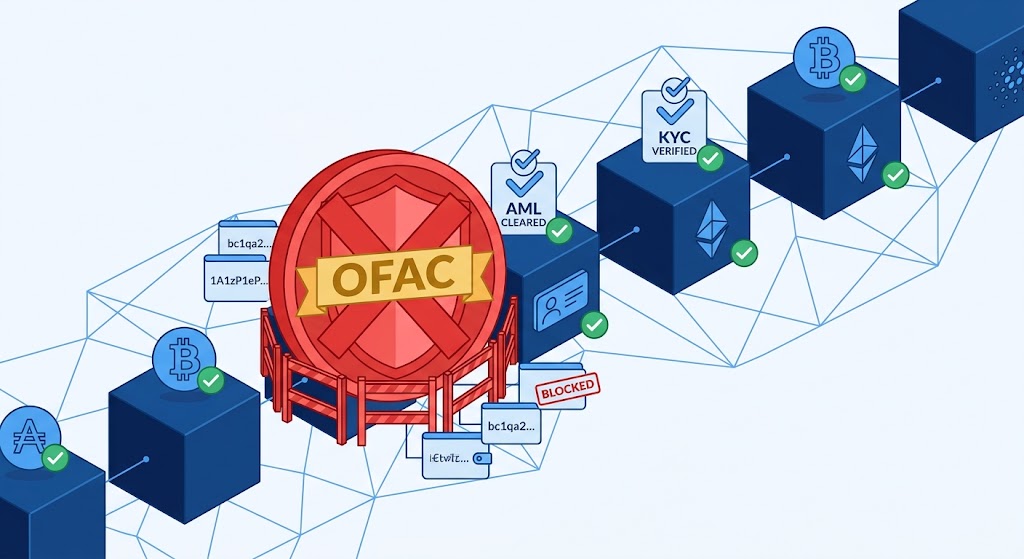
Since 2018, OFAC has been listing cryptocurrency wallet addresses directly on the SDN List alongside traditional names and accounts. If your platform processes a transaction to or from a listed wallet address, you've potentially committed a sanctions violation — even if you didn't know the address was sanctioned.
High-profile OFAC crypto enforcement actions include:
- Tornado Cash (2022) — OFAC sanctioned the Tornado Cash smart contract addresses, prohibiting US persons from interacting with the mixer
- Hydra Market (2022) — Russian darknet market, wallet addresses added to SDN List
- Lazarus Group (North Korea) — multiple Bitcoin and Ethereum wallet addresses listed
- BitFinex hack wallets — addresses holding stolen funds from the 2016 exchange hack
The message from OFAC is clear: cryptocurrency is not a sanctions-free zone.
Who Must Screen for Crypto Sanctions?
The same broad rule that applies to traditional sanctions applies here: all US persons and entities. Specifically:
- Crypto exchanges and trading platforms — must screen customers and wallet addresses
- Virtual Asset Service Providers (VASPs) — any entity facilitating virtual asset transfers
- Fintechs with crypto features — crypto wallets, crypto payment acceptance, crypto-to-fiat conversion
- DeFi front-end operators — companies maintaining user interfaces for DeFi protocols
- Stablecoin issuers — must be able to block or freeze wallets on the SDN List
Two Dimensions of Crypto Sanctions Screening
Crypto sanctions screening operates on two levels that don't exist in traditional finance:
1. Customer/Counterparty Screening
This is the same as traditional KYC sanctions screening — checking the identity of the person or entity you're doing business with against the SDN List and other sanctions lists.
This happens at onboarding (when you verify identity) and on an ongoing basis as OFAC updates its lists.
2. Wallet Address Screening
This is unique to crypto. You must screen the blockchain wallet addresses your customers use — both their own addresses and the addresses they're transacting with.
OFAC lists specific wallet addresses in hex or base-58 format on the SDN List. Your screening system must match incoming and outgoing wallet addresses against this list before allowing transactions to process.
Blockchain Analytics Tools
Manual wallet screening is not practical. The industry uses blockchain analytics platforms that combine OFAC's listed addresses with broader intelligence about wallet activity, transaction history, and risk scoring.
The major providers include:
- Chainalysis — the market leader; deep coverage, widely used by regulators and law enforcement
- Elliptic — strong global coverage and DeFi analytics
- TRM Labs — fast-growing platform with strong real-time capabilities
- CipherTrace (acquired by Mastercard)
- Merkle Science
These tools do more than just match SDN addresses — they score wallets based on their history and associations, flagging wallets that have transacted with mixers, darknet markets, ransomware addresses, or other high-risk entities.
What to Do When a Sanctions Match Is Found
When your screening system identifies a wallet address on the SDN List:
- Block the transaction — do not process it
- Block the funds — if value has already been received from the sanctioned address, freeze it
- Report to OFAC — file a report with OFAC within 10 business days using the OFAC reporting form
- Document everything — maintain complete records of the match, the review, and the action taken
- Consult counsel — especially for complex cases involving significant amounts or uncertain jurisdiction
Do not return funds to a sanctioned wallet — that is itself a prohibited transaction. Contact OFAC for guidance on what to do with blocked funds.
Building a Crypto Sanctions Compliance Program
A complete crypto sanctions program includes:
- Customer identity screening — KYC at onboarding, ongoing re-screening as OFAC lists update
- Wallet address screening — at the point of transaction, for both sending and receiving addresses
- Blockchain analytics integration — risk scoring of wallet transaction history
- Transaction blocking capability — automated blocking for confirmed SDN matches
- Incident response procedures — what to do when a match is found
- Staff training — ensuring your team understands crypto-specific sanctions risks
- Annual program review — testing and updating your screening rules
Frequently Asked Questions
How often is OFAC's crypto address list updated?
OFAC updates the SDN List continuously. Your screening system must refresh its address database at the same cadence — ideally daily or in near real-time.
What if a customer sends me funds from a sanctioned wallet without my knowledge?
You may still be in violation. OFAC's strict liability standard means intent is not required for a civil violation. The best defense is having a screening program that would have caught the incoming transaction. Voluntary self-disclosure to OFAC is a significant mitigating factor.
Does crypto sanctions screening apply to stablecoins?
Yes. Stablecoins like USDC and USDT are subject to the same sanctions rules as other virtual assets. Some stablecoin issuers (like Circle for USDC) have the ability to freeze wallet addresses at the smart contract level in response to law enforcement requests.
Does OFAC's Tornado Cash designation mean all mixers are banned?
The Tornado Cash designation was specific to that protocol's addresses. However, using any mixing service to obscure the origin of funds raises serious sanctions and AML risk regardless of whether it has been specifically sanctioned.
This article is for educational purposes only and does not constitute legal or compliance advice. Sanctions regulations evolve frequently. Consult a qualified compliance professional or legal counsel for guidance specific to your business.