Cryptocurrency companies face significant AML compliance requirements from FinCEN and state regulators. Here is a comprehensive guide to what crypto AML compliance requires in 2025, from BSA registration to transaction monitoring to Travel Rule compliance.
Cryptocurrency AML Compliance: A Complete 2025 Guide
Cryptocurrency companies operating in the United States face a substantial and growing set of anti-money laundering compliance obligations. The U.S. regulatory framework for crypto AML has evolved significantly over the past decade — and FinCEN's enforcement activity against crypto companies that fail to maintain adequate AML programs has demonstrated that these obligations are real, enforced, and consequential.
This guide covers the full scope of AML compliance requirements for cryptocurrency businesses in 2025 — from the basic federal registration obligations through transaction monitoring, blockchain analytics, and the emerging Travel Rule requirements.
FinCEN Registration
The first step for any cryptocurrency company that qualifies as a Money Services Business is registration with FinCEN as an MSB. Most cryptocurrency businesses — exchanges, wallet providers, crypto payment processors, OTC desks — qualify as MSBs as money transmitters under FinCEN's regulations. Registration must occur within 180 days of commencing operations. For a foundational overview of MSB obligations, see our guide on what is a Money Services Business.
FinCEN has been clear that lack of awareness of registration requirements is not a defense for failing to register — crypto companies that have operated as MSBs without registering face civil penalties and may face criminal referral in egregious cases.
The Written BSA/AML Program
All registered MSBs must maintain a written BSA/AML compliance program with the five required components: internal controls, a designated compliance officer, ongoing employee training, independent testing, and Customer Due Diligence. For crypto companies, the written program must specifically address the unique risk environment of cryptocurrency — the pseudonymous nature of blockchain transactions, the use of privacy coins, the risk of high-value rapid transfers, and the specific AML red flags associated with crypto transactions.
Building a crypto-specific AML policy is a distinct task from adapting a generic AML policy. The crypto AML policy must address blockchain analytics, Travel Rule compliance, exchange and withdrawal controls, and other elements specific to virtual currency businesses.
KYC and Customer Identification
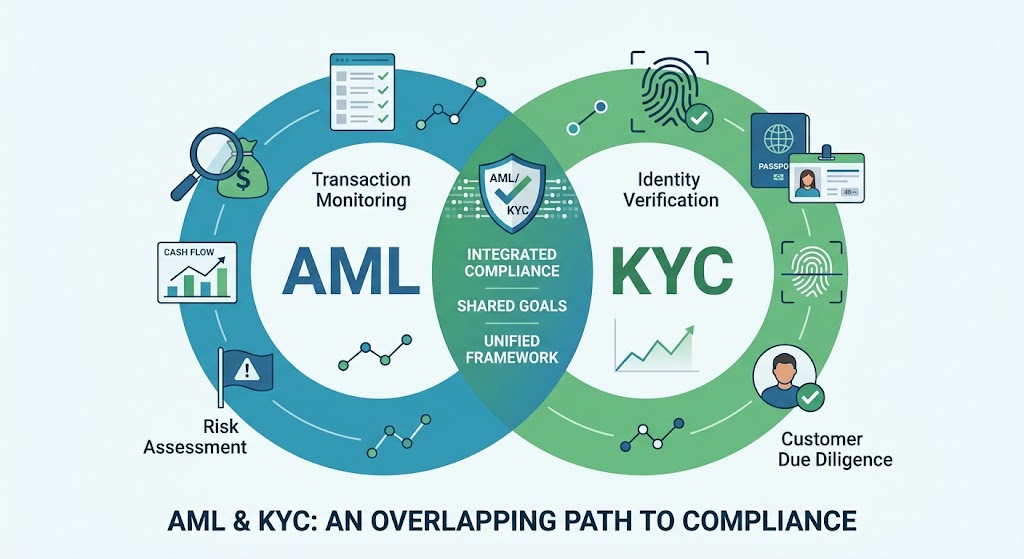
Crypto MSBs must implement Customer Identification Program requirements — collecting and verifying the identity of each customer at account creation. For retail customers, this means collecting name, date of birth, address, and government ID information and verifying through documentary or non-documentary methods. For business customers, it means implementing KYB procedures including beneficial ownership verification.
FinCEN has made clear that operating crypto exchanges or wallet services without KYC verification is a fundamental compliance failure. The enforcement actions against major crypto companies have consistently cited inadequate or absent KYC as a core deficiency.
OFAC Sanctions Screening
Cryptocurrency companies must maintain robust OFAC sanctions screening for customers, beneficial owners, and transactions. OFAC has added specific cryptocurrency addresses to the SDN List — addresses that must be blocked. Blockchain analytics tools that identify transactions with exposure to SDN-listed addresses are now standard compliance tools for cryptocurrency businesses.
OFAC has brought significant enforcement actions against cryptocurrency businesses — including major exchanges — for failures in sanctions screening. The penalties have been substantial, in some cases exceeding hundreds of millions of dollars.
Transaction Monitoring and Blockchain Analytics
Transaction monitoring for crypto businesses involves two distinct but complementary functions: traditional transaction monitoring that looks for behavioral patterns consistent with money laundering or financial crime (structuring, rapid in-out movement, transaction patterns inconsistent with the customer's stated purpose), and blockchain analytics that examines the on-chain history of funds associated with transactions on the platform.
Blockchain analytics tools analyze the blockchain record of where funds originated — identifying whether funds passed through darknet markets, sanctioned addresses, mixers or tumblers, or other high-risk blockchain entities before arriving at your platform. This is a capability unique to cryptocurrency compliance and is now expected by FinCEN and sponsor banks as a standard component of crypto AML programs.
SAR Filing
Crypto MSBs must file Suspicious Activity Reports with FinCEN when they know, suspect, or have reason to suspect that a transaction involves funds derived from illegal activity or that a customer is evading BSA reporting requirements. The $2,000 threshold for SAR filing applies to crypto transactions. SAR filing procedures must be documented in the AML program, and SAR quality and timeliness are examined by FinCEN.
The Travel Rule
FinCEN's Travel Rule — 31 CFR § 103.33 — requires financial institutions to transmit certain information alongside wire transfers above $3,000. FinCEN's 2019 guidance made clear that the Travel Rule applies to virtual currency transactions — crypto exchanges and other covered businesses must collect, retain, and transmit customer information for cryptocurrency transactions above the threshold.
The practical implementation of the Travel Rule for crypto businesses has been technically challenging — unlike traditional wire transfers, cryptocurrency transactions do not have a built-in field for originator information. The Virtual Asset Service Provider industry has developed technical protocols for Travel Rule compliance, and FinCEN has continued to emphasize Travel Rule compliance as an enforcement priority for crypto businesses.
Enhanced Due Diligence for High-Risk Crypto Customers
Crypto businesses serve some customer categories that carry elevated AML risk — customers from high-risk jurisdictions, large-volume traders, OTC counterparties, and businesses in high-risk industries. Enhanced Due Diligence procedures for these customer categories must be documented and implemented. For customers who are Politically Exposed Persons, EDD is required regardless of transaction volume or geographic risk.
Frequently Asked Questions
Do DeFi protocols need AML compliance programs?
The application of BSA AML requirements to decentralized finance protocols is an evolving area. FinCEN has signaled that some participants in DeFi — particularly those with control over protocol functionality or customer assets — may be MSBs subject to BSA requirements. The regulatory framework for DeFi AML obligations continues to develop, and participants in DeFi who are uncertain about their obligations should seek qualified legal counsel.
What are the most common crypto AML enforcement failures?
FinCEN enforcement actions against crypto businesses have consistently cited several deficiencies: failure to register as an MSB, failure to implement KYC verification at all or adequately, failure to maintain a written AML program, failure to file required SARs, and failure to implement OFAC sanctions screening. The crypto AML policy addresses the written program element; the other failures require implementation-level compliance work.
Does state licensing affect crypto AML requirements?
State money transmitter licenses — which are required for most crypto exchanges operating in regulated states — have their own AML program requirements that may exceed the federal minimum. In addition, the New York BitLicense imposes crypto-specific compliance requirements that go beyond the federal BSA baseline. For companies licensed in multiple states, the AML program must satisfy the most demanding state requirements applicable to the business. For crypto licensing requirements by state, see our guide on cryptocurrency licensing requirements by state.
How ComplyOne Helps
ComplyOne works with cryptocurrency companies to build comprehensive AML compliance programs — from FinCEN registration through KYC implementation, blockchain analytics integration, SAR filing procedures, and Travel Rule compliance — through advisory services, compliance technology, or both.
Talk to the ComplyOne team to get started.
The information in this article is for general educational purposes and does not constitute legal or regulatory advice. Cryptocurrency AML regulatory requirements are evolving rapidly. Consult qualified legal counsel for guidance specific to your cryptocurrency business model.